
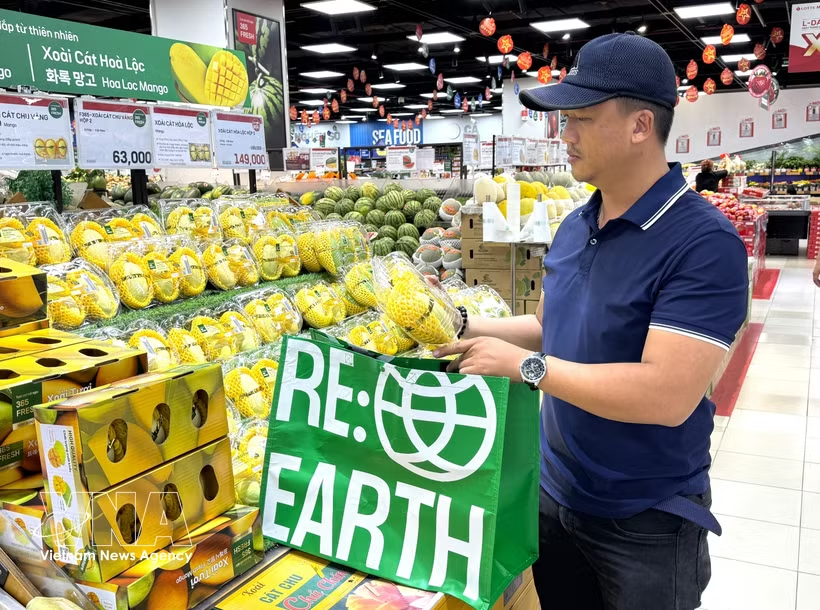
WNAM REPORT: As consumers now prioritise eco-friendly and resource-efficient products, it eases environmental pressure and creates momentum for companies to retool production and shift toward a green economy.
Vietnam’s strategic orientation for sustainable development, approved by the Prime Minister in 2004, included waste treatment technologies, clean energy, recycling and environmental protection.
The 2020 Law on Environmental Protection established a stronger legal framework with rules on sustainable production and consumption, circular economy, environmental industries and green procurement. The national action plan on sustainable production and consumption for 2021–2030 targets lower extraction of natural resources, fuels and materials, less waste, a faster circular economy and sharper corporate competitiveness.
A Ministry of Agriculture and Environment list shows that 13 additional products have earned Vietnam’s Eco-Label certification over the past two years, mostly eco-friendly and biodegradable plastic packaging.
A 2025 PwC Vietnam consumer survey found that 69% of Vietnamese consumers are willing to pay more for food to support environmental protection, but price remains a key factor. In rural areas, purchasing decisions are still driven mainly by price, with environmental concerns a lower priority.
Dr Chu Thi Kim Loan from Vietnam National University of Agriculture said making green consumption a real driver of sustainable development requires moving beyond calls for environmental awareness toward ensuring eco-friendly choices are accessible, reliable and affordable. That demands simultaneous action from the State, businesses, distribution systems and consumers.
Tools that help consumers identify green products should be improved. The Vietnam Eco-Label system, energy-efficiency labels and related certificates should become clearer, more transparent and easier to recognise. Certified product lists should be public, regularly updated and gradually linked to traceability systems so consumers can verify information before buying.
Phan Thi Le Thuy from Nha Trang University said the policy framework for green consumption should be further refined for greater consistency, coordination and transparency, while green products and services, clean technology adoption, and economical and efficient resource use encouraged.
Price support and demand-stimulus measures are also needed. Incentive policies should cover eco-friendly projects and products at multiple levels, rather than focusing only on products certified under the Vietnam Eco-Label scheme.
Dr To Van Truong, former Director of the Southern Institute of Water Resources Planning, said green finance, green credit instruments, tax incentives and interest rate support should be developed to cut businesses’ transition costs since investment in technology and production-line upgrades remains a major barrier, especially for small and medium-sized enterprises.