
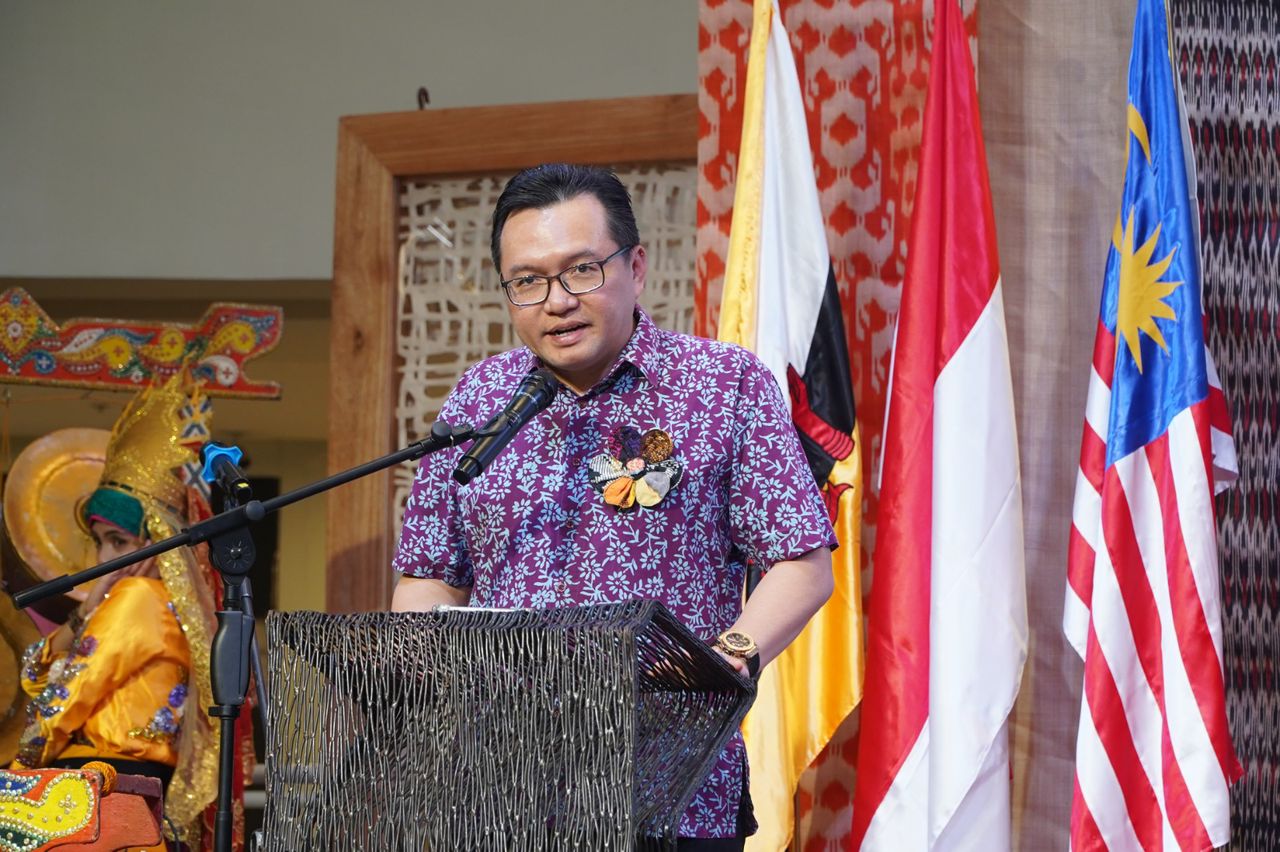
‘WORLD NEWS AM’ has the honor to reproduce the speech of honorable Deddy Faisal BinAhmad Salleh Consul General of Malaysia at the BIMP EAGA Trade & Tourism Expo:
Distinguished guests, esteemed colleagues, ladies and gentlemen,
Good afternoon. It is a privilege and honour to be here this afternoon.
Before I begin, allow me, on behalf of the Government and people of Malaysia, to extend our heartfelt condolences to the bereaved families and to the people of the Philippines.
I was deeply saddened to learn of the recent calamities that struck parts of the Philippines as a result of Typhoons Tino and Uwan, taking precious lives and bringing hardship to many families. Even in the midst of tragedy, I am confident that the indomitable spirit of the Filipino nation will light the path towards healing and recovery. Malaysia stands in full solidarity with the Philippines in this time of sorrow.
Your resilience, compassion, and unity in adversity remind us that the ties binding our nations go far beyond trade and diplomacy — they are bonds of friendship, humanity, and shared destiny. As José Rizal said – the Filipino spirit, though tried by hardship, does not yield; it bends like bamboo in the storm, yet rises with greater strength when the tempest has passed.
Ladies and gentleman
Today, as we gather under the spirit of the BIMP-EAGA — we are reminded that regional collaboration remains the surest route to shared prosperity.
When BIMP-EAGA was established in 1994, its founders envisioned a sub-region that could bridge the development gap between metropolitan centres and our resource-rich peripheries. Thirty years on, that vision has become more urgent.
Collectively, the BIMP-EAGA region now contributes over US$300 billion to ASEAN’s GDP and houses nearly 80 million people, many of them young, skilled, and eager to connect with the world.
Trade within BIMP-EAGA has grown steadily, with intra-EAGA trade rising by about 7% annually over the past decade, even amid global disruptions. Yet, the real potential remains largely untapped.
Much of our trade still flows outward — to China, Japan, and Singapore — rather than across our own borders. For East Malaysia and Mindanao in particular, this presents both a challenge and an opportunity.Let me share some figures. In 2024, Sabah’s total trade reached 29.4 billion Dollar, while Sarawak recorded 39.7 billion Dollar, driven largely by energy, timber, and agriculture.
Meanwhile, Mindanao’s exports hit US$6.2 billion, led by bananas, coconut products, and processed food.
However, trade between East Malaysia and Mindanao remains below US$500 million annually — less than 1% of our total export volumes. That gap is not an indicator of failure, but of immense room for growth. To unlock this potential, we must focus on three strategic drivers: connectivity, complementarity, and collaboration.
First, connectivity. Trade cannot flourish where movement is constrained. The proposed Zamboanga–Sandakan and Davao–Labuan maritime routes, along with improved roll-on roll-off (RORO) services, could drastically reduce logistics costs by up to 30% and transit time by half. Similarly, expanding air links between Kota Kinabalu, Kuching, and Davao will make it easier for business travellers and investors to move within the growth area. Digital connectivity is equally vital. Strengthening e-commerce platforms and cross-border payment systems will allow MSMEs to participate meaningfully in regional trade.
Second, complementarity. East Malaysia’s strength in downstream industries — palm oil, petrochemicals, halal food, and tourism — complements Mindanao’s rich agricultural base. Joint ventures in halal certification, food processing, renewable energy, and fisheries can integrate supply chains across the Sulu-Sulawesi corridor. A study by the ASEAN Secretariat estimates that such industrial linkages could increase sub-regional GDP by 15% within five years.
Third, collaboration. The private sector must take the lead, but government must create the conditions for confidence.
Harmonising customs procedures, simplifying non-tariff measures, and establishing mutual recognition arrangements can smoothen the flow of goods and services.
We should also expand the BIMP-EAGA Business Council’s role to include structured matchmaking between SMEs, and ensure that the Green City and Sustainable Tourism frameworks attract responsible investment.
Ultimately, this is not only about trade; it is about transforming geography into advantage. East Malaysia and Mindanao sit at the heart of ASEAN’s blue economy. With abundant renewable energy, biodiversity, and a young population, this corridor could well be ASEAN’s next frontier of inclusive growth.
Ladies and gentlemen, BIMP-EAGA has always stood for the idea that what is peripheral today can be central tomorrow — if we act with vision, courage, and trust. Let us therefore turn our shared geography into shared prosperity; our diversity into strength; and our borders into bridges.
The opportunities are vast. The question is not whether East Malaysia and Mindanao can succeed together — but whether we have the resolve to make it happen. I believe we do.
Thank you.