
LAHORE ( WNAM REPORT): The Centre for Aerospace and Security Studies (CASS), Lahore, organised a roundtable discussion titled, “Growing Up with Algorithms: How AI Is Rewiring Childhood and Youth.” As an independent think tank, CASS Lahore organises academic events for scholars and practitioners interested in examining critical issues at the intersection of technology, society, and policy. The event was attended by academics, intellectuals and domain experts. Ms Faiza Abid, Research Assistant at CASS, delivered the opening address.
In the first session, Dr Ibrar Hussain, Dean of Information Technology at the University of Lahore, discussed how algorithmic systems are shaping children’s learning, play, and interaction. He highlighted adaptive classrooms, smart toys, AI-powered games, and social simulations that connect school and home through blended play–learning ecosystems. Dr Hussain warned of risks related to data privacy, cognitive development, loss of essential skills, dependency, and surveillance, He further stressed the importance of secure and responsible AI development to protect psychosocial well-being.
In the second session, Dr Shazia Hasan, Professor of Psychology at the University of Central Punjab, explored how algorithmic environments are reshaping the mind, identity, and individual agency. She noted that while AI can enhance cognitive abilities, it may also replace introspection, self-reflection, and critical judgement. Focusing on youth, she warned that overreliance on AI can weaken autonomy, emotional engagement, and critical thinking. Dr Hasan emphasised that preserving human agency requires interpreting AI outputs thoughtfully, placing them within ethical, social, and cultural contexts, and ensuring space for independent thought and self-awareness.
In his concluding remarks, Air Marshal Asim Suleiman (Retd), President, CASS, Lahore, highlighted that AI is central to daily life. He noted that AI in platforms, games, and social media subtly shapes behaviour, attention, emotions, social interactions, and identity. While it offers creativity, personalised learning, and problem-solving, it can reduce independence, resilience, and privacy. He stressed that families, educators, and policymakers must guide ethical use, supported by research, policies, and human-centered collaboration, to foster growth, critical thinking, and ethical decision-making.
The roundtable concluded with a lively interactive session. It highlighted the critical impact of AI on youth, education, and human development. The participants appreciated CASS Lahore’s initiative in hosting an engaging and thought-provoking discussion.
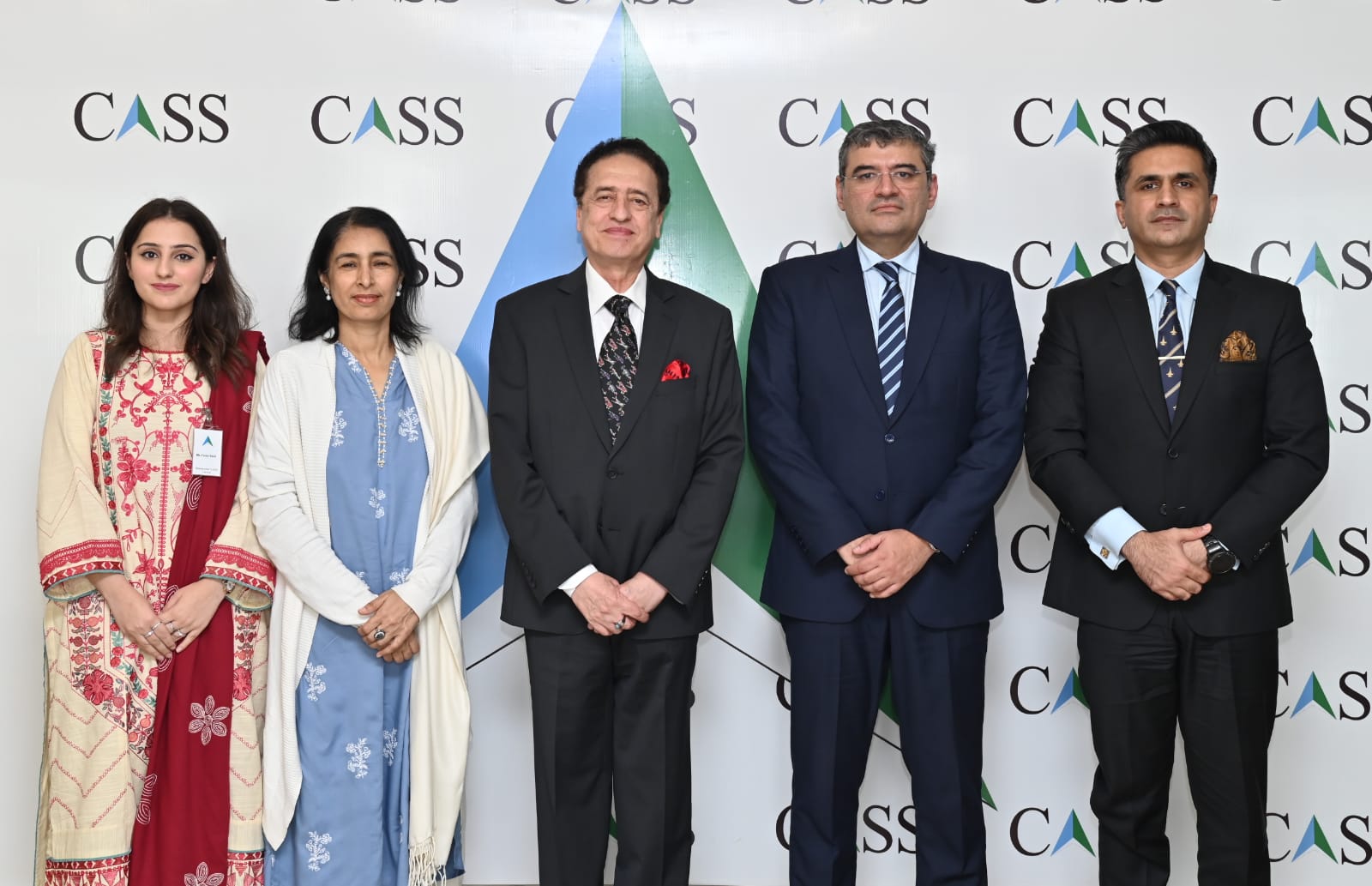
CASS Roundtable: “Growing Up with Algorithms: How AI Is Rewiring Childhood and Youth”
10