
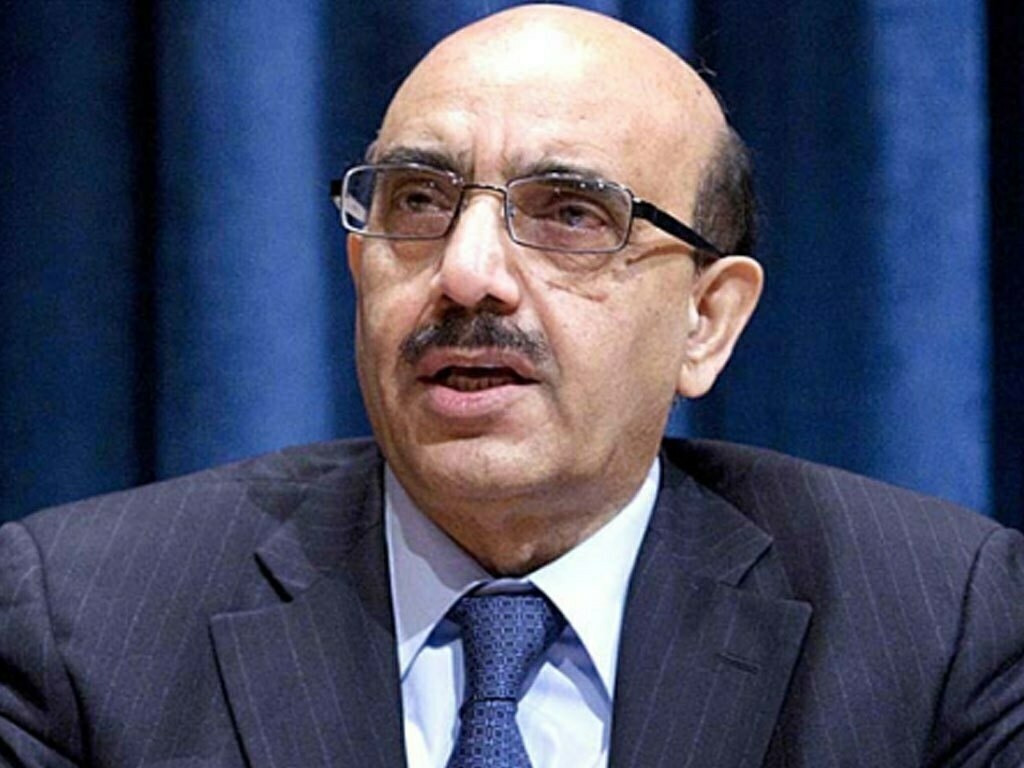
islamabad ( WNAM REPORT ): Former Ambassador of Pakistan to the United States, China and the United Nations, and former President of Azad Jammu and Kashmir, Sardar Masood Khan has said that Pakistan has now been firmly established as a principal global mediator after successfully earning the trust of both Washington and Tehran during a highly complex diplomatic process that led to a landmark understanding between the two countries.
Speaking in a television interview, he said Pakistan’s success in facilitating dialogue between the United States and Iran reflects a rare diplomatic achievement built on long-standing relationships, careful balancing of regional interests, and sustained engagement with multiple stakeholders. He noted that Pakistan’s credibility was reinforced by its ability to maintain trust simultaneously in Washington, Tehran, and key gulf capitals, while avoiding alignment with any single bloc.
He said Pakistan did not act alone in this effort but worked in close coordination with regional partners including Saudi Arabia, Qatar, Türkiye, Egypt, and China, while also receiving broader international support from countries across Europe, Asia, and other regions. According to him, this collective backing transformed the initiative into a global diplomatic endeavour rather than a unilateral mediation effort.
Sardar Masood Khan observed that the early phase of the agreement has already produced positive signals for global markets, including easing energy prices and improving investor sentiment. He said the expected reopening of key channels of communication and economic exchange would further reduce geopolitical pressure and restore confidence in global supply chains.
However, he cautioned that the real challenge begins with the upcoming 60-day negotiation phase, where complex technical and political issues must be resolved. These include uranium enrichment limits, the management of nuclear stockpiles, sanctions relief, and the release of frozen financial assets. He described these issues as “structurally difficult” and requiring sustained diplomatic engagement.
He further highlighted a proposed reconstruction and development framework involving a multi-billion-dollar investment package in Iran, supported by Gulf states and Asian partners. He said this initiative, if implemented, could reshape regional economic architecture and create long-term interdependence between former adversaries.
Identifying key risks, he pointed to four major challenges: domestic political pressures in Iran and the United States, Israeli exclusion from the process and its potential disruptive posture, and the fragile post-conflict environment in the broader Middle East, particularly regarding Lebanon and ongoing military deployments.
Concluding his remarks, Sardar Masood Khan said Pakistan’s role has demonstrated that credible diplomacy, when backed by trust and strategic patience, can produce breakthroughs even in the most entrenched conflicts. He stressed that sustaining this progress will require continuous engagement, strong verification mechanisms, and collective regional responsibility to ensure that peace is not only achieved but preserved.
Pakistan’s diplomatic initiative paves way for landmark US-Iran understanding: Masood Khan
6