
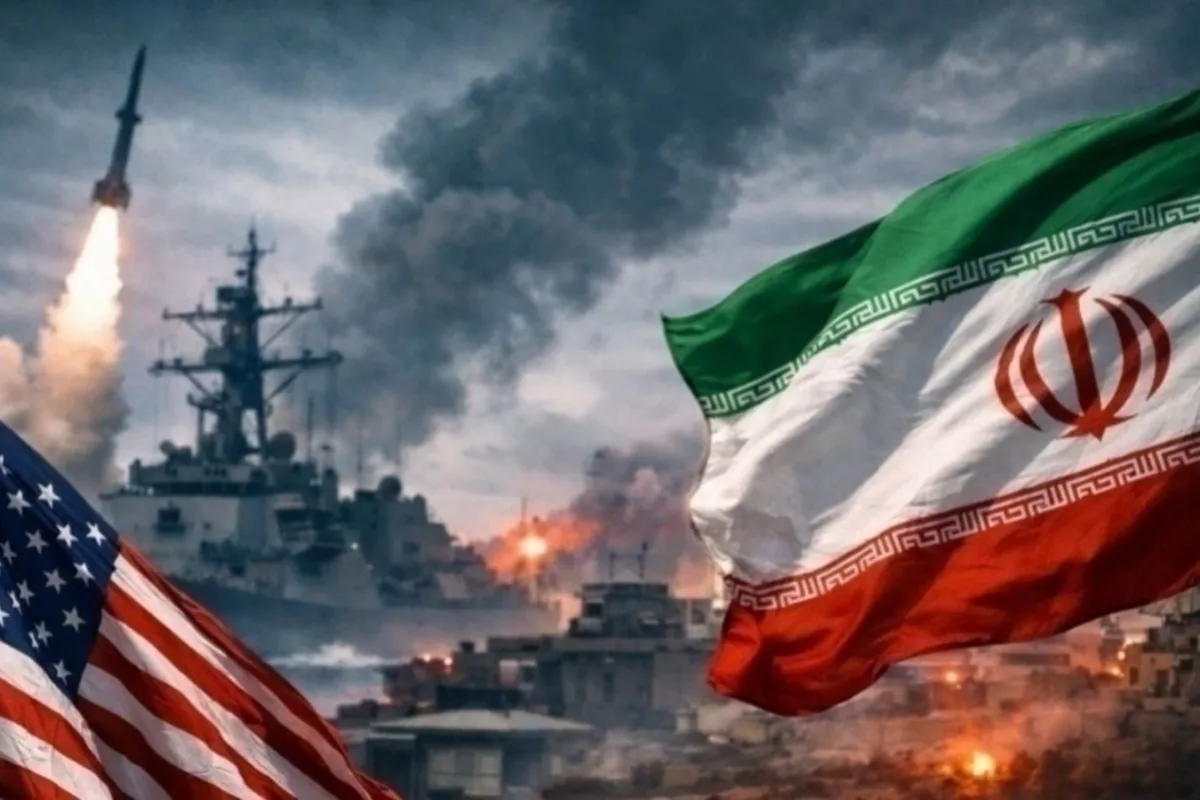
ISLAMABAD ( WNAM REPORT ): Former President of Azad Jammu and Kashmir and former Ambassador of Pakistan to the United States, China, and the United Nations, Sardar Masood Khan on Wednesday warned that diplomacy in the Middle East is under unprecedented strain, cautioning that any further military escalation between the United States and Iran could trigger a wider regional conflict with devastating humanitarian, economic, and strategic consequences.
Speaking in television interview on the evolving Middle East crisis, Ambassador Masood Khan said that although diplomatic channels remain open, they are operating under immense pressure due to renewed military strikes, increasingly hostile rhetoric, and the widening trust deficit between Washington and Tehran. He stressed that Pakistan, alongside Qatar and Oman, continues to play a vital mediatory role and must intensify efforts to bring both sides back to meaningful negotiations before the conflict spirals further out of control.
He observed that the Memorandum of Understanding had initially created hope for de-escalation, but subsequent military actions and renewed sanctions have severely undermined confidence in the diplomatic process. He noted that mediators are now confronted not only with external geopolitical tensions but also with domestic political pressures influencing decision-making in both Iran and the United States.
Ambassador Masood Khan expressed grave concern over reports of possible attacks on Iranian nuclear-related facilities, warning that any direct strike on sites such as Bushehr or suspected underground uranium storage locations could release radioactive material with catastrophic consequences extending far beyond the Middle East. Such an incident, he cautioned, would endanger neighbouring states, disrupt global markets, and severely weaken the international nuclear non-proliferation regime.
He further remarked that the conflict has already begun affecting global maritime security and energy supply chains. Referring to recent developments surrounding the Strait of Hormuz, he said proposals regarding new security charges on commercial shipping and continued military deployments have complicated an already fragile regional environment. He also pointed to growing security concerns around Bab-el-Mandeb, warning that any disruption of these strategic maritime corridors would have far-reaching implications for international trade and global energy prices.
Highlighting Pakistan’s diplomatic engagement, Ambassador Masood Khan noted that Prime Minister Shehbaz Sharif, Deputy Prime Minister and Foreign Minister Ishaq Dar, and Pakistan’s diplomatic leadership remain actively engaged with regional and international stakeholders, including Saudi Arabia, Iran, China, Qatar, Oman, Türkiye, and Egypt, to preserve dialogue and prevent another full-scale confrontation.
He underlined that while mediators cannot directly control internal political dynamics in Washington or Tehran, they must continue sustained engagement because the stakes extend far beyond the two countries involved. According to him, another round of conflict would destabilise the entire Middle East, threaten global economic recovery, and increase the likelihood of broader international involvement.
Commenting on regional preparedness, Ambassador Masood Khan noted that Gulf countries have developed alternative oil export routes and strategic infrastructure to reduce dependence on vulnerable maritime passages. Nevertheless, he emphasised that no alternative can fully replace the strategic significance of the Strait of Hormuz, making diplomatic stability indispensable for regional and global security.
Concluding his remarks, Ambassador Masood Khan urged all parties to exercise maximum restraint, abandon confrontational rhetoric, honour diplomatic commitments, and return to negotiations. He stressed that peace remains the only sustainable path forward and that responsible diplomacy must prevail before the region descends into a far more dangerous and unpredictable conflict.