
WNAM REPORT: OpenAI has launched the first international cohort of its Edu for Countries initiative under the global OpenAI for Countries program, with Kazakhstan selected among the initial participating nations alongside Estonia, Singapore, the United Arab Emirates, Jordan, and Greece.
Kazakhstan’s inclusion marks a major milestone in the country’s education and digital transformation agenda, making it the first Central Asian country to join the initiative. The program enables the systematic introduction of ChatGPT Edu, a specialized educational version of artificial intelligence, into national education systems, reported the Ministry of Science and Higher Education’s press service on Jan. 21.
Strategic integration of AI in education
Participation in Edu for Countries reflects Kazakhstan’s approach to artificial intelligence as a tool that enhances, rather than replaces, educators. The integration of ChatGPT Edu aims to reduce administrative and methodological workloads for teachers while enabling more personalized, higher-quality learning.
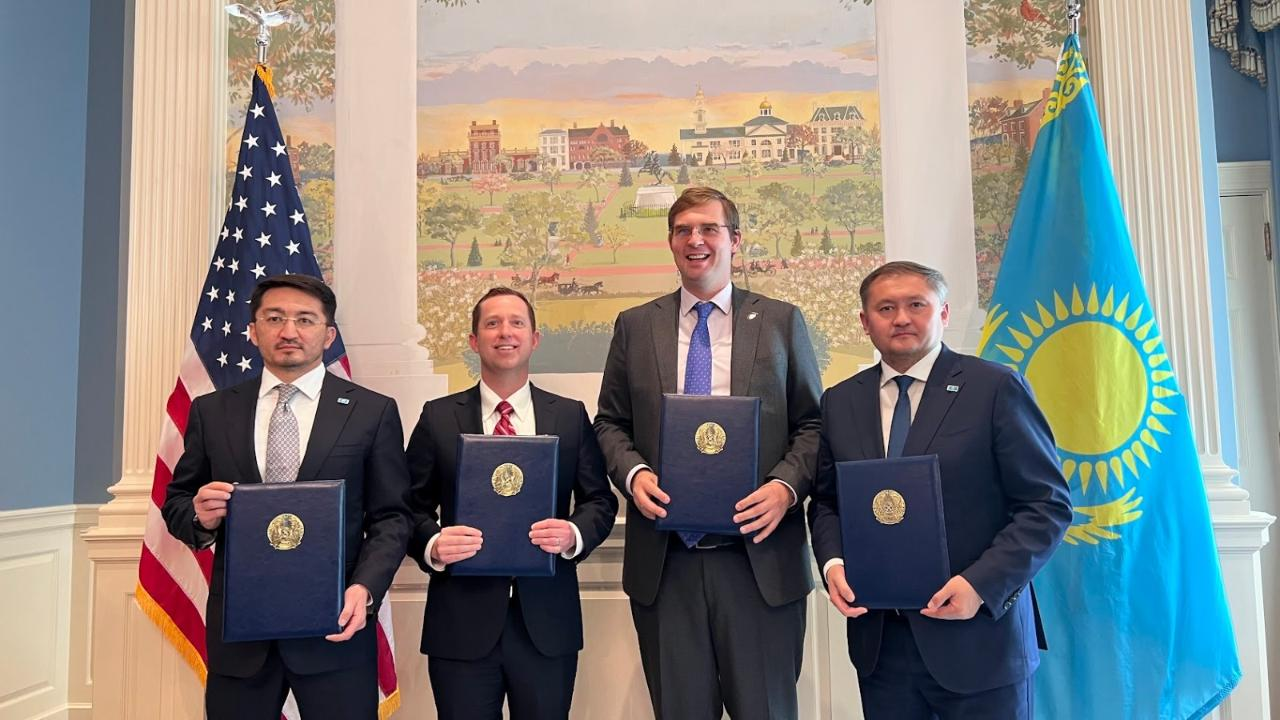
The project is being implemented under agreements reached following a memorandum of cooperation signed on Nov. 6, 2025, during the visit of President Kassym-Jomart Tokayev to the United States. The main agreement was concluded between OpenAI, Freedom Holding, and regional partner Bilim Group.
165,000 free licenses for educators and institutions
Under the program, 165,000 ChatGPT Edu licenses will be provided free of charge to Kazakhstan’s educational institutions, including 100,000 licenses for preschool, secondary, technical, and vocational educators. Administrators and higher education faculty members will be provided with 62,800 licenses, with 2,200 licenses allocated to participants in the Astana Hub ecosystem.
Deputy Prime Minister and Minister of Digital Development, Innovation and Aerospace Industry Zhaslan Madiyev said the initiative reflects Kazakhstan’s long-term vision.
“We view ChatGPT Edu as a practical tool to support educators and develop a strong research environment, fully aligned with national education standards, security requirements, and the principle of equal access,” he said.
Educators empowered, not replaced
Minister of Science and Higher Education Sayasat Nurbek emphasized that the program is designed to strengthen academic capacity rather than automate education.
“Artificial intelligence is not a substitute for people, it is a tool that amplifies human thinking when used critically and responsibly. Kazakhstan is not preparing users of AI — we are preparing its creators,” he said.
ChatGPT Edu enables teachers to design lesson materials, assignments, and assessments, adapt content to different skill levels, and work in Kazakh, Russian, and English. While AI can assist in preparing evaluation criteria and feedback, all grading decisions remain with educators.
Minister of Education Zhuldyz Suleimenova highlighted the broader pedagogical impact.
“Artificial intelligence should enhance the role of teachers by taking on non-core tasks. Tools like ChatGPT Edu expand individual learning approaches and help cultivate digital culture, responsibility, and critical thinking among students,” she said.
Training, security, and international experience
Starting January 2026, regular training sessions will be conducted with OpenAI specialists to ensure consistent, responsible, and effective use of ChatGPT Edu across teaching, administration, and research.
Educational institutions will operate within secure, dedicated digital workspaces that are fully compliant with Kazakhstan’s data protection and information security legislation.
Managing Director of Astana Hub Valeriya Te noted that access to ChatGPT Edu will also support innovation-focused education initiatives such as Tomorrow School and Tech Orda, helping students apply AI tools in real-world projects.