
WASHINGTON ( WNAM MONITORING): The US government will attempt to redirect Iranian assets to Gulf states for rebuilding and repairs of future damage caused by Iran, a source familiar with the matter said on Saturday, a day after a wave of attacks by Iran against Kuwait and Bahrain. US Treasury Secretary Scott Bessent has also directed a team to assess costs for damage already inflicted on Gulf allies by Iran, the source said, adding that the US will consider using Iranian assets for those repairs as well.
The disclosure came a day after Mohsen Rezaei, an adviser to Iran’s supreme leader, told CNN that a peace deal hinged on the release of $24 billion in Iranian assets frozen by the United States.
The source on Saturday did not specify what kind of assets the Treasury was examining. The language used to describe the new measures did not appear limited to frozen assets.
Peace negotiations appear to have stalled, although a minister from mediator Pakistan traveled to Tehran on Saturday with a letter for Iran’s Supreme Leader Mojtaba Khamenei, Iran’s semi-official ISNA news agency reported.
The threatened redirection of Iranian assets could create a new irritant to a fragile ceasefire between the United States and Iran, which was tested again this weekend with strikes by the US and Iran.
US forces struck Iranian coastal radar sites in Goruk and Qeshm Island, both in the Strait of Hormuz, early Saturday after shooting down drones launched by Iran that US Central Command says posed a threat to maritime traffic.
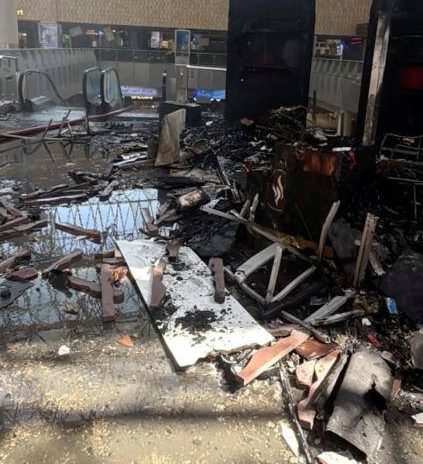
Iran’s Revolutionary Guard said it retaliated against US bases in Kuwait and Bahrain, and Kuwait’s army said on Saturday it engaged seven ballistic missiles that passed over residential areas, resulting in material damage but no casualties.
Iran later said it had hit US bases in both countries with ballistic missiles, but the US military said six missiles were intercepted and a seventh did not reach its target. The US and Iran have been engaged in largely indirect negotiations for an interim deal to halt the three-month-old war that would leave issues including Iran’s nuclear program to further negotiations.
But a deal has remained elusive while the two sides have periodically skirmished.
Tehran wants access to billions of dollars in oil revenue, waivers on sanctions on crude exports, the lifting of a US blockade on its ports and leverage over the Strait of Hormuz. Iran has effectively blocked the waterway, where about a fifth of global oil traffic transited before the war.
Iranian state media reported that Pakistani Interior Minister Mohsin Naqvi arrived in Tehran on Saturday for talks with Iranian officials, including Foreign Minister Abbas Araqchi. Naqvi said he was carrying a “special letter” from his country’s army chief and prime minister to Iran’s Khamenei, ISNA reported. Trump is facing mounting domestic political pressure due to rising gas prices to bring the unpopular war to an end. He told NBC that while most of Iran’s drone and missile manufacturing facilities had been destroyed, the Iranians still had access to about a fifth of their missiles.
“They have some missiles, they have some drones. I would say percentage wise, maybe 21 percent to 22 percent of their missiles. It’s a lot of missiles, but it’s not what it was when we first attacked,” Trump told NBC News’ “Meet the Press” program, according to excerpts released by the network on Friday.
After the US and Israel launched the war against Iran on February 28, Tehran attacked Gulf states hosting US bases and largely stopped shipping through the Strait of Hormuz. The conflict has driven up oil prices and disrupted supply chains for other goods, including humanitarian aid.
Damage to Gulf states
The US move comes after a regional escalation that began on Feb. 28 and saw unprecedented waves of Iranian missile and drone strikes targeting military facilities, energy infrastructure, airports, ports and economic centers across Gulf states.
Regional assessments indicated that Iran launched more than 6,400 missiles and drones against Arab states between late February and mid-April. Although Gulf and allied air-defense systems intercepted the vast majority of the projectiles, the scale of the attacks caused significant infrastructure damage, industrial disruptions and casualties across the region.
Among the most serious incidents was a May 17 drone strike on the UAE’s Barakah nuclear power plant, which the head of the International Atomic Energy Agency described as a “serious compromise of nuclear safety.”
IAEA Director General Rafael Grossi said the attack struck an electrical facility at the site, triggering a fire in a generator outside the plant’s inner perimeter and forcing emergency systems to provide power. While no radiation leak occurred, Grossi warned that attacks on civilian nuclear facilities were unacceptable and could have resulted in severe consequences.
The UAE blamed pro-Iran militias in Iraq for the attack.
Elsewhere in the Gulf, Kuwait repeatedly came under fire during the conflict. Kuwaiti authorities said Iranian attacks damaged civilian infrastructure, including Kuwait International Airport, and caused casualties. On Wednesday, Kuwait said Iranian strikes had killed one person, wounded several others and damaged diplomatic missions, while forcing temporary disruptions to airport operations.
The US military rejected Iranian claims that a US Patriot interceptor had caused damage at the airport, saying Iranian drones had deliberately targeted the civilian facility.
Since February, Kuwait has suffered some of the most extensive damage in the region. Military installations including Camp Buehring and Ali Al Salem Air Base were hit, resulting in US military casualties and damage to allied aircraft. Kuwait International Airport sustained repeated attacks, while strikes and falling debris damaged power lines, refinery facilities, desalination infrastructure and maritime assets.
The UAE also absorbed significant economic losses. Drone attacks and falling debris damaged facilities at Fujairah’s energy hub and shipping infrastructure, while fires were reported at oil storage facilities. Dubai International Airport, Jebel Ali Port and commercial properties in Dubai sustained varying degrees of damage. Military facilities including Al Dhafra Air Base and the French-operated Camp de la Paix were also targeted.
Qatar’s energy sector suffered one of the most strategically significant blows of the conflict. A strike on the Ras Laffan liquefied natural gas complex forced a temporary reduction of about 17 percent in the country’s LNG output, with analysts warning that full restoration of production capacity could take years.
Saudi Arabia, meanwhile, faced sustained missile and drone barrages aimed at exhausting its air-defense network. Saudi authorities reported that debris from intercepted projectiles and some direct strikes affected civilian areas, airports, hotels and energy-related sites. Between Feb. 28 and March 18 alone, Saudi defenses tracked and engaged at least 38 ballistic missiles and 435 drones.
Bahrain also came under repeated attack. A drone strike in March triggered a major fire at the Bapco refinery complex, while authorities reported dozens of civilian injuries from attacks during the early stages of the conflict.