
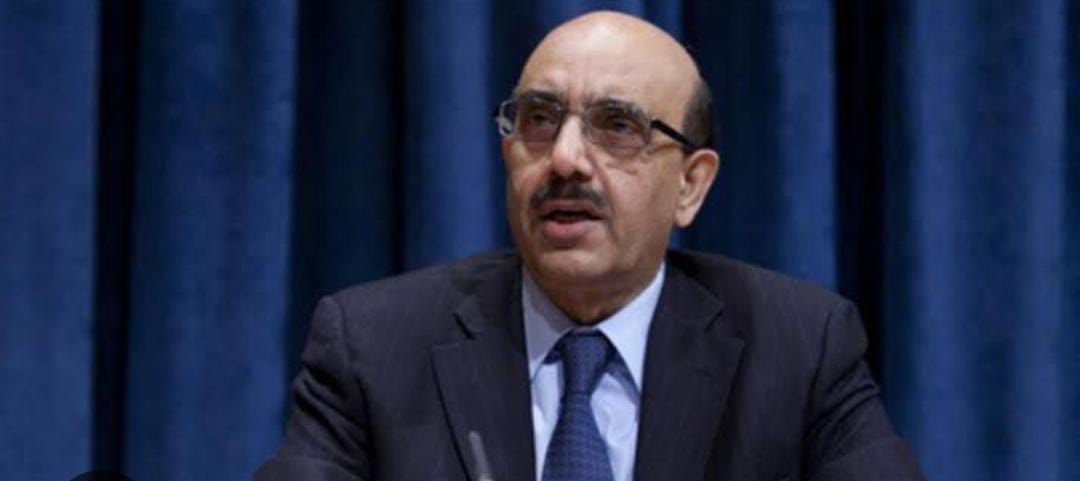
WNAM REPORT: Former Ambassador of Pakistan to the United States, China and the United Nations, and former President of Azad Jammu and Kashmir, Sardar Masood Khan has said that Pakistan’s successful mediation between the United States and Iran has elevated the country to the front ranks of international diplomacy, establishing it as a trusted peacemaker with growing influence across West Asia.
Speaking in an international television interview, he said Pakistan’s diplomatic achievement is unprecedented, as it successfully brought together two adversaries that had remained hostile for nearly five decades. He noted that Islamabad hosted the first face-to-face talks between Washington and Tehran, followed by sustained backchannel diplomacy that ultimately resulted in the signing of a Memorandum of Understanding aimed at ending hostilities and launching a structured process for a broader political settlement.
Sardar Masood Khan said that when differences emerged immediately after the signing of the Memorandum of Understanding over the implementation of a comprehensive ceasefire, particularly concerning developments on the Lebanese front, Pakistan once again stepped forward to prevent the diplomatic process from collapsing. Working closely with Qatar, Pakistan facilitated emergency consultations that helped preserve momentum and keep negotiations on track.
He described the ongoing negotiations as a decisive phase that will determine the success of the broader peace process. According to him, the next sixty days will focus on reaching a comprehensive nuclear agreement, sanctions relief for Iran, the release of frozen Iranian assets, and other technical issues essential for achieving durable regional stability.
Highlighting Pakistan’s leadership during the mediation process, Sardar Masood Khan said the close coordination between Prime Minister *Shehbaz Sharif* and Field Marshal *Syed Asim Munir* played a decisive role in advancing negotiations. He noted that the Pakistani civil and military leadership maintained seamless coordination throughout the diplomatic effort, enabling Islamabad to engage effectively with all relevant stakeholders.
He said the acknowledgment by United States Vice President *J.D. Vance* of Field Marshal Asim Munir’s contribution reflects Pakistan’s constructive and credible role in facilitating dialogue between Washington and Tehran. According to him, continuous engagement between Pakistan’s leadership and senior American officials helped secure the initial ceasefire and laid the foundation for direct negotiations hosted in Islamabad.
Sardar Masood Khan observed that Pakistan’s diplomatic gains extend far beyond the immediate breakthrough. He said the country has earned a reputation as a credible mediator capable of resolving complex international disputes—a role traditionally associated with the United Nations, major world powers, or established mediating states. He described Pakistan’s performance as a landmark achievement that has significantly enhanced its standing in capitals across the world.
He further stated that Pakistan has become more deeply integrated into the diplomatic and strategic landscape of the Gulf and the broader Middle East. The confidence reposed in Pakistan by both Washington and Tehran, he said, has created new opportunities for the country to contribute to future regional peace initiatives, strengthen political partnerships, and expand economic cooperation.
Concluding his remarks, Sardar Masood Khan said Pakistan should build upon this diplomatic success by institutionalising its role as a trusted regional peacemaker. He added that sustained engagement in conflict resolution, regional connectivity, economic diplomacy and strategic dialogue will not only strengthen Pakistan’s international profile but also contribute to lasting peace, stability and prosperity across West Asia.