
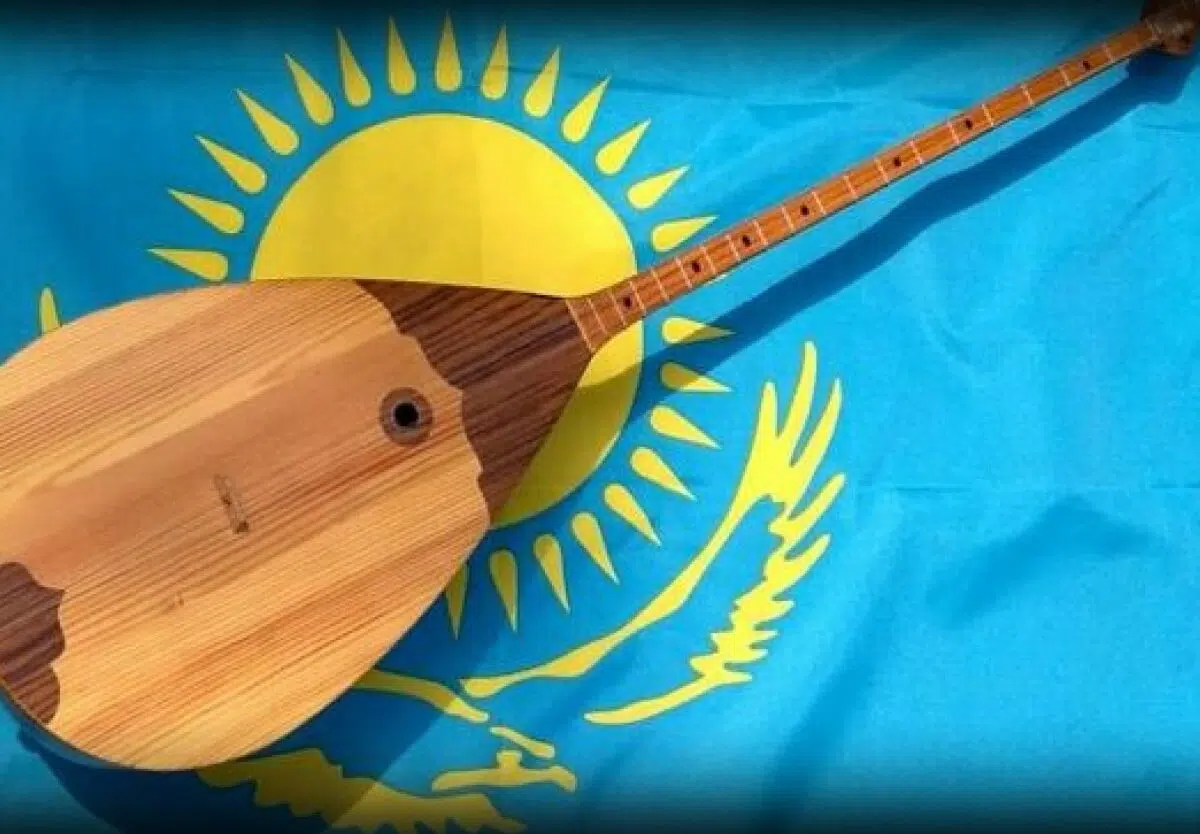
On 5 July, Kazakhstan celebrates National Dombra Day.
Among the many forms of traditional Kazakh art, the dombra and the art of kui performance represent a unique cultural tradition with a history spanning many centuries. According to archaeological and ethnographic evidence, dombra-like instruments were used across the Eurasian steppe thousands of years ago. Some historical sources suggest that the instrument’s origins date back between 2,000 and 6,000 years.
The dombra holds a special place in the spiritual life of the Kazakh people. The formation of this musical instrument dates back to ancient times. The dombra was widely used among Turkic-speaking peoples from Altai to Anatolia. The Altai Mountains, regarded as the cradle of Turkic peoples, are considered to be one of the earliest places where the first dombra-like instruments emerged.
Academician Akhmet Zhubanov once said: “The dombra, the most cherished and sacred musical instrument of the Kazakh people who inhabited the vast steppe, with its deep resonant and thoughtful plucked sounds, is pleasing to the ear and close to the heart; its silvery ringing tone reveals many hidden stories.”
The oldest examples of dombra-like instruments were discovered in caves of the Zhargalant-Khairkhan mountain range in the Altai-Mongolian region. A two-stringed fretted instrument resembling the dombra was found there. Ancient inscriptions were discovered on the body of the instrument. These inscriptions were deciphered by Berlin-based Turkologist Peter Sieme. According to Turkologist K. Sartkozhauly, the inscription reads: “The melody of the fragrant kui fills us with love.” This valuable artifact dates back to the 5th-6th centuries BC.
Structure of the Dombra
The dombra is one of the oldest and most sacred musical instruments of the Kazakh people. It is a two-stringed, multi-fretted plucked instrument and is considered an inseparable part of Kazakhstan’s spiritual and cultural life.
The dombra is usually tuned in two main ways: the fourth tuning and the fifth tuning. It consists of several parts: the head, tuning pegs, frets, neck, body, soundboard and bridge. Traditionally, the dombra is carved from wood.
Different regions of Kazakhstan have developed various forms of the dombra. Across the Kazakh steppe, the shape and features of the instrument evolved depending on local conditions, lifestyle and traditions, schools of song, epic poetry and kui performance, the individual performing style of musicians, and the craftsmanship of instrument makers.
Prominent Figures Who Advanced the National Art of Kui Through the Dombra
The art of dombra performance flourished among the Kazakh people during the 19th century. Over time, two principal traditions of kui performance developed: the Tokpe style, characterized by its energetic and dynamic execution, and the Shertpe style, known for its lyrical and expressive character.
Throughout Kazakhstan’s history, a number of outstanding kui composers and performers devoted their lives to the dombra and laid the foundations of the country’s traditional schools of kui performance. Among the most renowned masters are Kurmangazy, Tattimbet, Seitek, Sugir, Turkesh, Dauletkerey, Kazangap, Esbai, Kozheke, Alshekei, and Dina Nurpeisova. Their compositions and performing traditions remain an essential part of Kazakhstan’s cultural heritage.
Many original dombra instruments that once belonged to these legendary musicians are preserved in the Ykylas Dukenuly Museum of Folk Musical Instruments in Almaty.
Today, the dombra is more than a national musical instrument, it has become one of Kazakhstan’s cultural symbols and an important element of the country’s national identity. Contemporary performers and professional orchestras continue to elevate the art of dombra performance, introducing its unique musical traditions to audiences around the world.