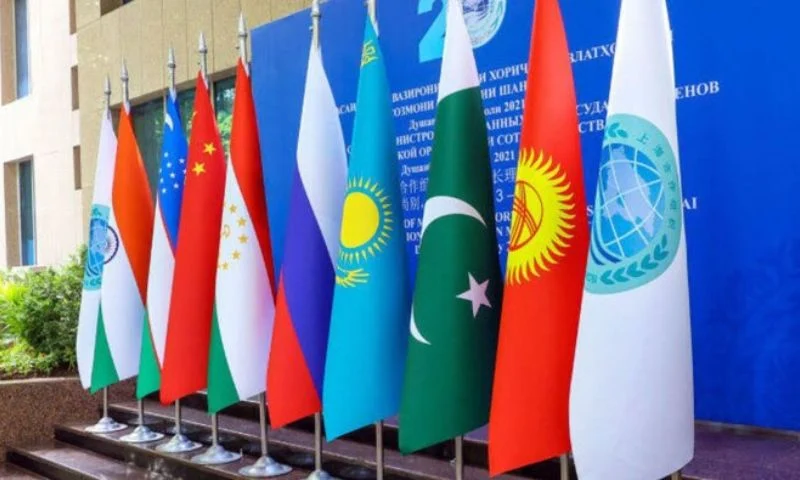
Islamabad ( WNAM REPORT ): The Institute of Regional Studies (IRS), Islamabad, hosted a webinar titled “The Kyrgyz Perspective on the SCO at 25: Summitry and Pakistan’s Chairmanship,” in collaboration with the Aplicata Center for Strategic Studies and the Institute for Strategic and Academic Studies (ISAS), Bishkek. The discussion reviewed the Shanghai Cooperation Organisation’s (SCO) evolution over 25 years, Kyrgyzstan’s outgoing chairmanship, and priorities for Pakistan as it assumes the SCO chairmanship in September and prepares to host the SCO Summit in Islamabad in 2027.
President IRS, Ambassador Jauhar Saleem, said the SCO’s 25th anniversary offered an opportunity to assess its achievements and future direction rather than merely commemorate its history. He noted that the organisation had evolved from a predominantly security-focused grouping into a broader platform for political dialogue, economic cooperation, connectivity and people-to-people exchanges. Its continued relevance, he observed, would depend on effectively balancing the interests of major powers with those of the smaller member states.
Ambassador Saleem said Pakistan regarded the SCO as an important platform for advancing regional stability, connectivity and economic cooperation. He highlighted Pakistan’s ports, transport infrastructure and experience under CPEC as potential enablers of stronger Central Asia–South Asia linkages. He said Pakistan’s chairmanship would prioritise connectivity, trade, security cooperation and people-to-people exchanges, while drawing on its experience in chairing the SCO Regional Anti-Terrorist Structure (RATS) during 2025–2026.
Delivering the keynote address, Dr. Kubatbek Rakhimov, Executive Director of the Aplicata Center for Strategic Studies and co-founder of ISAS, Bishkek, reviewed Kyrgyzstan’s year-long SCO chairmanship. He identified security, connectivity, digitalisation and progress towards establishing the long-discussed SCO Development Bank and Development Fund among Kyrgyzstan’s priorities. Several of these objectives, he noted, remained only partially realised—a challenge common to SCO chairmanships rather than one specific to Kyrgyzstan.
Dr. Rakhimov also stressed the importance of sustained follow-up to translate summit-level agreements into tangible trade and investment outcomes. He cited the first direct road crossing by a Kyrgyz vehicle into Pakistan through the Khunjerab Pass and the completion of the respective Pakistan and Kyrgyzstan sections of the CASA-1000 power transmission project as examples of practical cooperation advancing alongside high-level political engagement.
Proposing a Chairmanship Continuity Mechanism, Dr. Rakhimov suggested a three-chair framework involving Kyrgyzstan, Pakistan and incoming chair Russia, jointly supported by ISAS, Bishkek, and IRS, Islamabad. The proposed mechanism would provide for an annual handover report, quarterly online and annual in-person consultations, and a joint monograph to facilitate the systematic transfer of institutional experience between successive SCO chairs. He said a working document on the proposal would be prepared by the end of October.
Mr. Pavel Fesunov, Research Fellow at ISAS, outlined the proposed mechanism’s practical implementation. He said the two institutes would jointly prepare an approximately 100-page report over the next two months, assessing the outcomes of Kyrgyzstan’s chairmanship and offering recommendations for Pakistan’s tenure. The initiative would subsequently be expanded to include a Russian partner institution and result in a further joint publication.
In his concluding remarks, Mr. Shahid Ilyas, Head of the Turkiye and Azerbaijan Program at IRS, said the SCO’s 25th anniversary should serve as an opportunity to evaluate the organisation’s effectiveness and strengthen implementation. He underscored the importance of translating broad political commitments into practical outcomes while ensuring that the perspectives and priorities of the Central Asian states remained integral to the SCO.
The webinar was attended by researchers, students and members of the Central Asia Program. Participants agreed that Pakistan’s forthcoming chairmanship, culminating in the SCO Summit in Islamabad in 2027, provides an important opportunity to translate the organisation’s political commitments into practical cooperation and deepen Central Asia–South Asia linkages in connectivity, trade and security.