
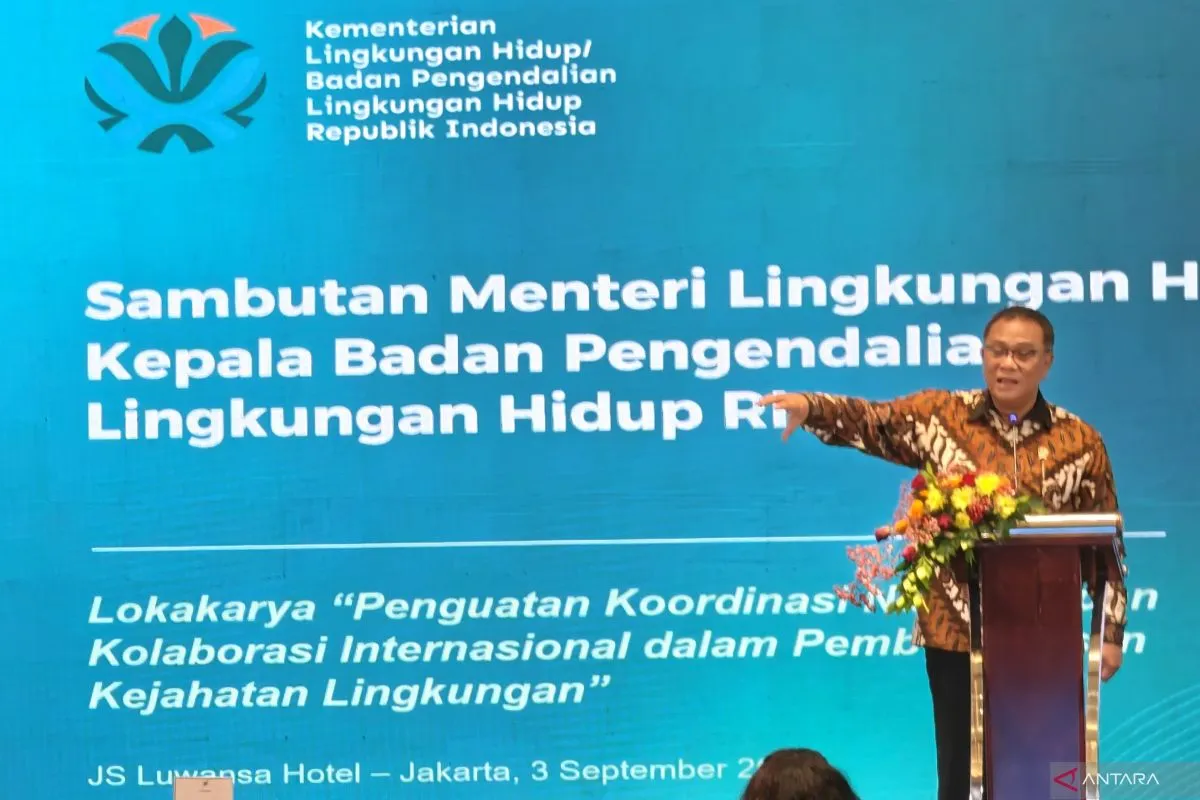
WNAM REPORT: The Indonesian government has partnered with the International Criminal Police Organization (Interpol) to strengthen law enforcement against environmental crimes across the country.
Environment Minister Jumhur Hidayat told at a press conference here on Thursday that technical cooperation with Interpol had officially begun with the formation of a working group, which will soon draft a roadmap for prosecuting the masterminds behind environmental crimes in Indonesia.
“This has just begun. There will be a technical working group that will detail the steps of cooperation,” Minister Hidayat said.
He said law enforcement must evolve from simply pursuing perpetrators in the field to also following the money, corporations, beneficial owners, and masterminds behind environmental crimes.
According to him, the move was prompted by the significant ecological losses and economic injustices caused by environmental crimes, including illegal logging, illegal fishing, wildlife trafficking, and illegal mining.
Citing World Bank data in his presentation, the minister said global economic losses from environmental crimes reach US$1-2 trillion annually, with 90 percent stemming from the loss of ecosystem services such as flood protection and carbon absorption.
At the national level, Hidayat cited a report by the Financial Transaction Reports and Analysis Center (PPATK) covering 2023 through the first half of 2024, which detected indications of transactions linked to mining crimes worth around Rp684 trillion and environmental crimes nearing Rp200 trillion.
“PPATK also found transactions suspected to be related to unlicensed gold mining reaching Rp185 trillion, with total fund turnover reaching Rp992 trillion, including indications of illegal gold flows to foreign markets,” Hidayat said.
Moreover, the government will facilitate the signing of a joint agreement involving ministries, agencies, and businesses under the concept of “environmental repentance” to encourage ecosystem restoration across regions and economic sectors.
According to the National Disaster Mitigation Agency (BNPB), losses from hydrometeorological disasters, which dominated in 2025, reached Rp22.8 trillion, while recovery costs were far higher. Recovery from the flash floods in Sumatra, for example, reached Rp56 trillion.
“Essentially, restore and honor the environment, no longer damage it. Those who are still damaging it now should stop, and after stopping, restore it,” he said.