
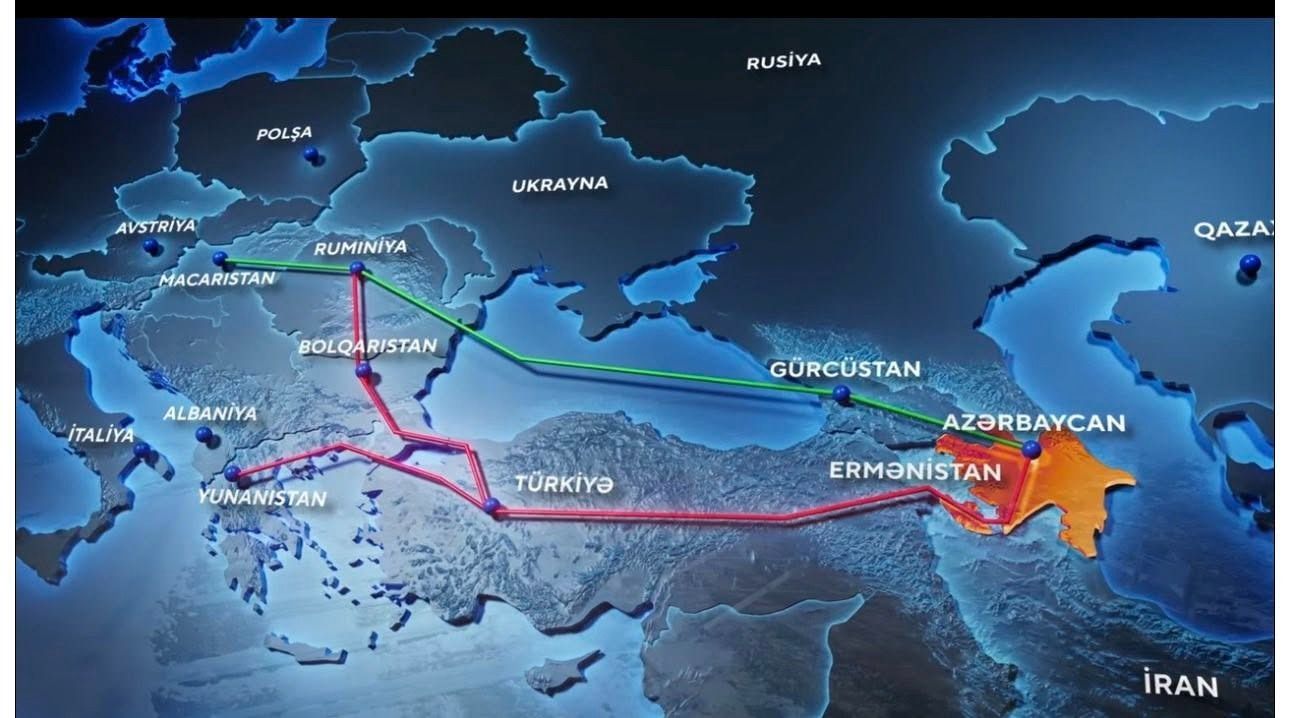
WNAM REPORT: Azerbaijan has begun construction of the Zangezur high-voltage transmission line, a project aimed at integrating the Nakhchivan Autonomous Republic into the country’s unified electricity system and strengthening cross-border energy connectivity toward Türkiye and European markets. The project is being implemented by AzerEnergy and forms part of a broader effort to modernize Azerbaijan’s power infrastructure, eliminate internal grid fragmentation, and expand regional electricity transmission capacity.
Why does integrating Nakhchivan into the national grid matter for Azerbaijan’s energy strategy?
Historically, Nakhchivan has operated separately from Azerbaijan’s main electricity system, relying on external connections for system balancing and frequency regulation. Full integration into the national grid is expected to alter this structure by enabling centralized dispatch, improved load management, and access to reserve capacity from the country’s main power network. From a technical perspective, integration allows for more stable system operation and reduces vulnerabilities associated with isolated grid functioning. Economically, it creates conditions for more efficient use of generation assets and lowers the cost of maintaining standalone balancing mechanisms.
The Zangezur project includes the construction of a two-circuit, 330 kV transmission line with a capacity of 1,000 megawatts, extending 105 km from Jabrayil to Aghbend and 74 km from Nakhchivan to the Ordubad border. The route follows the Araz River and crosses mountainous and rocky terrain, requiring complex engineering solutions.
A subsequent phase provides for construction of an additional 44 km line across the Zangezur corridor, which will connect the Aghbend and Ordubad sections into a continuous transmission route. In parallel, a new 330 kV substation is planned in Nakhchivan city, with preparatory works already underway.
The restoration of a direct electricity connection between Nakhchivan and mainland Azerbaijan has implications beyond domestic energy management. By eliminating breaks in internal transmission, the project enables more coherent and predictable power flows toward Türkiye and onward to Europe.
This integration improves the efficiency of transmission corridors passing through Türkiye by reducing system bottlenecks and enhancing operational stability. As a result, it supports the development of a continuous Azerbaijan–Türkiye–Europe electricity corridor and contributes to broader regional energy security.
How does the Zangezur power line support Azerbaijan’s expansion toward European electricity markets?
As a continuation of the project, plans are in place to construct a 230 km, 400 kV transmission line from Nakhchivan to Türkiye, along with the installation of a 400 kV converter substation, a voltage class not previously used in Azerbaijan’s power system. The introduction of 400 kV infrastructure would align Azerbaijan’s grid more closely with European transmission standards, facilitating future cross-border electricity trade and increasing export capacity via interconnected regional networks.
The integration of Nakhchivan into Azerbaijan’s unified electricity system and the construction of the Zangezur power line also complement Azerbaijan’s participation in the Black Sea Energy Corridor, which brings together Azerbaijan, Georgia, Romania, and Hungary.
While the Zangezur and Nakhchivan routes strengthen internal grid connectivity and create southern export options through Türkiye, the Black Sea Energy Corridor is designed to transmit electricity – primarily from renewable sources – from Azerbaijan through Georgia, across the Black Sea, and onward to Romania and Hungary, where it can be integrated into the European electricity network.
By eliminating internal transmission constraints and enabling more stable, centralized dispatch, Azerbaijan’s domestic grid projects increase the reliability of electricity flows feeding into westbound export corridors. In this context, internal grid integration becomes a prerequisite for sustained cross-border electricity exports, ensuring that power supplied to the Black Sea route can be delivered in predictable volumes and in line with European technical and regulatory requirements.
At the generation level, several renewable energy projects are expected to contribute to the expanded transmission system. These include four small hydropower plants with a combined capacity of 13 MW in Kalbajar and Lachin, as well as a 240 MW wind power project in Kalbajar. Together, these facilities are expected to increase the availability of electricity for both domestic consumption and export.
Taken together, the Zangezur power line and associated infrastructure projects point to a shift toward deeper internal grid integration and expanded regional interconnection. By linking Nakhchivan to the national power system and supporting multiple export directions toward European markets, Azerbaijan is addressing long-standing structural constraints in its energy system.
However, the project’s long-term impact will depend on several unresolved factors. These include adherence to construction timelines in technically challenging terrain, the synchronization of transmission systems across multiple jurisdictions, and the pace at which new renewable generation can be integrated into the grid without creating imbalances. In addition, differences in regulatory frameworks, market access rules, and grid codes between Azerbaijan and European partners may limit near-term export volumes unless further harmonization efforts are undertaken.
Furthermore, financing structures, cost recovery mechanisms, and the commercial viability of large-scale electricity exports will also play a role in determining whether the infrastructure is utilized at full capacity. As a result, while the Zangezur project strengthens the physical foundations of regional energy connectivity, its effectiveness will ultimately depend on parallel progress in technical coordination, market integration, and regulatory alignment.