
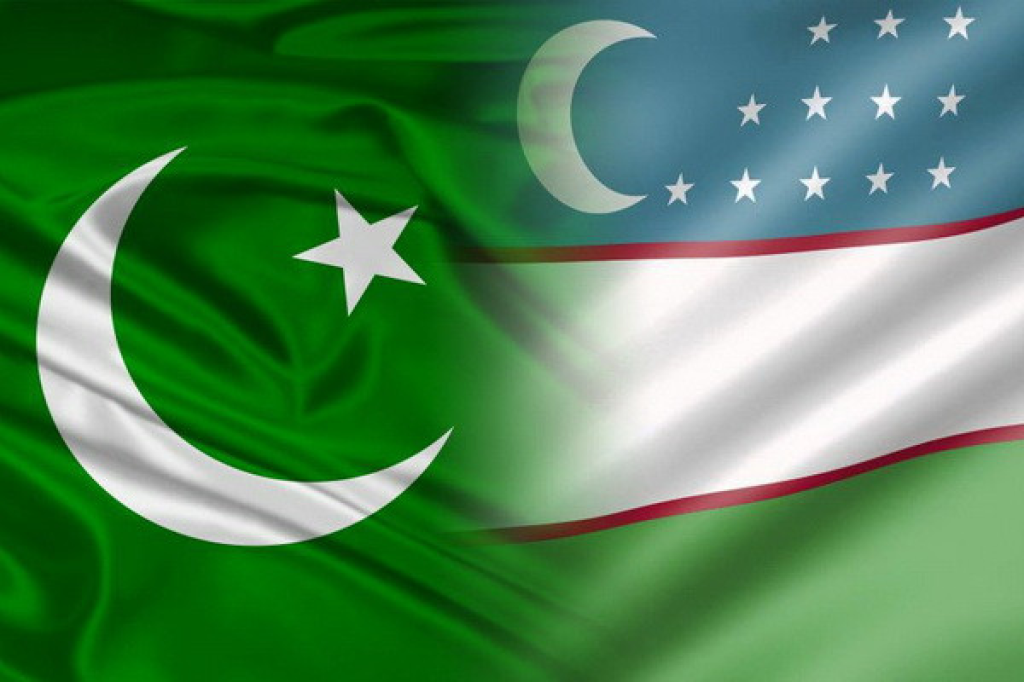
As is known, President of the Republic of Uzbekistan Shavkat Mirziyoyev paid a state visit to Pakistan at the invitation of the Prime Minister of the Islamic Republic of Pakistan, Shehbaz Sharif. It is expected that the implementation of large-scale infrastructure initiatives will be a key topic of the upcoming high-level talks.
For Uzbekistan, which is double-landlocked, the diversification of transport corridors is a fundamental condition for economic sustainability. High logistical costs, which in some cases account for 50 percent of the final product cost, have historically been a deterrent to developing the country’s export potential. In the current geo-economic configuration, the strategic partnership with Pakistan is critical, providing Central Asia with the shortest route to Indian Ocean seaports.
Cooperation between Tashkent and Islamabad has moved to the practical stage. The parties have agreed on key organizational issues and plan to start construction of the Trans-Afghan Railway in the near future. Against the backdrop of preparations for the launch of the megaproject, countries are already implementing alternative logistics measures, including expanding cargo flights and introducing digital vehicle permits, which will help turn the region into a key Eurasian transit hub.
The project of the century
The signing of a trilateral intergovernmental agreement among Uzbekistan, Afghanistan, and Pakistan provided the legal basis for implementing the transnational initiative. The document regulating the development of a feasibility study and a construction roadmap was finalized during a meeting of the responsible departments in Kabul. The agreement fixed the route of the highway: “Termez – Mazar-i-Sharif – Logar – Kharlachi – Peshawar”. The chosen trajectory, 573 kilometers long, is recognized as optimal for providing the shortest access to Pakistani ports.
The project’s economic parameters confirm its scale. The potential for cargo transportation is estimated at up to 20 million tons per year, which would make it possible to reorient a significant portion of the regional commodity flow from road to rail. The construction cost, which initially ranged from $4.8 billion to $8.2 billion, is estimated at approximately $7 billion after adjustments and calculations by relevant institutions.
The strategic importance of the highway goes beyond simple logistics: the project is designed to address the complex engineering challenge of connecting the railway network of Central Asia (1520 mm gauge) with Pakistan’s transport system (1676 mm gauge). The implementation of this solution, which provides for the creation of transshipment facilities or double-gauge sections, will actually complete the formation of the direct North-South railway corridor connecting Eurasia with the Indian Ocean.
Route diversification: focus on aviation and motor transport
During the design and construction of the railway, the parties are actively developing alternative multimodal solutions to meet current trade needs. The expansion of Uzbekistan Airways’ flight program has become a critical step in strengthening business mobility. Since October 2025, the frequency of flights on the Tashkent – Islamabad route has been doubled, and the total number of weekly flights to Pakistan, including Lahore, has reached four. The Pakistani logistics company TCS’s initiative to launch a Tashkent – Karachi cargo flight, aimed at accelerating the delivery of perishable agricultural products, will serve as an additional incentive for exporters.
In the land transportation sector, a key process optimization tool will become the creation of a joint transport and logistics company, which was agreed upon at the highest level. The new structure is designed to manage cargo flows and eliminate logistical gaps centrally. To speed up border procedures, an electronic permit system is being introduced to replace paper document management and increase transit transparency. The effectiveness of developing a multimodal corridor through Afghanistan is already evident in cargo traffic dynamics: in recent years, the volume of traffic along this route has increased 5-fold.
The strategic goal is access to the ports of Pakistan
A fundamental element of the new transport architecture is to ensure Uzbekistan’s direct access to global maritime communications. As part of the strategic partnership, Islamabad provides Tashkent with access to the deep-water ports of Karachi, Gwadar, and Qasim, which are considered the most promising southern gateway for Central Asia. The integration of these ports into Uzbekistan’s logistics chain will help diversify export routes and reduce dependence on traditional northern destinations.
A comparative analysis shows that the route through Pakistan has significant competitive advantages over alternative corridors, including the Iranian ports of Bandar Abbas and Chabahar. Expert assessments confirm that this route is the shortest and most cost-effective access to the Indian Ocean for the States of the region. In the context of geopolitical instability, direct, independent access to the sea strengthens Uzbekistan’s strategic autonomy in foreign trade.
The economic impact of reorienting cargo flows to the south is reflected in specific performance indicators. According to calculations, launching a direct rail link will reduce transportation costs by 30-35 percent, and the cost of transporting a container from Tashkent to Karachi will drop by about half compared with the route through Iran. Significant optimization of time costs is also expected: cargo delivery times, currently up to 30 days, will be reduced to 15 days, thereby increasing the competitiveness of Uzbekistan’s mineral resources and agricultural products on world markets.
A new era of Eurasian connectivity
The implementation of the Trans-Afghan Highway project, in synergy with the start of construction of the China – Kyrgyzstan – Uzbekistan railway, marks not just an infrastructural shift but also the birth of a new geo-economic architecture of Eurasia. Uzbekistan, located inside the continent, is confidently regaining its status as a key crossroads of civilizations, turning from a “dead end” into a global transit hub where the routes of the East, West, and South converge.
We are witnessing how the concept of land-linked replaces the geographical predestination of land-locked. The removal of physical barriers and the launch of steel highways to the Indian Ocean create the foundation for an unprecedented economic breakthrough. Reaching a trade turnover of $2 billion with Pakistan is only the first tactical milestone. Beyond that, the horizons for integrating Uzbekistan’s economy into global supply chains through the ports of Karachi and Gwadar open up.
The coming decade promises to be an era of transport renaissance, when reducing the distances and delivery times of goods translates into greater well-being for citizens and stronger national sovereignty. Uzbekistan is not just opening a window to the southern seas – it is creating a new map of opportunities for the whole of Central Asia, asserting its role as an architect of regional stability and prosperity. ( Courtesy -UzA )