
Baku ( WNAM MONITORING): Located along the shores of Baku Bay, the Bibiheybat Mosque and Shrine Complex is one of Baku’s most important sacred and historic sites. Positioned on the coast of the Caspian Sea, the complex impresses visitors with its architectural elegance and spiritual significance. More than a place of worship, Bibiheybat is regarded as a sacred symbol of Azerbaijan’s heritage, faith, and culture.
The mosque stands atop the tomb of Hakima Khanum, daughter of the seventh Imam Musa al-Kazim and sister of the eighth Imam Ali al-Ridha. Her tomb was considered sacred even before the mosque was constructed, as she was descended from the Prophet Muhammad. The site has long attracted a steady stream of visitors. The Bibiheybat Mosque was originally built in 1281–1282 during the period of the Shirvanshahs, and the complex later expanded with additional structures and the tombs of religious figures.
The Bibiheybat Mosque was a unique historical and architectural landmark. Regrettably, it was demolished in the 1930s under Soviet rule, along with many other historical and cultural monuments.
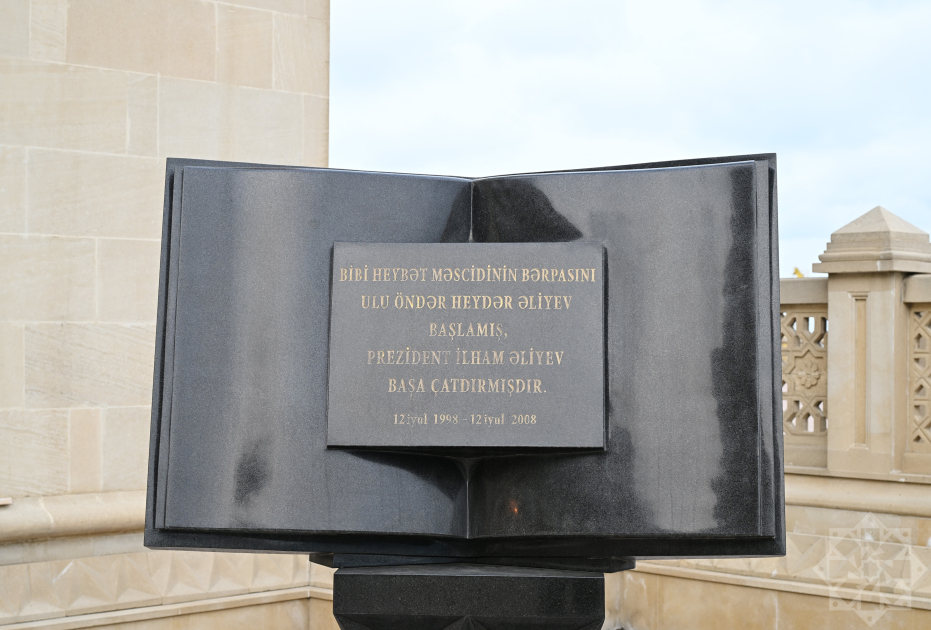
Following the restoration of Azerbaijan’s independence, the Bibiheybat Mosque and Shrine Complex was reconstructed under a decree signed by the country’s National Leader Heydar Aliyev. Built in the classical Eastern architectural style, the mosque’s interior is entirely clad in white marble. The complex features two minarets, including the “Heydar Minaret,” named after National Leader Heydar Aliyev. The mosque can accommodate up to 3,000 worshippers at a time.
Today, the site serves not only as a place of worship but also as a center of cultural and spiritual connection. Visitors come to pray, find tranquility, and regard the mosque as a sanctuary of faith and devotion.