
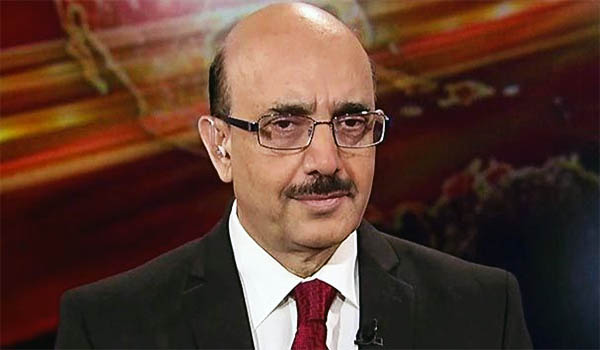
WNAM REPORT: Sardar Masood Khan, former Ambassador of Pakistan to the United States, China, and the United Nations, has welcomed the extension in the ceasefire between the United States and Iran, describing it as a “vital window of opportunity” for diplomacy to prevail over conflict.
He commended the leadership of Prime Minister Shehbaz Sharif and Chief of Defence Forces Asim Munir for their tireless efforts in facilitating dialogue, reducing tensions, and steering complex negotiations at a critical juncture. He noted that Pakistan’s diplomatic outreach and mediation have played a pivotal role in sustaining engagement between the two sides and preventing further escalation.
Sardar Masood Khan emphasized that Pakistan’s role as a mediator reflects its growing stature as a responsible and proactive actor in global peacebuilding. He highlighted that the country has successfully mobilized regional and international support, while maintaining continuous engagement with both Washington and Tehran to build trust and narrow differences.
Welcoming the ceasefire extension, he stated that it provides an essential breathing space for the parties to move towards structured negotiations. However, he cautioned that the situation remains fragile, with both sides continuing to employ coercive diplomacy and strategic signaling to gain leverage.
He observed that the Strait of Hormuz remains a central flashpoint, with its opening and closure directly impacting global energy markets and maritime security. Confidence-building measures, including easing blockades and ensuring freedom of navigation, he said, could help create a conducive environment for meaningful dialogue.
Sardar Masood Khan further noted that despite conflicting narratives and mutual accusations of ceasefire violations, there remains a viable pathway towards negotiations. He stressed that Pakistan is fully prepared to host and facilitate the next round of talks, with all necessary arrangements already in place.
Underscoring the broader implications, he warned that any collapse of diplomatic efforts would not only reignite conflict but also trigger severe economic and geopolitical consequences worldwide. “If Pakistan’s mediation fails, it will not be Pakistan’s failure—it will be the failure of the entire international community,” he reiterated.
Concluding, he expressed cautious optimism that sustained engagement, combined with political will on both sides, could transform the current pause in hostilities into a durable peace framework, reinforcing Pakistan’s role as a bridge for dialogue and a champion of global stability.