
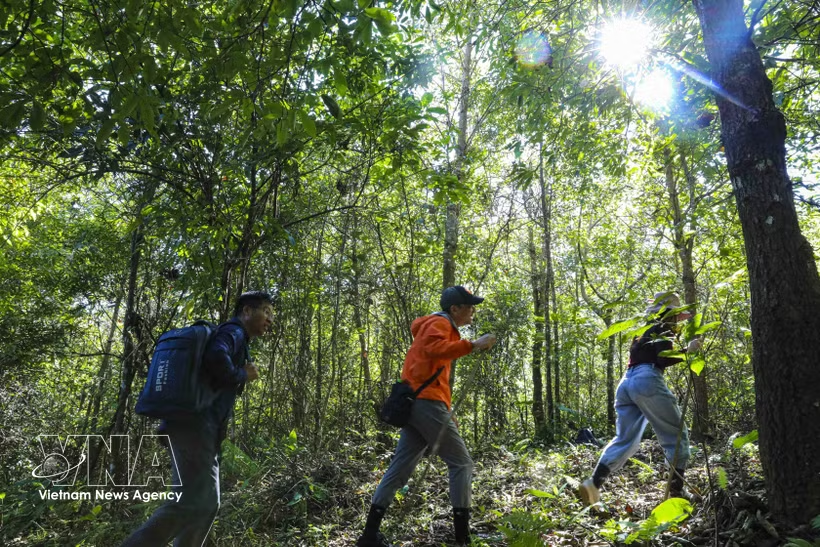
WNAM REPORT: Vietnam has, for the first time, introduced a national standard for adventure tourism, outlining requirements for hiking and trekking activities, with a strong focus on the safety of participants, group leaders and support staff.
The country’s adventure tourism sector is expanding rapidly, drawing young travellers and international visitors to activities such as trekking, caving, kayaking and paragliding. However, safety and management challenges remain. The newly issued national technical standard TCVN 14602:2026 – ISO 3021:2023 is seen as a significant step towards bringing greater consistency and oversight to the sector, particularly in hiking and trekking.
Tran Hau Ngoc, Vice President of the Commission for Standards, Metrology and Quality of Vietnam (STAMEQ), highlighted that the standard requires comprehensive risk assessments before any activity takes place, covering terrain, weather, route difficulty and emergency preparedness, while also guiding the matching of routes to suitable participant groups.
The framework marks Vietnam’s first unified set of rules for hiking and trekking, introduced amid a spate of mountain-related accidents. It is expected to improve risk control and guide the sector towards safer, more sustainable growth. Previously, the absence of common standards meant risks often fell on travellers, with accountability unclear when incidents occurred.
The standard also introduces clear criteria for grading routes by characteristics and difficulty, acting as a “filter” to raise industry standards and phase out poorly managed operators. It further sets high requirements for the qualifications and ongoing training of guides and group leaders, who play a central role in managing risks on site and ensuring participants are fully informed.
Pham Hai Quynh, Director of the Asian Tourism Development Institute (ATI), said the new rules are likely to shift competition in the sector from price to safety and professionalism, and should eventually be tied to licensing conditions to strengthen risk management and support sustainable development.
Despite growing demand, many adventure tours in recent years have been run informally or semi-professionally, lacking standardised safety procedures and weather monitoring, leading to cases of travellers getting lost, exhausted or injured. This has reinforced the urgency of implementing the new standard.
Quynh noted that TCVN 14602:2026 provides both a legal and technical foundation for businesses to enhance accountability and improve safety, while helping position Vietnam as a reliable and professional destination. The standard also extends to third parties such as equipment suppliers, transport providers and local service operators, creating a comprehensive “safety value chain”, alongside stricter requirements for guide credentials and equipment inspections.
Experts believe that, given Vietnam’s natural advantages, adventure tourism offers strong potential to attract international visitors. The adoption of the standard is expected to streamline operations, improve service quality and support informed consumer choices, while aligning the sector with international practices and fostering sustainable growth.
Environmental protection is also a key pillar, with the standard requiring trekking activities to follow “leave no trace” principles and minimise ecological impact, especially as many destinations face increasing pressure from rising visitor numbers.