
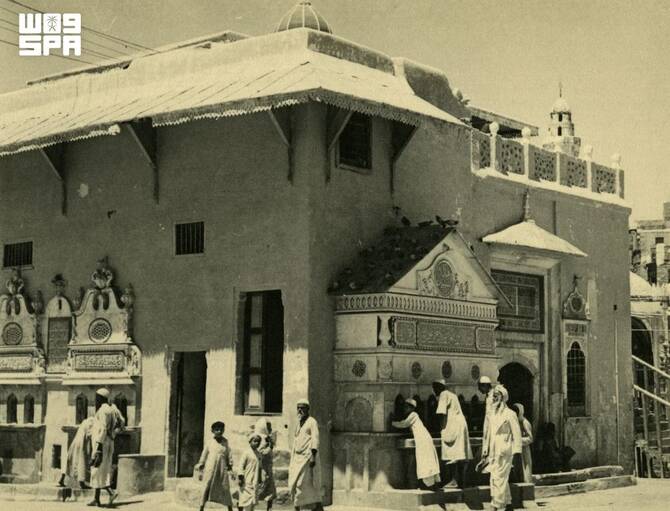
JEDDAH ( WNAM MONITORING): The tradition of serving Zamzam water to pilgrims is among the oldest professions linked to the Two Holy Mosques, dating back thousands of years to the rediscovery of the Zamzam Well by Abdul-Muttalib bin Hashim, the grandfather of Prophet Muhammad.
The responsibility for caring for the well and serving visitors later passed to his son Al-Abbas, establishing a service that became central to the Hajj and Umrah experience for centuries, according to the Saudi Press Agency.
Historically, Zamzam water was distributed by dedicated carriers who transported it throughout the Grand Mosque in Makkah and the Prophet’s Mosque in Madinah.
The water was stored in large clay jars, often perfumed with mastic and Taif rosewater to preserve freshness and add fragrance. Carriers moved through mosque courtyards with portable containers, serving worshippers by hand and delivering water to pilgrim accommodations across the holy cities.
As pilgrim numbers grew, the service evolved into a more organized system. According to the King Abdulaziz Foundation for Research and Archives, the Saudi state formally regulated Zamzam distribution under Hajj management regulations issued in 1926 during the reign of King Abdulaziz.
The king also ordered the construction of public Zamzam fountains, or sabeels, around the Grand Mosque in Makkah to improve access for pilgrims, the SPA reported.
Successive Saudi rulers continued expanding and modernizing the system. During the reign of King Abdullah, the Kingdom launched the King Abdullah Zamzam Water Project, introducing advanced purification, bottling, and transportation technologies.
The project includes automated monitoring systems, sterilization facilities, and a distribution network linked by about 4 km of stainless-steel pipelines.
Today, Zamzam water distribution combines deep-rooted Islamic tradition with modern infrastructure and technology. Automated bottling plants produce millions of bottles annually, while digital monitoring systems ensure water quality, safety, and efficient delivery to pilgrims in both Makkah and Madinah.
Despite the technological transformation, the service remains rooted in the same humanitarian mission that began centuries ago: ensuring pilgrims have easy access to Zamzam water throughout their spiritual journey.
Meeting peak Hajj demand
The Saudi Water Authority announced that more than 6.4 million cubic meters of water were distributed in Makkah and the holy sites from Dhul Hijjah 1 to 8 (May 18 to 25), as part of its operational plan for the Hajj season.
The authority said the Day of Tarwiyah alone recorded more than 883,640 cubic meters of water distribution, coinciding with pilgrims’ movement to the holy sites and increased demand, reflecting the sector’s readiness to manage peak phases efficiently.
It added that technical and laboratory teams conducted 4,625 tests on the Day of Tarwiyah across various sites to ensure water quality, safety, and compliance with health standards.
The water sector continues to implement its operational plans in coordination with relevant entities to ensure supply security and uninterrupted services in Makkah and the holy sites, enabling pilgrims to perform their rituals with ease and peace of mind.