
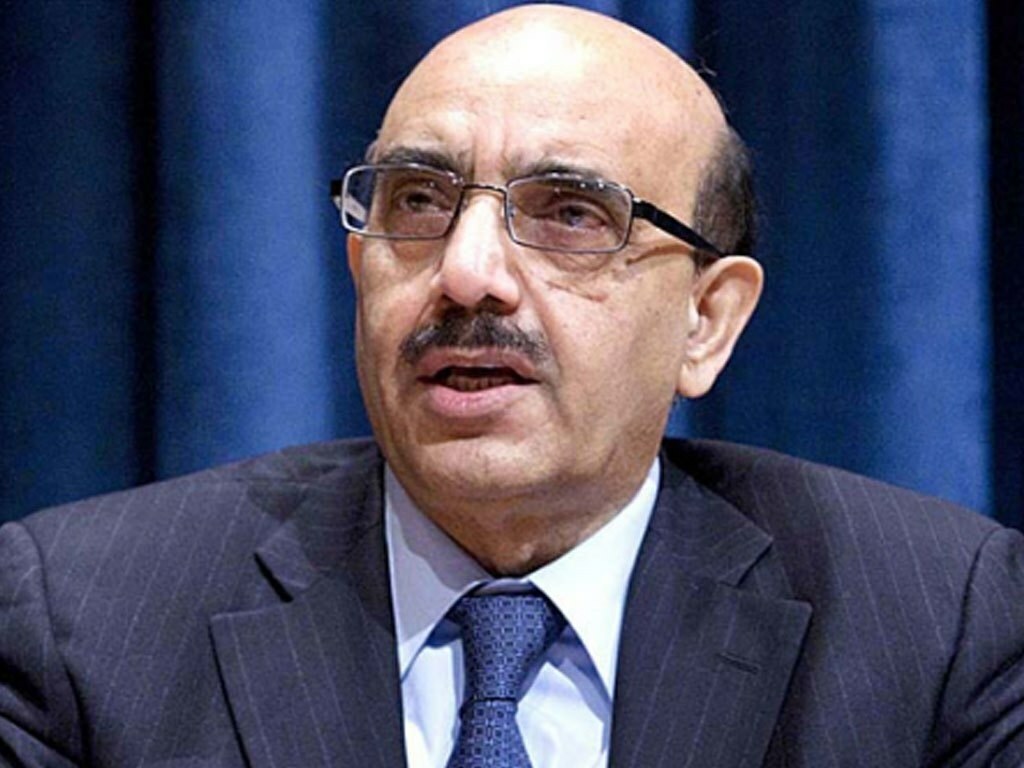
ISLAMABAD ( WNAM REPORT ): Former Ambassador of Pakistan to the United States, China and the United Nations, former President of Azad Jammu and Kashmir, Sardar Masood Khan, has said that the evolving Indo-Pacific geopolitical landscape is increasingly defined by the contest between major power rivalry and the quest for middle power autonomy, where countries such as Pakistan and Australia are navigating complex strategic, economic, and technological pressures while seeking to preserve independent policy space.
Speaking at a Futures Workshop on Shifting Geopolitics in the Indo-Pacific and Middle Power Autonomy, he said the concept of the Indo-Pacific has become a central strategic construct in global politics. He noted that the term, first coined by Indian naval strategist Gurpreet Khurana in 2007, was later advanced by former Japanese Prime Minister Shinzo Abe and subsequently adopted by the United States during 2017–2018 under President Donald Trump, leading to the renaming of the United States Pacific Command as the United States Indo-Pacific Command. He added that Pakistan and China continues to prefer the term Asia-Pacific, reflecting its broader and more inclusive regional outlook.
Sardar Masood Khan observed that while the Indo-Pacific framework reflects emerging maritime and strategic realities, it has also acquired significant geopolitical overtones and is viewed by some countries, particularly China, as part of a broader containment strategy. He noted that the region’s evolving security architecture is increasingly associated with arrangements such as the QUAD and AUKUS, while China has responded through initiatives including the Belt and Road Initiative (BRI) and the Global Security Initiative (GSI).
He observed that middle powers are increasingly defined not by traditional military dominance but by strategic flexibility, niche diplomacy, maritime engagement, climate cooperation, and regional influence. In this context, he said traditional middle powers such as Australia, Canada, and Sweden coexist with emerging middle powers including Pakistan, Indonesia, Türkiye, and South Africa, all attempting to expand diplomatic and economic room for manoeuvre in a rapidly shifting global environment.
Highlighting the Australia–Pakistan comparison, he noted that Australia remains deeply embedded in Western alliance systems while simultaneously maintaining strong economic linkages with China. Pakistan, by contrast, has historically pursued a balancing strategy between the United States and China, resisting binary alignments and seeking equilibrium in its external relations. He emphasized that both countries illustrate the structural constraints faced by middle powers operating within great-power competition.
Sardar Masood Khan said that despite vast differences in size and economic scale, Pakistan and Australia demonstrate growing complementarities in trade, investment, education, and maritime cooperation. He pointed to collaboration in mining, particularly at Reko Diq, expanding educational exchanges, and institutional mechanisms such as joint trade frameworks as evidence of deepening engagement. He also highlighted naval cooperation in the Indian Ocean and participation in multilateral maritime security initiatives as areas of shared interest.
He further noted that the future of global power will be increasingly shaped by disruptive technologies, including artificial intelligence, quantum computing, cyber systems, autonomous platforms, biotechnology, advanced semiconductors, and space-based capabilities. These developments, he said, are simultaneously widening technological gaps and creating new opportunities for niche specialization among middle powers.
Warning of emerging risks, he observed that technological asymmetries may deepen dependency and create new vulnerabilities in critical infrastructure and defence systems. However, he added that the same transformations also lower barriers to entry and enable smaller states to carve out strategic advantages through targeted innovation and human capital development.
Concluding his remarks, Sardar Masood Khan said the emerging international order is neither unipolar nor fully multipolar but fluid and catalytic. He stressed that middle powers must move beyond binary choices and instead diversify partnerships, strengthen economic resilience, invest in technology, and exercise diplomatic flexibility.
He underlined that the defining question for the future is whether middle powers will construct an independent network of cooperation or remain loosely embedded within structures shaped by great-power competition.