
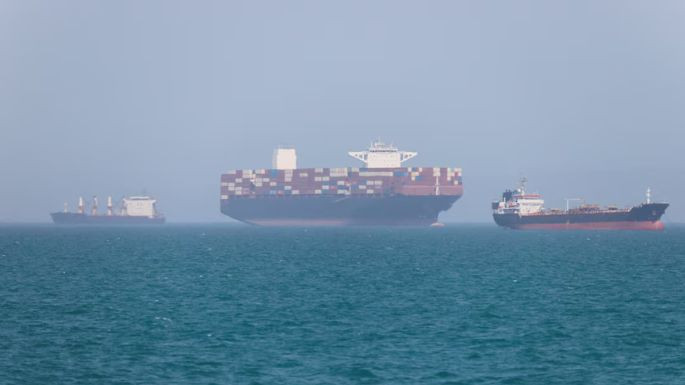
The recent cessation of military hostilities in the Middle East, followed by active negotiations in Switzerland with Pakistan as mediator, has yet to substantively resolve the underlying strategic tensions between the United States and Iran. The renewed escalation between the two parties has once again underscored the critical importance of sustainable peace and stability in the Middle East disrupting economies, communities, enterprises, and the eco-environment across the region.
Despite persistent diplomatic efforts and mediation, the weaponization of maritime pathways has become a bitter reality, holding the blue economy, seamless supply chains, oil and gas flows, and food security hostage, both within the Middle East and beyond.

Zulkafil Hassan khan
In stark contrast, the pause in hostilities has highlighted the strategic significance of the Strait of Hormuz, which has emerged as a primary point of geographical contestation between the two nations. The struggle for control of the Strait has triggered a series of retaliatory strikes, deemed a violation of Article 5 of the Memorandum of Understanding (MOU), and ultimately threatened to push the agreement to a breaking point.
It is crucial to note that the weaponization of this maritime route was initiated by Iran, severely disrupting the global economy and the shipping industry in a significant violation of international law. The Strait of Hormuz qualifies as an international strait, connecting the Persian Gulf to the Gulf of Oman and the Arabian Sea, and linking the high seas on both ends, thereby falling within the definition of an international strait under the United Nations Convention on the Law of the Sea (UNCLOS).
This legal status grants ships a right of transit passage through the Strait, protected by both international law and the law of naval warfare. However, following Israel’s attack on Iran, Tehran blocked the Strait to most maritime traffic, triggering mounting global economic consequences and transforming one of the world’s most vital waterways into a pawn in the conflict.
Regrettably, Iran has primarily relied on automatic moored mines and drifting mines, with reports estimating that approximately 80 such mines have been deployed in the center of the Strait. This operation by the Islamic Revolutionary Guard Corps (IRGC) is unequivocally unlawful under the law of naval warfare and customary international law. The Hague Convention VIII of 1907 reinforces this assessment: Article 1 forbids the laying of automatic contact mines unless they are constructed to become harmless within one hour of a belligerent losing control over them. Moreover, Article 2 expressly prohibits the laying of automatic contact mines off the coast and ports of the enemy with the sole object of intercepting commercial shipping. Iran deployed moored contact mines with the specific purpose of halting all commercial traffic, directly violating these international legal provisions.
International law further imposes an absolute duty on belligerents to provide proper notification of mining operations to neutral states. This requirement is reiterated in Article 3 of The Hague Convention VIII, which stipulates that belligerents must inform ship owners of mine-laying operations through advance notice detailing the precise locations of minefields. Such information must also be communicated to governments through diplomatic channels, enabling neutral vessels to secure their right of safe passage. Iran has failed to satisfy this obligation.
There is an absence of clear, public, and diplomatically communicated notification specifying the exact location of the mines, leaving neutral vessels navigating the Strait without knowledge of the hazards they may face. Instead, Iran and the IRGC issued general warnings that ships entering the Strait without prior authorization would be attacked or encounter mines. Mere warnings or the imposition of a requirement to seek Iranian permission are not equivalent to notifying minefields.
The legal obligation demands the disclosure of exact and precise mine locations, communicated to relevant authorities and neutral states to protect neutral navigation, not a simple declaration that the area is hazardous.
Compounding these violations, contact mines are inherently indiscriminate. They cannot distinguish between enemy naval vessels, neutral ships, or humanitarian assistance, rendering their deployment in such a strategically vital chokepoint particularly egregious.
It is essential to consider the Strait’s unparalleled significance: it is arguably the world’s most critical maritime passageway, through which approximately 20 percent of the global oil supply and a major share of global liquefied natural gas (LNG) transit.
The mining has severed the global energy supply, delayed the trade of manufactured goods, forced commercial traffic into perilous alternative routes, and sent shockwaves through international supply chains. The cascading effects have contributed to elevated oil prices, global inflation, and slower economic growth. Moreover, the blockade of the Strait of Hormuz is disproportionately damaging regional states, societies, and systems, exacerbating inflation, price hikes, and budgetary deficits.
In summary, the United States and Iran must avoid further escalation and commit fully to the true spirit of the signed MOU to achieve the desired goals of regional peace, stability, and harmony. For its part, Iran should remove all contact mines from the Strait of Hormuz to ensure the safety and security of oil and gas vessels. Resorting to violations of international law as a tool of retaliation is a deeply counterproductive strategy and must be discouraged and discontinued.
(Opinions expressed in this article are the author’s own and do not necessarily reflect the editorial policy of WNAM).