
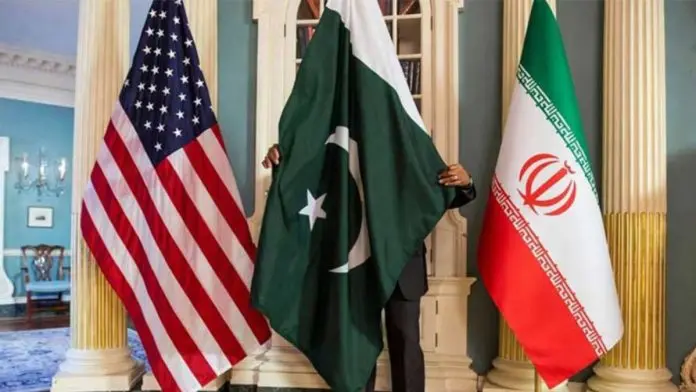
ISLAMABAD ( WNAM REPORT ): Pakistan remains a trusted channel between Washington and Tehran,” said Sardar Masood Khan, former Ambassador of Pakistan to the United States, China and the United Nations, and former President of Azad Jammu and Kashmir, describing Pakistan’s renewed mediation efforts as a significant diplomatic opportunity to bring the United States and Iran back to the negotiating table and prevent further escalation.
In a television interview , Sardar Masood Khan said the latest US sanctions campaign against Iran should primarily be understood as a pressure tactic aimed at persuading Tehran to resume negotiations rather than as preparation for renewed military hostilities. He said the United States had already employed significant military pressure and was now using economic measures as an additional lever.
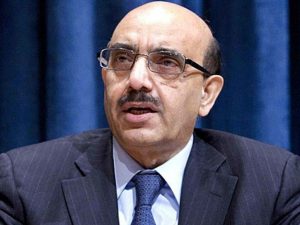
Sardar Masood Khan
Sardar Masood Khan said the sanctions, reportedly extending to financial and commercial networks involving around 100 countries, could have consequences beyond Iran. He noted that countries including China, India, Pakistan and several Gulf states could also experience economic repercussions because of their financial and trade linkages with Iran.
He said the continued existence of the Memorandum of Understanding between Washington and Tehran was an encouraging sign, as neither side had completely abandoned it as a possible framework for further negotiations. He observed that the latest developments indicated that both sides remained open to diplomacy despite their deep differences.
Sardar Masood Khan said Pakistan deserved credit for helping revive diplomatic engagement at a time when the international community was losing hope that mediation could succeed. He said Field Marshal Asim Munir’s visit to Tehran had facilitated communication between the two sides and helped persuade them to consider returning to direct negotiations.
He emphasised that Pakistan’s role was particularly significant because Islamabad continued to enjoy the confidence of both Washington and Tehran. He said Pakistan had been involved in the most sensitive stages of the diplomatic process, alongside other mediators including Qatar, Oman and Iraq.
Sardar Masood Khan identified the Strait of Hormuz as the immediate stumbling block in the negotiations. He said an understanding on freedom of navigation, the removal of the naval blockade and easing of sanctions would be essential for creating an environment conducive to broader negotiations.
He said reopening the Strait of Hormuz and establishing a ceasefire could have substantial economic benefits for Pakistan by reducing energy pressures, improving trade prospects and creating opportunities for greater investment from the Gulf, Iran and wider West Asia.
He cautioned, however, that significant challenges remained, particularly over Iran’s nuclear programme, sanctions, frozen assets, uranium enrichment and existing stockpiles. He said the ultimate objective should be an agreement acceptable to Iran, the United States and the broader international community.
Sardar Masood Khan stressed that a stable US-Iran relationship would benefit not only the two countries but the entire region and international community, adding that Pakistan’s mediation could help prevent further escalation and open the way for a durable diplomatic settlement.