
WNAM MONITORING: Pakistan is trying to broker a fresh 60-day period to reach a final agreement to end the months-long war between the US and Iran under the Islamabad Memorandum of Understanding, Pakistani government sources told on Wednesday.
The proposed timeline aims to “revive talks” on the reopening of the Strait of Hormuz and the lifting of sanctions against Tehran, said the sources, who asked not to be named as they were not authorized to speak to the media.
There is no official confirmation about the new proposal by Pakistan from either Washington, Tehran or Islamabad.
The new phase of talks proposed by Islamabad comes after the initial 60-day deadline expired last week, with no word from either side on whether to extend it or not.
The sources, however, insisted that the two sides tacitly agreed not to launch fresh hostilities despite the expiry of the previous deadline, which began on June 17 and ended on Aug. 16.
The fresh development comes following the latest visit of Pakistan’s army chief Field Marshal Asim Munir to Tehran, where he discussed new proposals with Iranian leadership, focusing on the revival of long-stalled direct talks with the US and reopening of the Strait of Hormuz, the sources said.
Pakistan’s Interior Minister Mohsin Naqvi, who accompanied Munir in Tehran, said “significant progress” had been made following the latest trip as part of Islamabad’s renewed push for the resumption of direct talks between the US and Iran.
The crucial trip came as the US launched a new economic sanctions regime against Tehran, affecting Iran’s trade.
Seyed Mehdi Tabatabaei, a spokesman for the Iranian President’s Office, said Tuesday that Munir’s visit was “highly productive” and yielded “significant diplomatic achievements,” with results to “become apparent soon.”
Pakistan, the sources added, has proposed another 60-day period, with immediate resumption of stalled direct talks to reach a framework for reopening of the strait and lifting of sanctions in the first phase.
US proposes lifting of ‘sizable part’ of economic sanctions on Tehran
Pakistan’s army chief also conveyed to the Iranian leadership the fresh US proposal seeking reopening of the strait in exchange for lifting of “a sizable part” of economic sanctions on Tehran, according to the sources.
“The two sides are exchanging messages through Islamabad (on new proposals) to reach a preliminary framework before announcing the extension and revival of direct talks,” the sources, familiar with the latest developments, said.
The sources, however, acknowledged that fundamental differences between the two sides on ceasefire violations and Iran’s support to Hezbollah and Houthis still persist.
The US, according to the sources, wants revival of direct talks and reopening of the Strait of Hormuz simultaneously, whereas Iran is sticking to its demand for halting ceasefire violations by Israel, mainly in southern Lebanon, before reopening of the strait.
“Tehran has shown a positive gesture to the new proposals, however, no specific terms have yet been reached on the key issues,” another source said, referring to reopening of the Strait Hormuz and lifting of sanctions.
Pakistan’s army chief, the sources further said, invited the Iranian negotiators to Islamabad to reopen talks with the US.
“Doha option is also there,” said the sources, referring to any possible meeting in Qatari capital.
Pakistan’s mediation role
Pakistan has remained the main mediator between Iran and the US throughout the war that began on Feb. 28 and has maintained close contact with both sides.
The US and Iran signed the Islamabad Memorandum of Understanding on June 17 and launched negotiations toward a final agreement. However, the talks later stalled over disagreements on security guarantees and freedom of navigation through the Strait of Hormuz, one of the world’s most strategic routes for global energy supplies and trade.
Between July 8 and July 24, the US and Iran exchanged military strikes, with Washington launching attacks on targets inside Iran and Tehran responding by striking US military facilities and equipment in several Arab countries, including Jordan, Bahrain and Kuwait.
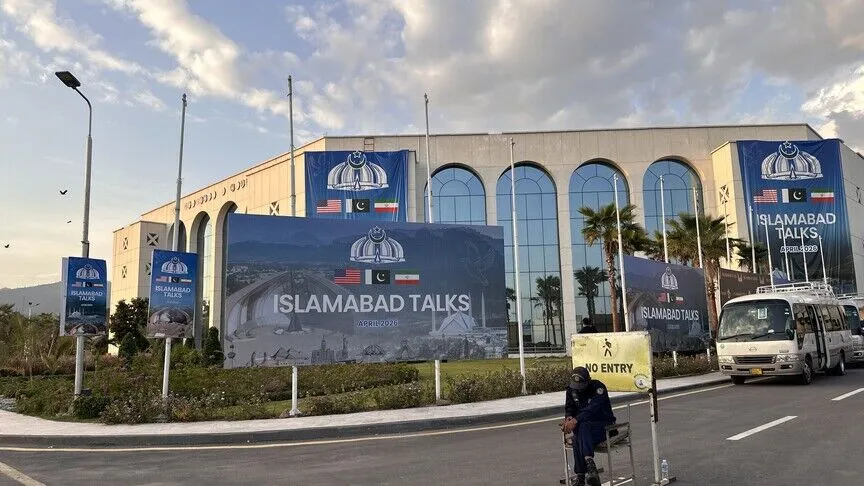
After securing a ceasefire on April 8, Pakistan hosted the highest-level direct talks between the US and Iran since they broke diplomatic ties in 1979. The talks, held in Islamabad on April 11-12, ended inconclusively.
Since the US and Israel launched a war on Tehran on Feb. 28, more than 3,500 people, both civilians and soldiers, have been killed in Iran.
Tehran has hit US bases and assets in the Middle East, and the Pentagon has confirmed 18 deaths and 756 injuries among its personnel during the war.