
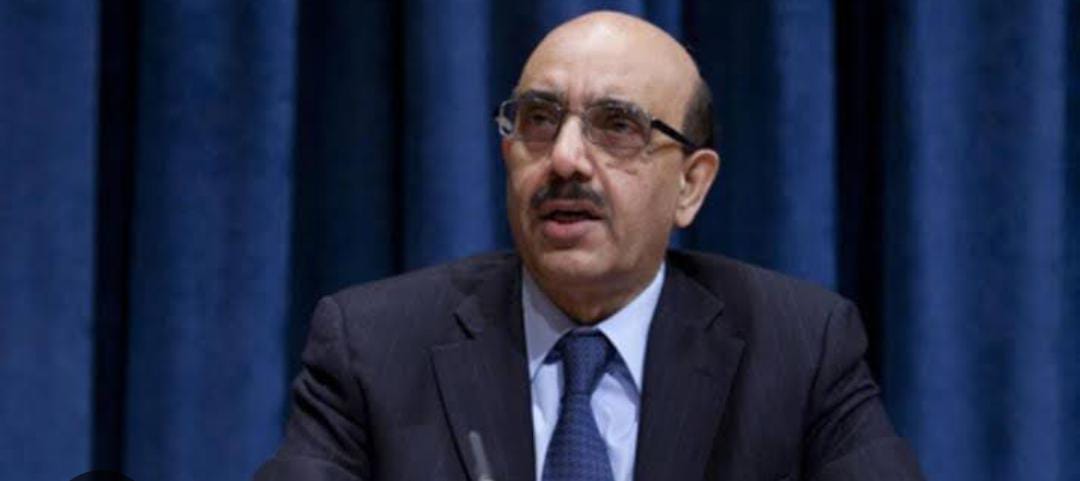
WNAM REPORT: The Shanghai Cooperation Organisation (SCO) must develop stronger regional mechanisms to counter terrorism, particularly the threats emanating from Afghanistan, as terrorism has become a shared security challenge for Pakistan, China, Russia and Central Asian states, said Sardar Masood Khan, Former Ambassador of Pakistan to the United States, China and the United Nations, and former President of Azad Jammu and Kashmir.
Speaking about the recent SCO meeting hosted by Pakistan, Sardar Masood Khan said the joint condemnation of strikes against Iran by Pakistan, China, Russia and India was significant, particularly because India had joined such a condemnation for the first time. He noted that Iran’s membership of the SCO also contributed to the importance of the collective position.
He said the Regional Anti-Terrorist Structure (RATS), a subsidiary body of the SCO, was an appropriate forum for addressing regional security concerns. According to him, India’s participation in the consensus demonstrated the significance of the platform in bringing member states together on issues affecting regional stability.
Sardar Masood Khan stressed that Pakistan itself remains among the principal victims of terrorism and continues to face attacks across the country, particularly in Balochistan and Khyber Pakhtunkhwa. He said the scale of the losses demonstrated that Pakistan was paying a heavy price in its fight against terrorism, with security personnel and civilians among those affected.
He said the SCO countries had genuine reasons to regard terrorism as a common regional threat and that the situation in Afghanistan had remained a permanent item on the organisation’s agenda since 2001. China faces security concerns linked to militant and separatist elements operating from Afghanistan, while Russia remains concerned about the potential spread of terrorism and narcotics trafficking through Central Asia towards Russia and Europe.
Sardar Masood Khan said RATS had identified terrorism, separatism and extremism as the “three evils” requiring collective attention. However, he observed that the SCO currently lacked a sufficiently developed mechanism to effectively counter these threats, underscoring the need for stronger regional cooperation.
Turning to Pakistan’s defence cooperation with Saudi Arabia and Türkiye, he said Pakistan had already supported Saudi Arabia during the conflict by deploying aircraft, including JF-17s, and drones. However, he noted that the precise triggers and thresholds for activating the strategic mutual defence arrangements between Pakistan and Saudi Arabia, as well as the trilateral Pakistan-Saudi Arabia-Türkiye agreement, had not yet been clearly identified.
Sardar Masood Khan said the regional security environment remained fluid and required continued diplomatic engagement alongside security cooperation, particularly through multilateral platforms capable of addressing terrorism as a shared regional challenge.