
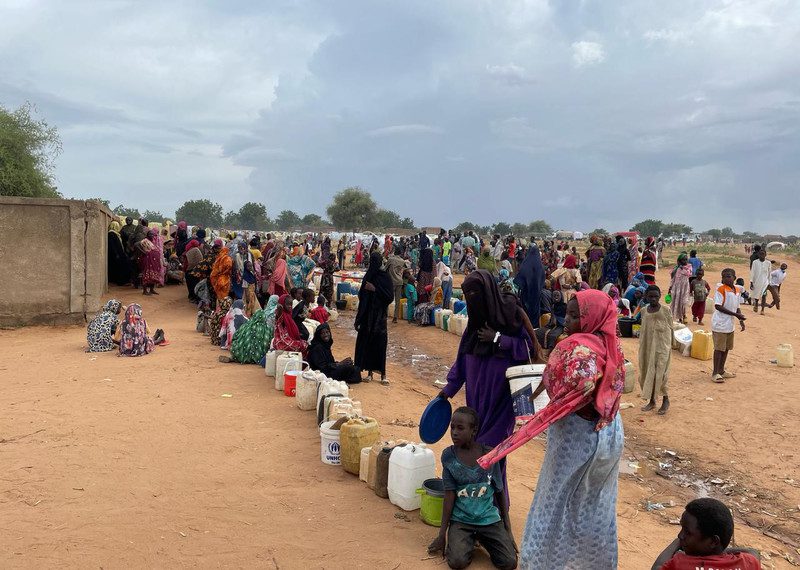
Sudan, a country once full of optimism after its independence, is now facing one of the most tragic humanitarian crises in the world. Prolonged fighting between rival forces have destroyed towns, pushed million of people from their homes, According to the United Nations (OCHA), more than 10 million people have been displaced within and outside Sudan since the conflict began in April 2023. Families now live in continuous fear as hospitals, schools, and markets are destroyed by violence and poverty.so far, the world give minimal attention-the voices of Sudan’s people are often lost behind the scenes this tragedy is not only about War.it shows the daily fight of common people to live with pride and respect in a land where kindness and compassion are vanishing.
The crises in Sudan begin in April 15, 2023, when two powerful military leaders the Sudanese Army (led by General Abdal Fattah al-Burhan) and the Rapid Support Forces ((led by Mohmed Hamdan Dagalo, know as Hemedti) started fighting each other for control of the Country. This conflict over authority destroyed peace and created unrest across Sudan. As cities turned into Conflict area, people lost their homes, jobs, and families. The crises is important because it shows how political greed can destroy a nation and how innocent people suffer when leaders fight for power.it also remind the world of its duty to help those who are victims of war and hunger.
The war in Sudan has created countless refugees, forcing families to cross borders in search of safety. Shelters in neighboring states can no longer hold refugees, and many people live without proper food or shelter. Hunger has become a part of everyday life in Sudan, as markets are destroyed and food prices keep rising. According to the World Food Program (WFP), around 25 million Sudanese – more than half of the country’s population face serve hunger and food insecurity. The Country’s economy has collapsed, human rights violations have increased-civilians are attacked and women Children suffer the most, and medical Centers are being destroyed. The situation in Sudan reveals how a struggle for power can transform into a humanitarian disaster affecting every corner of society.
The situation in Sudan in not unique similar crises have already unfolded in other parts of the world such as Syria and Yemen, where civil war have caused massive devastation and human suffering.
The ongoing war in Sudan display several common traits with the conflict that destructed Syria and Yemen. All three countries have faced long periods of internal conflict, political instability, and deep humanitarian crises. Power struggle between rival groups have weakened their governments and sabotage public institutions, leaving ordinary people to survive in fear and poverty.
Like the Syrian conflict, Sudan’s crises started with political conflict that convert into violent clashes. Both nations experienced severe damage, loss of life and large-scale forced migration. Cities such as Aleppo in Syria and Khartoum in Sudan were turned into warzone, forcing millions to leave their homes. International bodies have continuously appealed for peace, yet their efforts have been unable to prevent the violence.
According to the World Health Organization(WHO) latest report that 70% of hospitals in conflict zone are out of service, and many of health workers have been killed or injured while on duty.
The war in Yemen also reflects a similar image. Continuous conflict among government and Houthi rebels, along with external involvement, pushed Yemen into critical food shortage and poverty. Sudan now facing the same pattern, where civilians especially women and children suffers the most hunger crises, dieses and insecurity.
Collectively, these crises show how internal power struggles and weak global response lead to prolonged instability and human pain.
The Sudan conflict has also disturbed the surrounding African countries. Thousands of refugees have fled toward nearby countries like Chad, Egypt and South Sudan creating heavily burden on nearby nations. The continuous conflict threatens trade routes, food supply, and regional stability. Analysts warn that if Sudan remains unstable it may spread into other weak African states transforming a national conflict into regional threat.
According to the s (UNHCR), estimate that over 1.8 million refugees have crossed into near by regions.
According to me, after the ongoing humanitarian disaster in Palestine the Sudan internal conflict show that the world is slowly becoming blind to civilian suffering. In both regions, civilians are victim of killing and forced migration. So far international community stays passive and politically divided. It feels as if the worth of human life seems forgotten and international institutions appear powerless to act. If this global indifference continues then the acceptance of genocide as normal might it become horrible reality of our time.
In conclusion Sudan ongoing human disaster stand as a harsh reminder of how political power struggle can destroy nations and human lives. Thousands of innocent people continue to face starvation, migration, and armed conflict. While the world watches with limited action. The global community’s delayed reaction show the weakness of global institutions in preventing human suffering. Sudan’s situation, much like Syria and Yemen, exposes the world failure to protect civilians and ensure peace. Yet, amid all the destruction, there remains a faint chance for rebuilding and stability if global powers take real responsibility and act together. Humanity cannot afford to stay silent while millions suffer. The crises in Sudan must not become another forgotten tragedy it should serve as appeal for empathy, cooperation, and justice.