
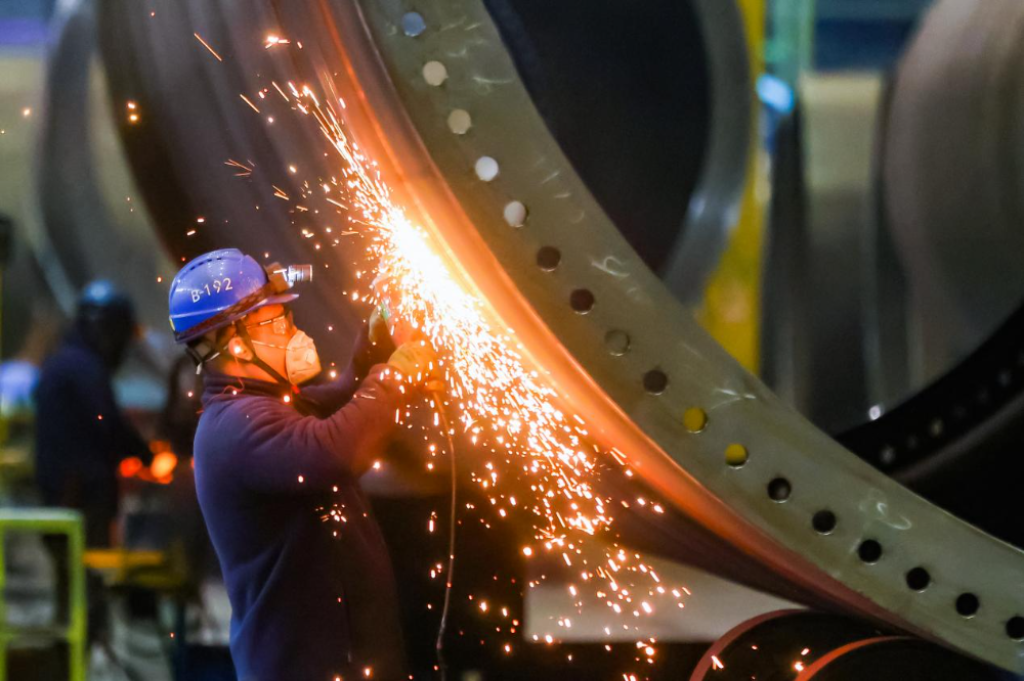
WNAM REPORT: Amid rapid changes in the geopolitical arena and the transformation of global market conditions, support for the real sector is becoming a key direction of state policy.
China’s experience accumulated in this area is distinguished by consistency and a strategic approach.
At the 2019 session of the National People’s Congress, Xi Jinping emphasized that engaging in the real sector with diligence and full dedication is a shared responsibility. In the following years, this idea became a fundamental principle of the country’s economic policy.
The “Jinjiang Experience”, formed in Fujian Province, plays an important role in the development of China’s private economic sector. Its foundation lies in long-term strategic thinking, production discipline, and the deep refinement of specific product types.
For decades, local entrepreneurs have entered global markets by improving the quality of “one pair of shoes” or “one garment”. This is not a pursuit of quick profit, but a choice of a strategy for the sustainable development of industry. The direct result of such a consistent policy has been the creation of industrial clusters, the introduction of innovative technologies, and the production of export-oriented goods. This approach has made the real sector the main direction of the economy.
In recent years, China’s processing industry has demonstrated steady growth rates. During the implementation of the 14th Five-Year Plan for the country’s socio-economic development (2021-2025), the consistent increase in industry’s value added confirmed that the real sector has strengthened as a reliable pillar of national development.
As Xi Jinping emphasized, regardless of the stage of economic development, the real sector remains the foundation of the country’s competitiveness. Therefore, in the 15th Five-Year Plan for socio-economic development (2026-2030), the formation of a modern industrial system, the intellectualization of production, and accelerated environmental modernization have been identified as priority tasks.
Particular attention is drawn to the fact that strategic decisions do not remain merely on paper – they are reinforced through visits to the regions and practical analysis at production sites.
Uzbekistan is also consistently implementing reforms aimed at diversifying industry, creating high-value-added products, and increasing the share of export-oriented products. The development of the real sector has become one of the priority directions of the economic policy of “New Uzbekistan”.
Relations between Uzbekistan and China have reached the level of a strategic partnership. Joint projects are being implemented in the fields of industrial cooperation, green energy, mechanical engineering, and the chemical and textile industries. Enterprises with Chinese investment participation contribute to increasing localization and the introduction of new technologies.
As China’s experience shows, the consistent development of industry, support for the private sector, and technological modernization ensure sustainable growth rates. This creates a solid foundation for deepening economic cooperation between the two countries.
The development model based on the real sector demonstrates effectiveness even under conditions of global instability. As seen in China, the combination of strategic planning, political will, and production discipline ensures economic resilience.
For Uzbekistan, this experience has significant practical importance on the path toward industrial modernization and achieving higher positions in global value chains. Mutually beneficial cooperation in the real sector will help elevate economic relations between the two countries to a new level.