
ISLAMABAD ( WNAM REPORT): Leading journalists, climate experts, policymakers, academics and media educators on Thursday called for integrating green journalism into mainstream media discourse, saying informed and responsible reporting is essential for addressing the growing challenges of climate change, environmental degradation and sustainable development.
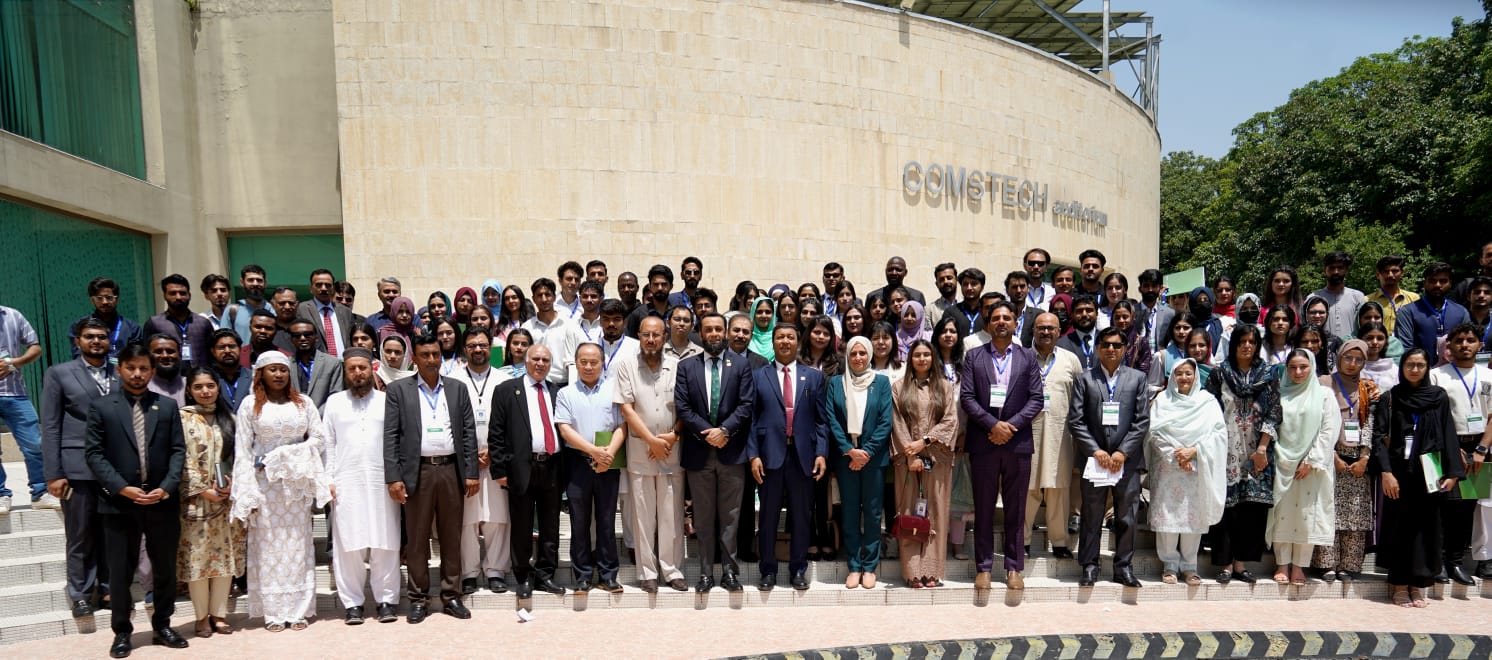
The consensus emerged during a one-day international conference on “Green Journalism: Media, Climate and Societal Responsibility,” jointly organized by OIC-COMSTECH and the Federal Urdu University of Arts, Science and Technology (FUUAST) at the COMSTECH Secretariat in Islamabad.
Federal Minister for Information and Broadcasting Attaullah Tarar, who attended the conference as chief guest, lauded COMSTECH and FUUAST for initiating an important national dialogue on climate communication and environmental responsibility.
He said green journalism has emerged as an effective tool for promoting environmental awareness and encouraging responsible societal behavior. Stressing the critical role of media in shaping public opinion, he noted that Pakistan, despite contributing only a small fraction of global carbon emissions, remains among the countries most vulnerable to climate change.
“Climate change is affecting every sector of society, and responsible journalism can play a vital role in informing citizens, influencing policy discussions and promoting environmental stewardship,” he said, assuring participants of the Ministry of Information’s support for initiatives aimed at strengthening climate awareness and environmental reporting.
In his keynote address, Coordinator General OIC-COMSTECH Prof. Dr. M. Iqbal Choudhary said climate change, biodiversity loss, desertification, water scarcity and food insecurity posed serious threats to many OIC member states. He observed that while developing countries contribute comparatively little to environmental degradation, they continue to suffer disproportionately from its consequences.
Prof. Choudhary emphasized that effective responses to climate challenges require close collaboration among media, scientists, policymakers and society. He said journalists have a crucial responsibility to communicate complex environmental issues in a manner that is understandable, evidence-based and relevant to public concerns.
Earlier, Vice Chancellor FUUAST Prof. Dr. Zabta Khan Shinwari underscored the importance of academic institutions in promoting environmental consciousness and responsible journalism. He said universities must play a leading role in preparing future journalists and communicators to address climate-related challenges through informed, research-based reporting and public engagement.
The conference brought together prominent journalists, environmental specialists, media scholars and students to examine the evolving role of journalism in addressing climate challenges.
The first panel, titled “Media, Climate Change and Environmental Realities,” featured renowned journalists Rauf Klasra, Mahnoor Qureshi, Javed Chaudhry and Azaz Syed, while Dr. Margaret Otieno of Kenya delivered an international keynote message. Speakers emphasized the need for fact-based climate reporting, stronger public awareness campaigns and greater media engagement with environmental issues.
A second panel on “Media, Climate and Societal Responsibilities” explored the intersection of journalism, environmental sustainability and social accountability, with experts presenting research on climate communication, environmental policy and public awareness.
The conference also included a student poster exhibition and documentary screening highlighting environmental challenges and innovative responses from academic institutions.
A dedicated session involving media faculty members and researchers discussed the integration of green journalism into university curricula, media education and professional training frameworks. Participants stressed the need to equip future journalists with the knowledge and skills required to report accurately on climate science, environmental risks and sustainability issues.
In concluding remarks, speakers agreed that climate change represents one of the defining challenges of the 21st century and that media institutions, universities, governments and civil society must work collectively to promote informed public discourse and support evidence-based environmental action.