
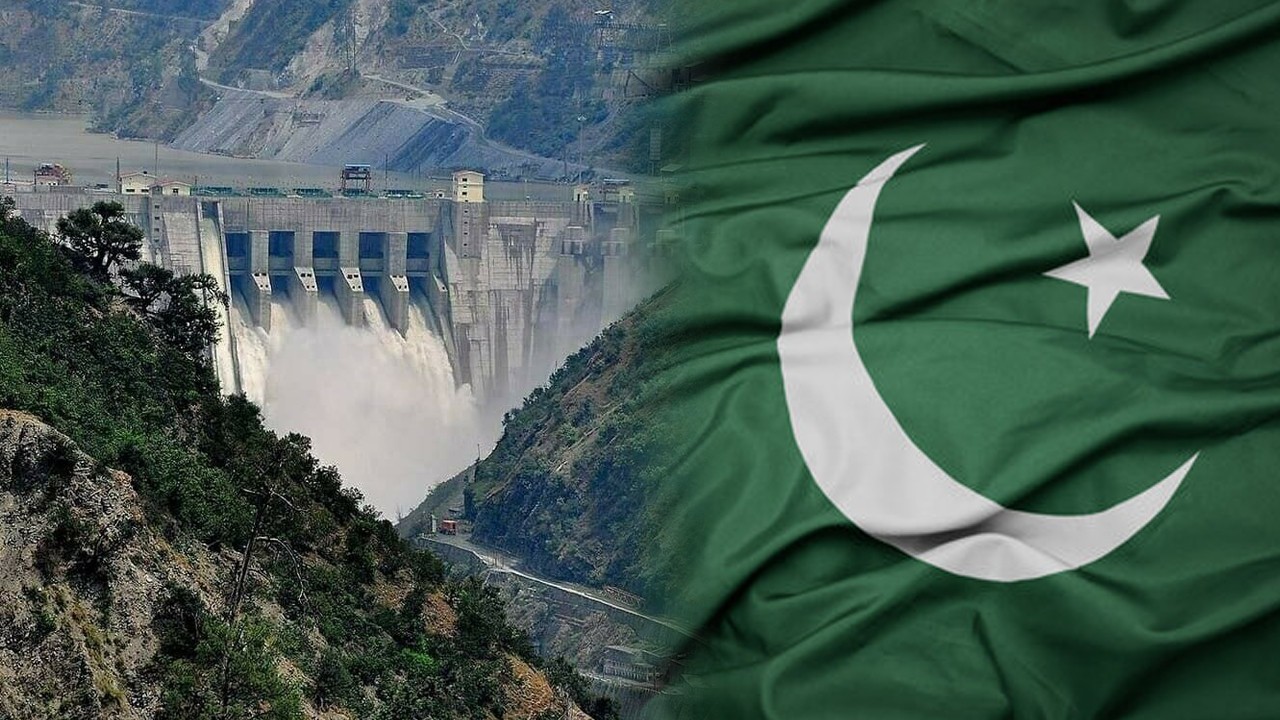
The Indus Waters Treaty (IWT), signed in 1960 under the auspices of the World Bank, has long been regarded as one of the most successful transboundary water-sharing agreements in modern history. Built on a rigid foundation, Article XII of the treaty explicitly ensures that none of the signatories can unilaterally pull out or withdraw from its obligations. However, recent geopolitical friction—marked by India’s announcement to place the treaty in abeyance following the 2025 Pahalgam security incident—has pushed this historical agreement into unchartered, dangerous waters. In this high-stakes standoff, a complex web of media narratives has emerged, often clouding the physical and legal ground realities.

Tauqir Ahmad
At the heart of Pakistan’s immediate security concerns is India’s aggressive pursuit of infrastructure on the Western Rivers.
Under the 1960 framework, Pakistan was allocated 80% of the Indus Basin’s total water share via the three Western Rivers: the Indus, Jhelum, and Chenab. India is under a strict legal obligation to let these waters flow unrestricted, save for limited, specific non-consumptive and agricultural uses.
While India maintains that its projects are permissible “run-of-the-river” designs, the building of four prominent dams on the Chenab River, alongside the strategic 8.7 km Chenab-Beas link tunnel at Koksar, tells a different story on the ground.
To downstream Pakistan, a mega-tunnel designed to channel water out of the upper Chenab system and drop it directly into the Beas basin feels less like structural optimization and more like the illegal diversion and stealing of its sovereign water allocation besides using it as bargaing chip.
To divert international and legal scrutiny from these structural violations, Indian media and state narratives have aggressively shifted the blame onto Pakistan’s internal vulnerabilities. This counter-narrative relies heavily on two primary arguments. New Delhi frequently claims that Pakistan actively utilizes only about 40% of its allocated share, allowing the remaining 60% to flow “wasted” into the Arabian Sea.
The media channels highlight Pakistan’s failure to expand its storage capacity, pointing to a severe lack of small and medium-sized dams, poor rainwater harvesting, and an inability to control an exponential population growth rate fluctuating between 2.7% and 3.0%. This combination, they argue, is the true culprit behind Pakistan’s depleting water tables.
While these domestic challenges require urgent, serious introspective consideration within Pakistan, they do not grant India a legal loophole. Internal mismanagement or demographic pressures in a downstream state never absolve an upstream state from its binding international treaty obligations.
The escalation of this dispute has triggered severe warnings. Pakistan’s leadership has communicated a clear red line: any permanent blockage or illegal abeyance of the Indus Waters Treaty will be interpreted as an act of war. Conversely, hawkish elements in India use these aggressive reactions to project Pakistan as an unstable aggressor on the global stage.
With both states holding nuclear capabilities, war is entirely off the table as it offers no winners but only mutual destruction. Ultimately, both nations will eventually be forced back to the negotiating table. Therefore, avoiding emotional and hasty decisions is vital; confrontational statements only serve the narrative India seeks to build , instead, a pragmatic “give and take” policy must be adopted through an out-of-the-box diplomatic strategy.
Since the Indus system originates in the Tibetan plateau, China, as the ultimate super-upper riparian state, must be actively engaged. Because changing water flows and regional instability directly threaten the multi-billion-dollar China-Pakistan Economic Corridor (CPEC) and shared regional ecology, turning the IWT from a fragile bilateral gridlock into a comprehensive trilateral treaty is the most tangible path forward. It provides a neutral, heavy-weight arbiter capable of binding both sides to physical ground realities rather than media-driven narratives.