
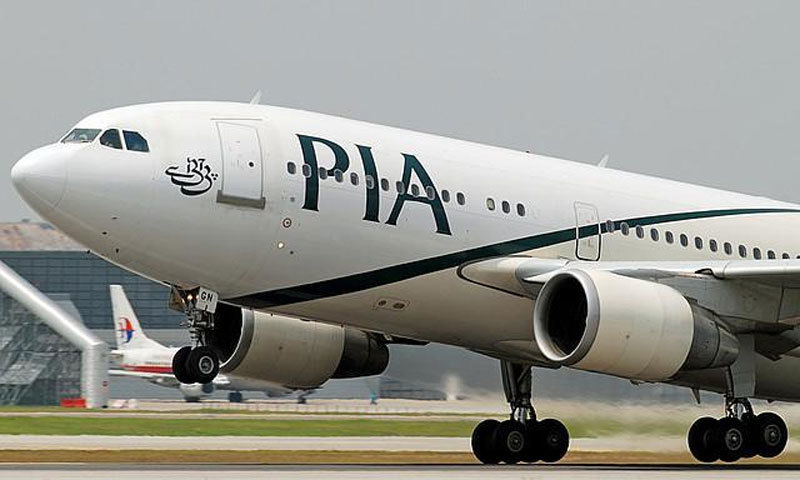
For decades, the phrase “Great people to fly with” was far more than a marketing tag. It was indeed an international standard. During its glory days, Pakistan International Airlines (PIA) represented elegance, innovation, and state-of-the-art aviation. Today, looking back at the journey of Pakistan’s national flag carrier offers both a sense of deep pride for what once was and a sober lesson in how political interference and institutional neglect can dismantle a global leader.
The Golden Era – When PIA Taught the World to Fly

Tauqir Ahmad
In its prime through the 1960s and 1970s, PIA was widely recognized as one of the finest airlines in the world. Boasting a modern fleet and an unblemished reputation for hospitality and safety, its operational standards were the envy of many nations.
The PIA’s training academies were so well-regarded that emerging carriers sent their aircrew and technicians to Karachi for training. Most notably, in 1985, PIA played a pivotal role in the birth of Emirates, leasing aircraft and providing foundational technical and administrative support.
PIA built an impressive portfolio of international real estate, including the legendary Roosevelt Hotel in New York City and premier properties in Paris.
During this era, PIA proved that a state-run enterprise could operate with world-class efficiency—provided meritocracy remained intact.
The downfall of PIA began when the commercial imperative of running an airline was replaced by political expediency. Beginning in the late 1970s and early 1980s, successive governments began using the national carrier as a tool for patronage rather than a competitive commercial entity.
Over time, meritocracy was cast aside. Nepotism led to severe overstaffing, ballooning payrolls, and operational inefficiency. Instead of operating as a lean commercial business, PIA was treated like a social welfare agency.
As losses accumulated with every change of government, the state was forced to inject up to PKR 15 billion or more annually just to keep planes in the air. These were precious taxpayer funds that could have been directed toward public health, education, and critical infrastructure. As funds dried up, fleet maintenance suffered: aircraft were grounded, routes were curtailed, and the airline’s reputation slowly eroded.
The ultimate blow came in 2020, following an unconsidered speech by a minister on the floor of Parliament regarding pilot licensing. The poorly handled statement triggered an immediate loss of confidence across the globe.
As a direct consequence:
Europe (EASA), the UK, and the US banned PIA operations.
Pakistani pilots flying for international airlines worldwide faced groundings and intense scrutiny.
Carriers from the GCC and Far East rapidly expanded their flight frequencies into Pakistan, capturing the lucrative traffic that once belonged to the national carrier.
Despite the severe damage inflicted on the country’s international standing and financial health, accountability was sorely lacking.
Back in May 2013, this scribe argud that PIA needed immediate, structural privatization to stop the continuous bleed of public money. While those calls met intense political resistance at the time, the core principles of restructuring remain as urgent today as they were then.
To build an airline capable of surviving in the modern aviation market, a clear 10-point roadmap was required:
1. Privatize PIA and remove political interference and bring in commercial discipline.
2. Relocate Head Office to Islamabad and align executive management closer to central regulatory hubs.
3. Enforce Strict Meritocracy, Eliminates political appointments across ground, flight, and administrative operations.
4. Establish Dual Maintenance Bases and modern maintenance hubs in Islamabad and Lahore to minimize downtime.
5. Optimize Staff-to-Aircraft Ratio Right sizes workforce levels to match international industry benchmarks.
6. Customer & Stress Management Training for ground and cabin crew in modern service standards and high-pressure resolution as friendly behaviour and positive attitude towards the customers brings them back.
7. Induct Fuel-Efficient Aircrafts.
8. Dynamic Catering Systems to Match catering directly to passenger loads to reduce food waste and operational cost.
9. Strict Flight Delay accountability formally logs and investigate all delays, holding responsible staff directly accountable.
10. Employee Shareholding Options to direct stake in the airline to foster a genuine sense of ownership.
The story of PIA serves as a stark reminder that commercial entities can not thrive as political instruments. Restoring the legacy of “Bakamal Parwaz” will require deep structural courage, sound business logic, and an absolute commitment to merit. (Opinions expressed in this article are the author’s own and do not necessarily reflect the editorial policy of WNAM)