
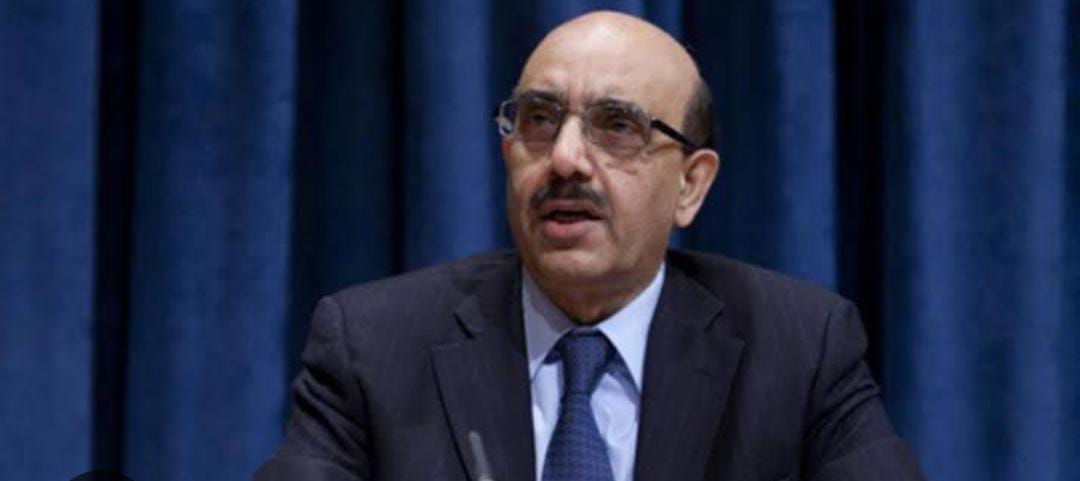
WNAM REPORT: Political maturity in Azad Jammu and Kashmir and sustained diplomatic engagement in the Middle East, emphasizing that dialogue and constitutional processes remain the only viable path to resolving both domestic and regional challenges, said Sardar Masood Khan, Former Ambassador of Pakistan to the United States, China and the United Nations, and former President of Azad Jammu and Kashmir.
Speaking in a television interview, Sardar Masood Khan welcomed the Election Commission’s decision to conduct phased elections in Azad Jammu and Kashmir, describing it as a balanced democratic approach under the prevailing security circumstances. He said democratic continuity must be preserved while ensuring peace, security and public confidence in the electoral process. He urged all political parties to exercise restraint during the election campaign and avoid rhetoric that could deepen internal divisions or provide opportunities for hostile propaganda against Pakistan.
Referring to recent political developments in Azad Jammu and Kashmir, he emphasized that constitutional and legislative matters should be resolved through the elected Legislative Assembly in accordance with democratic norms and institutional procedures. He observed that responsible political conduct is essential for safeguarding Pakistan’s principled position on the Jammu and Kashmir dispute and preventing adversaries from exploiting internal political differences.
Turning to regional affairs, Sardar Masood Khan emphasized that Pakistan must continue to play a leading diplomatic role in preventing the ongoing Iran–United States conflict from escalating into a broader regional war. He noted that Pakistan enjoys the confidence of Tehran while maintaining constructive engagement with Washington and strategic relations with Saudi Arabia, placing Islamabad in a unique position to facilitate dialogue alongside Qatar, Oman, Türkiye, Egypt and Iraq.
Referring to recent diplomatic initiatives, he said renewed mediation efforts demonstrate that diplomacy remains active despite continuing military escalation. He stressed that every available diplomatic channel should be utilized to bring the parties back to negotiations before further damage is inflicted on civilian infrastructure, regional economies and global energy security.
Commenting on the evolving security environment, Sardar Masood Khan observed that Pakistan’s strategic defence cooperation with Saudi Arabia entails important responsibilities. However, he emphasized that Pakistan’s foremost national interest lies in preventing the expansion of the conflict rather than becoming a participant in it. He cautioned that any wider confrontation would jeopardize maritime trade routes, energy supplies and economic stability across the Middle East and South Asia.
Discussing the recently negotiated United States–Saudi civilian nuclear agreement, he noted that while the agreement represents a significant diplomatic development, important questions regarding safeguards, verification mechanisms and Congressional approval remain unresolved. He stressed that transparent implementation and international oversight would be essential for preserving strategic stability in the region.
Sardar Masood Khan reiterated that dialogue, constitutional governance and responsible diplomacy remain the most effective instruments for resolving political disputes, safeguarding national interests and securing lasting peace in South Asia and the Middle East.
Pakistan Must Preserve Democratic Stability in Kashmir and Promote Peace Across the Region
57