
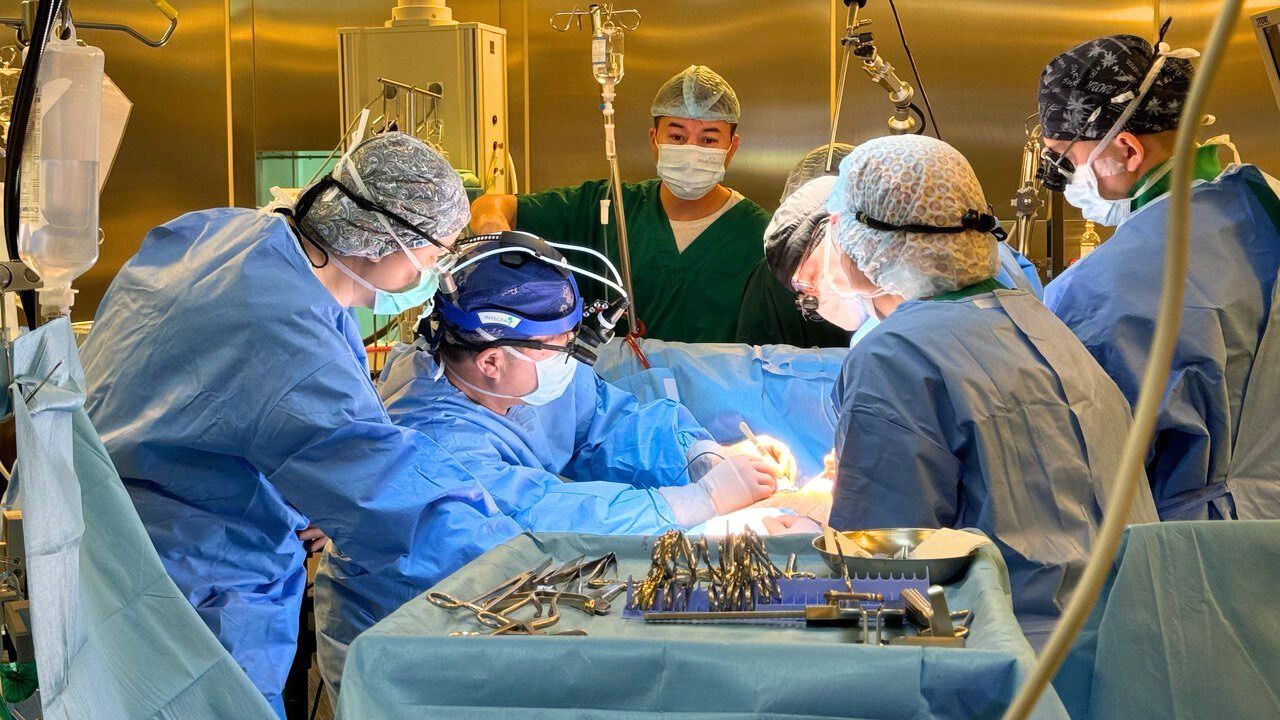
WNAM REPORT: Kazakhstan is intensifying efforts to raise public awareness of organ donation and improve its transplant system as 4,739 patients, including 126 children, remain on the national transplant waiting list, with transplantation representing the only chance of survival for many of them.
Documentary raises public awareness A documentary film, “4739,” produced by the Khabar Agency, premiered in Astana on July 21 to highlight the importance of organ transplantation, the work of transplant specialists, and the experiences of patients awaiting donor organs.The title reflects the number of people currently on Kazakhstan’s transplant waiting list. More than 350 patients die each year before receiving a suitable organ. Through the stories of transplant recipients, their families, and medical professionals, the film aims to encourage informed public discussion while respecting different personal and ethical views on organ donation, reported the Prime Minister’s press service.
The documentary will be broadcast on the 24KZ TV channel on July 24 at 7:30 p.m. Government reaffirms support for transplant medicine Opening the premiere, Deputy Prime Minister and Minister of Culture and Information Aida Balayeva said protecting citizens’ lives and health remains a government priority in line with President Kassym-Jomart Tokayev’s policy of strengthening healthcare and developing high-tech medicine. She said Kazakhstan has made significant progress in transplant medicine, with domestic specialists performing increasingly complex operations requiring advanced technology and multidisciplinary expertise. The government will continue to develop the national transplant system, strengthen the capacity of medical institutions, and expand public awareness efforts, she added.
Balayeva also wrote on her Facebook account that she has officially registered her consent to posthumous organ donation. “One person’s decision can give another the opportunity to continue living despite everything. That is why we must discuss this issue not through the prism of fear, but with understanding, responsibility, and deep respect for human life. Human life is the highest value, and every step taken to preserve it can be of enormous, sometimes decisive, significance. Every person awaiting a transplant lives with the hope of a second chance. Preserving that hope is our shared human responsibility,” she wrote. Transplant activity expands, as waiting list remains high According to the National Center for Coordination of Transplantation and High-Tech Medical Services, 4,739 patients are currently awaiting organ transplantation, including 4,208 people waiting for kidney transplants, 293 for liver transplants, 208 for heart transplants, and 30 for lung transplants. The waiting list includes 126 children. Since Kazakhstan established its modern transplant service in 2012, doctors have performed 3,270 organ transplants, including kidney, liver, heart, lung, corneal and pancreas transplant procedures. Overall, 82% of operations have relied on living donors, while 18% have been performed using organs from deceased donors. Over the past five years, approximately 1,500 organ transplants have been carried out in Kazakhstan, with every fourth operation performed in 2025. Last year alone, doctors completed 310 kidney, liver, heart and lung transplants. This year, the country also performed its first pediatric heart transplant. Deceased organ donation increases Health officials reported a significant rise in deceased-donor transplantation. The number of transplant operations using organs from deceased donors increased from 23 in 2024 to 68 in 2025, while the number of actual deceased donors rose from six to 18 during the same period, reported Kazinform. According to the national donor registry, 16,109 people have formally consented to posthumous organ donation, while 156,174 have officially registered their refusal. Officials noted that one deceased donor can save the lives of up to seven patients, depending on the condition of the donated organs. Regulatory changes are being considered that would make a person’s officially registered consent for organ donation legally sufficient after death, eliminating the current requirement to obtain additional permission from relatives. Health officials emphasized that medical staff treating patients do not have access to information about a person’s donor status. Such information is available only to three national transplant coordinators and is disclosed only after brain death has been formally confirmed. Authorities also stressed that hospitals receive no financial incentives for deceased organ donation and that every donation case undergoes strict medical and legal oversight.