
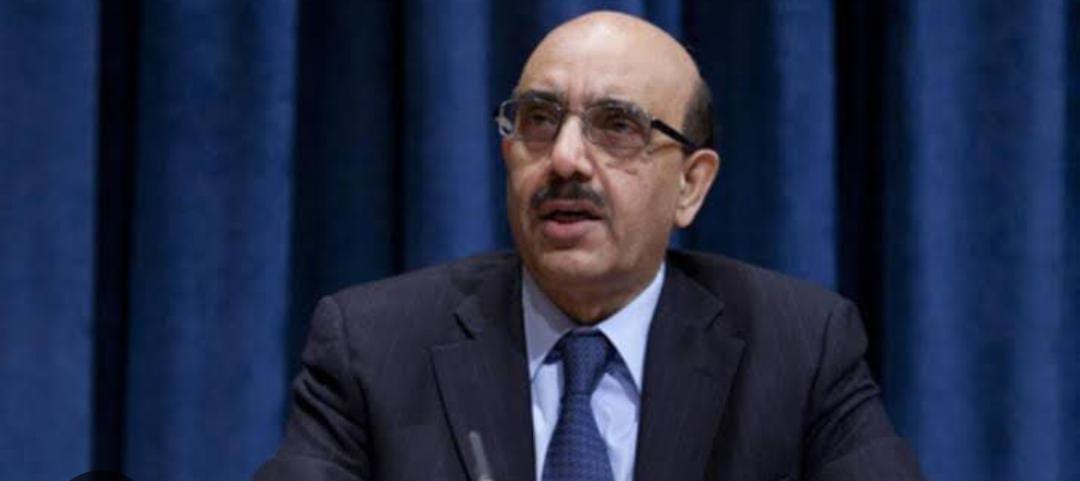
WNAM REPORT: Pakistan must transform its geographical relevance, human resources and natural endowments into sustainable national power, said Sardar Masood Khan, Former Ambassador of Pakistan to the United States, China and the United Nations, and former President of Azad Jammu and Kashmir.
Addressing a session on Pakistan’s strategic position and the evolving global order held at Institute for Strategic Studies, Research and Analysis (ISSRA), National Defence University, Sardar Masood Khan said Pakistan today stands at an important juncture in the regional and international security environment.
He attributed this enhanced position to developments in Pakistan’s security posture, its renewed engagement with the United States, its growing role in international peace efforts, and its contribution to diplomatic efforts aimed at reducing tensions between the United States and Iran.
He said Pakistan’s role in facilitating communication between Washington and Tehran and helping create space for direct negotiations represented an important development in Pakistan’s diplomatic history. “Pakistan not only wrote a new chapter in Islamic history, but also contributed to international efforts to prevent further escalation,” he observed.
Sardar Masood Khan said Pakistan’s evolving security partnerships had also increased its strategic relevance beyond South Asia, extending into the wider West Asian region. He stressed that this emerging role carried greater responsibility and required Pakistan to develop a clear and forward-looking national strategy.
Discussing the changing international order, he said the world was moving through a period of profound transformation driven by geopolitical competition, technology, economic power, military-industrial capabilities and scientific advancement. The emerging competition between the United States and China, he noted, was likely to remain one of the central axes shaping the international system in the years ahead.
He called for a broader understanding of the global order that recognises the contributions and perspectives of different civilisations, including Islamic, Chinese and other non-Western civilisations. The existing international system, he said, could no longer be viewed exclusively through a Western historical and intellectual framework.
Sardar Masood Khan further observed that the international community faced several possible trajectories, including reform of the existing global order, its replacement, the emergence of competing blocs, or the development of a transformed and more inclusive system.
He emphasised that Pakistan must move beyond merely identifying problems and proposing solutions. “The most important task is operative: how do we do this?” he said, urging researchers, policymakers and institutions to focus on implementation.
He said Pakistan could convert geography into strategic connectivity, population into human capital, natural resources into value addition, security into confidence and investment, and geographical relevance into tangible economic and diplomatic influence.
He also called for stronger engagement with Africa, particularly North, West, Central, East and Southern Africa, describing the continent as an important future arena for Pakistan’s economic and diplomatic engagement.
Concluding, Sardar Masood Khan urged Pakistani policymakers and scholars to replace pessimism and prescriptions with practical strategies capable of converting Pakistan’s potential into sustainable national power.