
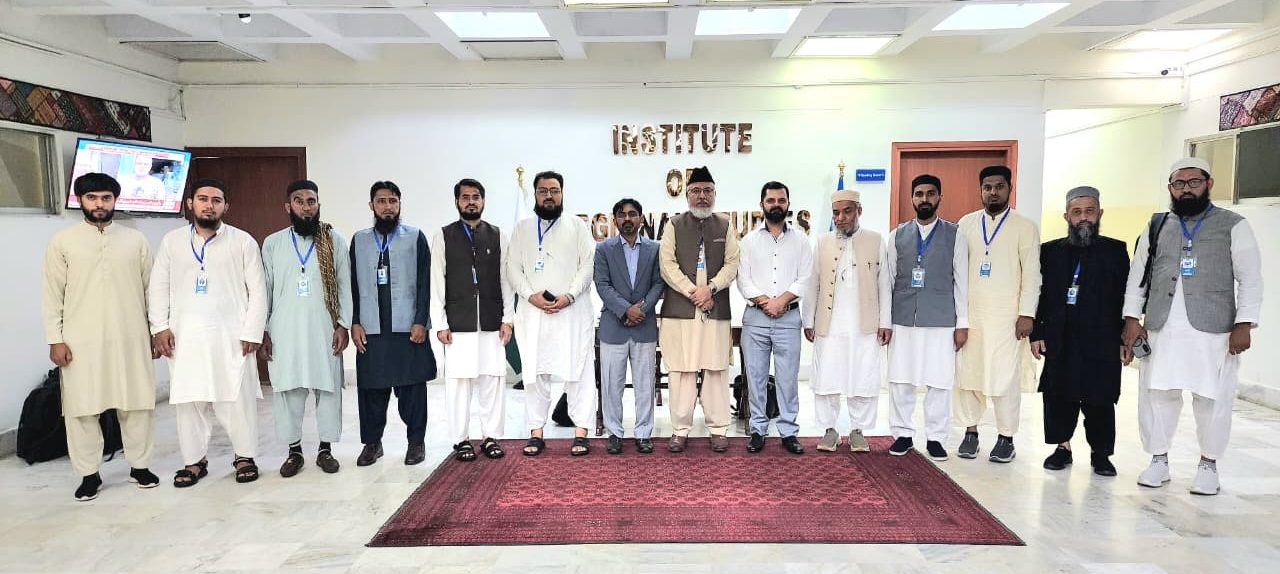
ISLAMABAD ( WNAM REPORT ): A delegation of the participants of the “Rabta 2026” study tour organized by Dar-ul-Ilm-wat-Tahqeeq (Research Academy for Higher Education and Technology), Karachi, visited the Institute of Regional Studies (IRS) to hold wide-ranging interactions with IRS researchers. The visiting delegation was led by Dr. Syed Aziz-ur-Rehman, the Head of the Regional Dawah Centre, Sindh, of the International Islamic University.
During the interaction with the delegation, IRS research team briefed the participants on the current developments in Pakistan’s relations with all its neighbouring countries, especially, Afghanistan, India, and Iran. IRS researchers conveyed it to the visiting delegation that Pakistan desired friendly relations with all its neighbouring countries, including India and Afghanistan. They emphasized, however, that both India and Afghanistan were also required to respond positively to Pakistan’s peaceful aspirations for the region.
On India, the delegation was briefed that while Pakistan desires normal and peaceful neighbourly relations, New Delhi is creating a hostile bilateral and regional environment by taking actions like the illegal suspension of the Indus Waters Treaty and supporting proxy terrorist groups involved in Pakistan through Afghanistan. On Afghanistan, IRS research team shared with the visiting delegation that Pakistan’s only major concern with regard to Afghanistan was the latter’s soil being used for terrorist activities against Pakistan. They maintained that if the Taliban government in Kabul would address this single issue to Pakistan’s satisfaction, it would not only improve relations between the two countries but also open up avenues for regional trade and connectivity through Afghanistan.
Researchers at IRS emphasized the importance of peace and stability in Afghanistan as well as its good relations with all its neighbouring countries for realizing the true trade and connectivity potential of the region. They further argued that becoming part of the China-Pakistan Economic Corridor (CPEC), as well as other regional connectivity projects like the Trans-Afghan Railway Line project, could open up vast avenues of economic activity for Afghan businessmen and improve livelihoods for the people of Afghanistan.
IRS hosts study delegation from Karachi
4