

Few phrases dominate Pakistan’s energy discourse as persistently, and as misleadingly, as “circular debt.” It is invoked as though it were a settled economic concept, an unavoidable structural defect inherent in supplying gas and electricity in a developing economy. In policy debates, media commentary, and official statements, circular debt is treated almost as a natural phenomenon, costs rise, prices are politically constrained, arrears accumulate, and the cycle repeats. This framing may be convenient, but it is fundamentally wrong. Circular debt is neither a textbook concept nor an economic inevitability. It is a locally coined term that has gradually come to obscure, rather than explain, the real problem.
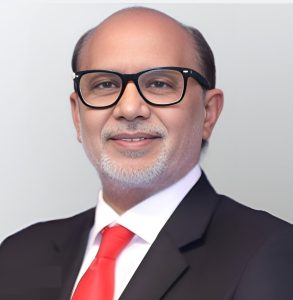
Muhammad Arif
There is no universally accepted textbook definition of circular debt. The term does not exist as a doctrinal concept in economics, finance, accounting, or public finance literature. Internationally, comparable situations are described using more precise terminology, such as payment arrears, inter-enterprise debt, settlement failures, or quasi-fiscal deficits in public utilities. Pakistan’s use of the phrase “circular debt” is therefore contextual and political, not academic. This distinction matters, because once a phrase acquires the aura of inevitability, it discourages scrutiny and dilutes accountability.
The most entrenched misconception is that circular debt is caused by underpricing of gas and electricity. This claim does not survive even a cursory examination of Pakistan’s tariff regime. Over the years, regulators have allowed virtually every conceivable cost component to be passed through to consumers. These include inefficiencies, unaccounted-for losses, unjustified operating expenditures, financing costs, exchange-rate losses, and even late-payment surcharges arising from utilities’ own failure to pay suppliers on time. As a result, gas and electricity tariffs in Pakistan are among the highest in the region. When prices already reflect all approved costs, the argument that debt accumulates because prices are too low becomes untenable.
A second misconception is that consumers are responsible for the creation of circular debt. This is factually incorrect. Consumers pay bills issued under notified tariffs. Once payment is made, the consumer’s obligation is fully discharged. Consumers do not decide whether subsidies are released on time, whether public-sector entities pay their dues, whether expensive imported fuels are diverted into subsidised segments, or whether payments to producers are delayed. Yet consumers are repeatedly asked to bear the financial consequences of these decisions.
In substance, what is labelled as circular debt in Pakistan’s gas sector is far simpler and far more troubling, money collected from consumers but not paid to gas producers. This is not a mysterious circular flow but a straightforward settlement failure. When tariffs are approved and revenue is recovered, the obligation to pay upstream producers becomes a matter of cash-flow discipline and governance. Failure to honour that obligation cannot be transformed into a consumer liability merely by giving it a technical label.
The gas pricing decisions from October 2023 onward illustrate this distortion clearly. Consumers were told that extraordinary tariff increases were necessary to recover alleged historical revenue shortfalls. Those increases were imposed, and consumers paid at enormous economic and social cost. Logically and regulatorily, once such recoveries were made, subsequent annual revenue requirements should have been reduced to reflect the cleared deficit. That did not happen. Instead, revenue requirements were carried forward as if no recovery had taken place, while the public was assured that prices had not been increased further. Presenting the absence of a new increase as “relief,” while denying the reduction that fairness and logic demanded, exemplifies how the circular debt narrative is used to mislead.
This practice subjects consumers to double jeopardy. They are first penalised through steep tariff hikes to recover past deficits, and then penalised again by being denied the benefit of that recovery in subsequent pricing. Paying once to clear the past and continuing to pay as if nothing has been cleared is indefensible in any fair regulatory system. No credible framework allows the same party to be charged twice for the same alleged deficiency.
The misconception deepens further when financing costs and late-payment surcharges are examined. Late-payment surcharge exists to penalise defaulters and incentivise timely settlement. In Pakistan’s energy sector, however, utilities delay payments to generators and producers, incur surcharges, and then pass those costs on to consumers through tariffs. The defaulter is insulated, while the compliant payer is punished. This inversion of responsibility is then rationalised under the banner of circular debt.
Another misunderstanding is that circular debt reflects a shortage of resources. In reality, the problem is not the absence of money but the mismanagement of money. Cash is collected but not settled in a timely and disciplined manner. Public-sector entities consume energy but do not pay, yet their unpaid amounts are socialised and recovered from paying consumers rather than enforced through contractual and legal mechanisms. Policy decisions distort demand and supply without providing fiscal cover, as evidenced by the reduction in gas and electricity consumption, which poses systemic risks for GDP growth and the national economy. Regulatory capture further weakens enforcement against powerful defaulters. These are governance failures, not pricing failures.
Describing this condition merely as maladministration understates its seriousness. When tariffs are already at regional highs, inefficiencies are already socialised through prices, and consumers are still told that debt is accumulating because they are not paying enough, the issue crosses from poor administration into systematic misrepresentation. The term “circular debt” becomes a convenient fiction that masks accountability gaps and normalises repeated extraction from the same payer.
The danger of this misconception is structural, not semantic. As long as circular debt is framed as an inevitable financial phenomenon, policy responses will continue to focus on higher tariffs, ad hoc bailouts, and refinancing exercises. These measures may temporarily ease liquidity stress, always at the expense of consumers, but they do nothing to correct the underlying failures of settlement discipline, subsidy management, and regulatory enforcement. Worse, they entrench a moral hazard in which inefficiency and non-payment are rewarded while compliance is punished.
A more honest discourse requires abandoning the myth of circular debt as an economic law and recognising it for what it truly is, a governance-induced settlement failure despite full recovery from consumers. Once this distinction is accepted, the policy response must change fundamentally. The focus should shift from extracting more money from consumers to tracing where collected money goes, enforcing payment discipline across the value chain, ring-fencing costs, and restoring regulatory credibility.
Correcting the misconception of circular debt is therefore not an academic exercise. It is a prerequisite for any meaningful and durable solution to Pakistan’s energy crisis. As long as the debate remains trapped in slogans and convenient abstractions, consumers will continue to be blamed for a problem they did not create, while the real sources of financial stress in the energy sector remain unexamined.
The starting point of reform must be the creation of a credible, end-to-end system for recording, reconciling, and verifying data across the entire energy value chain, from production and imports to transmission, distribution, billing, and settlement. No system can be governed effectively when decisions are based on fragmented, delayed, or unreliable information.
If there is genuine sincerity toward the national interest, Pakistan must move decisively away from manual, opaque, and discretion-driven management practices and adopt Governance 5.0 principles, technology-enabled, data-driven, transparent, and accountable governance. Digital energy accounting, real-time cash-flow tracking, automated reconciliation, and public disclosure of verified datasets are prerequisites for restoring credibility.
Without reliable information, there can be no sound planning. Without transparency, there can be no accountability. And without governance reform anchored in data integrity, no amount of tariff adjustment will ever resolve what is fundamentally a failure of management, not a failure of consumers.
Opinions expressed in this article are the author’s own and do not necessarily reflect the editorial policy of WNAM.
The author is former Member (Gas), OGRA, Managing Partner at Arif and Associates, a boutique petroleum and business-law consultancy, and a thought leader in energy, governance, regulatory reform, and consumer rights advocacy. Email: [email protected] | Cell: 0333 5191381