
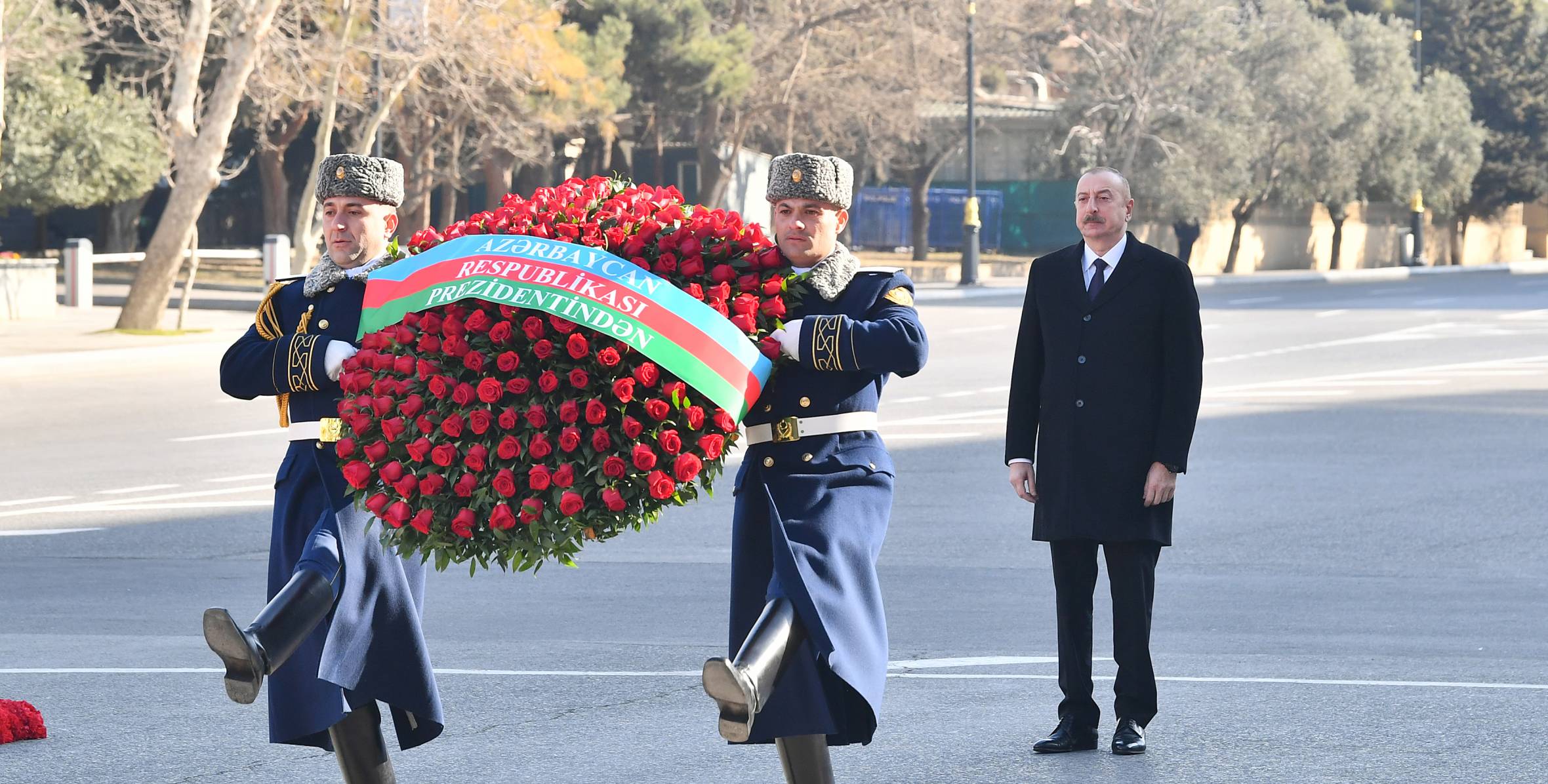
Khojaly is a town located in the Karabakh region of Azerbaijan. During the Tsar Russia’s colonial era, ethnic Armenians were brought from other regions of the world to the Karabakh region of Azerbaijan and were settled down there. Indigenous people of Karabakh, including the town of Khojaly whole heartedly welcomed and helped them in settling down. It was the cultural as well as religious obligation on the local people to accept and help the ethnic Armenians. The Armenians were free to practice their religion and to construct churches there. Local people always respected their religion and culture. Later on Soviet occupation brought new divisions of lands and Azerbaijan was deprived of its substantial area which was given to Armenia. Nevertheless, Karabakh remained under the control of Azerbaijan.
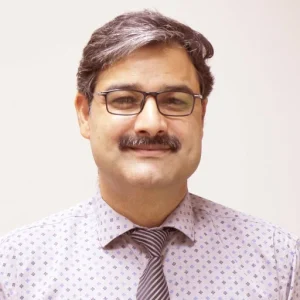
Prof.Adam Saud
Khojaly Genocide
However, once the Soviet Union disintegrated, Armenia launched an aggressive campaign against the innocent civilians of Karabakh region. It instigated an ethnic Armenian uprising against the Azerbajini population. Since, Azerbaijan did not have bad intentions towards any ethnicity or country, it tried to resolve the conflict through peaceful means. Azerbaijan never thought that Armenia can attack the region physically, hence did not expect a military expedition. nevertheless, to their surprise, Armenia launched an attack on Karabakh region and occupied a substantial territory. Azerbaijan requested international community to take action against the illegal occupation of its territories, to which the UN passed resolution for the withdrawal of Armenian forces from the Azerbaijani territories. However, the resolution could not be implemented in letter and spirit by the UN. Only a few countries, including Pakistan stood besides Azerbaijan and supported its legal stance.
The failure of international community led to the Khojaly genocide on the eve of 25 and 26 February 2026, when Armenian forces stormed the town and ruined it. They were also supported by the Soviet 336th Motor Rifle Regiment which was supposed to maintain peace. A total of 613 innocent civilians were brutally killed. They include 63 children, 106 women, and 70 elderly persons. The brutality did not end there, they burnt the dead bodies as well as houses of the people, raped several women, and hundreds were taken as hostages. In many cases whole families were wiped out.
Karabakh had been and is a matter of national pride for Azerbaijan. It was not only strategically located region, but an integral part of Azerbaijan. Since, Khojaly had an airport, its occupation provided an edge to the Armenian forces. They wanted to secure a military dominance over Azerbaijan. On the other hand, this massacre aimed at breaking the high spirits of local Azerbaijani citizens. It was message from the Armenian government to the innocent Azerbajini inhabitants that their resistance against the Armenian brutalities will be crushed this way.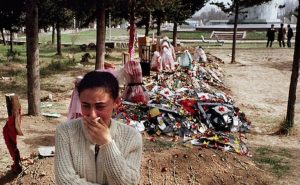
Khojaly cannot be described as an accidental tragedy but was a deliberate act of terrorism by Armenia, which purposefully targeted the civilians and wiped them out from their ancestral lands. This act of state sponsored terrorism forced hundreds of thousands of people to flee their houses and took refuge in other countries as well as regions of Azerbaijan. However, after all the diplomatic efforts to resolve the conflict through peaceful and diplomatic means failed, Azerbaijan’s leadership decided to use the force in order to liberate its occupied territories. In 2020, the brave leadership of Azerbaijan launched a decisive military expedition which led to the liberation of Karabakh region from three decades of Armenian illegal occupation. This was declared as the “Great Patriotic War” by Azerbaijan’s government.
The event is a genocide by all means. Under the 1948 UN Genocide Convention, “genocide includes acts committed with intent to destroy, in whole or in part, a national, ethnic, racial, or religious group. Hence the systematic killing of civilians, the targeting of women and children, the mutilation of bodies, and the mass hostage-taking demonstrate qualifies this incident as a Genocide.”
There were multiple political, social, economic, and diplomatic effects of Khojaly incident. It resulted into the mass scale vacation from their ancestral lands of the Azerbajini population. An estimated one million people became refugees or internally displaced persons. Most of the regions within Karabagh were depopulated forcefully or people left their houses amid fear of lives. They had to live in other cities and regions of Azerbaijan in temporary shelters for decades. Khojaly also became a symbol of national identity and collective memory. 26 February has become as a symbol of victimization, resilience, and the injustices faced by the Azerbajini people. This day is regularly observed in Azerbaijan to show solidarity with the inhabitants of Khojaly, and national resilience. After liberating Karabakh, government of Azerbaijan is investing billions of dollars for the reconstruction and rehabilitation of the indigenous population. “Justice for Khojaly” slogan has been central to Azerbaijan’s demand for accountability of the perpetrators and international recognition of massacre as a Genocide.
Azerbaijan remained committed to resolve the conflict within the limits of international law and restoring the territorial integrity. Since, Azerbaijan had been requesting the international community and institutions to help them getting back their occupied territories alongwith the justice to the victims of genocide, international community except a few countries gave a cold shoulder to Baku’s demand. This led Azerbaijan to strengthen its security while investing into the modernization of its military. Which proved to be a correct decision.
Khojaly genocide cannot be separated from the Armenian broader occupation of the Karabakh region. The Armenian forces never developed the region and deliberately kept it poor. No major infrastructure development projects were initiated. Instead, at the time of defeat, Armenian forces destroyed the remaining infrastructure by setting the house ablaze, destroying the major bridge and important roads. They also razed down the schools and hospitals. Above all, they densely mined the region in order to kill the returnees. Azerbajin’s regime under the leadership of President Ilhan Aliyev is committed for the rehabilitation of the people. It wants a respectful return of the inhabitant to their homeland. The government has initiated a programme “The Great Return” in this regard.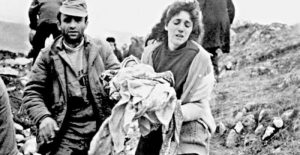
Khojaly genocide has also placed justice for the victims at central position in Azerbaijan’s foreign policy. The message from Azerbaijan is clear: Khojaly must never be forgotten, minimized, or politicized in ways that deny the suffering of innocent civilians. Recognition is not sought for revenge, but for historical truth and moral accountability. Khojaly genocide tells us that when ethnic hatred is unchecked, if international community fails to control it, and if it is supported by an adversary state, the consequences are beyond imagination. It brings only catastrophe.
The memory of Khojaly stands as both a wound and a warning, a wound that continues to shape Azerbaijan’s national consciousness, and a warning to the world about the cost of indifference to mass violence. May the victims be remembered with dignity. And may their memory strengthen our collective commitment to justice, sovereignty, and lasting peace. ( The author is: Professor at Bahria University, Islamabad)