
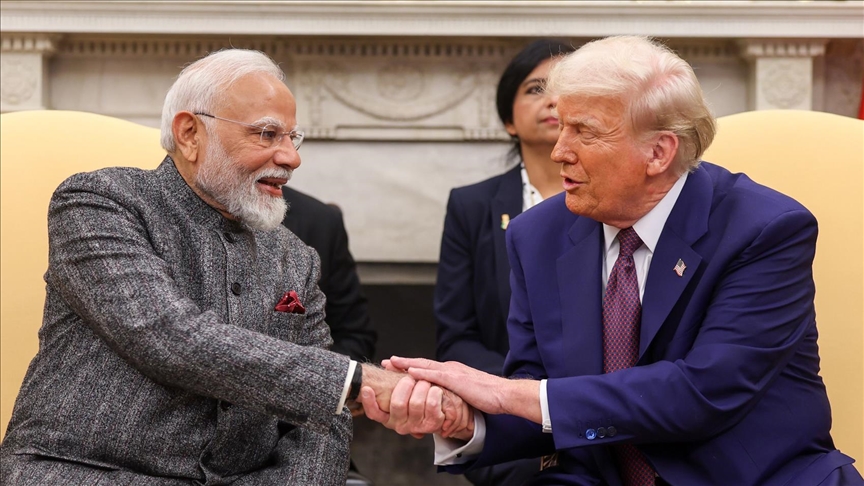
NEW DELHI ( WNAM MONITORING): A proposed trade deal between the United States and India was delayed because Indian Prime Minister Narendra Modi did not telephone US President Donald Trump, US Commerce Secretary Howard Lutnick said.
Lutnick’s remarks came as New Delhi and Washington failed to conclude a trade agreement last year, prompting the Trump administration to impose higher tariffs on Indian goods.
“It’s all set up. He has [US President Donald Trump] the [deal] closer. He does the deal. So I said, ‘You’ve got to have Modi. It’s all set up. You have to have Modi call the president,’” Lutnick said in a podcast Thursday, US time, recalling negotiations with the Indian side.
“They [India] were uncomfortable doing it. So, Modi didn’t call,” he said.
The Trump administration later imposed 50% tariffs on Indian imports, partly over India’s continued purchases of Russian oil amid the war in Ukraine.
Trade talks between the two sides resumed in September after US Assistant Trade Representative Brendan Lynch met Indian officials in New Delhi.
India, however, rejected Lutnick’s account on Friday.
New Delhi said on Friday it has been committed to negotiating a bilateral trade agreement with the US “as far back as 13 February last year.”
“On several occasions, we have been close to a deal. The characterization of these discussions in the reported remarks is not accurate,” the ministry said, adding that Trump and Modi spoke eight times last year.
“We remain interested in a mutually beneficial trade deal between two complementary economies and look forward to concluding it,” the statement said.
‘Secure affordable energy’
Commenting on a proposed US sanctions bill targeting Russia, the ministry said India’s position is “guided by the evolving dynamics of the global market and by the imperative to secure affordable energy.”
Trump has given a “green light” to a bipartisan sanctions bill targeting Russia, according to US Senator Lindsey Graham.
“This bill would give President Trump tremendous leverage against countries like China, India and Brazil to incentivize them to stop buying the cheap Russian oil that provides the financing” for Moscow, Graham said.
Beijing has pushed back against such a move, saying its trade ties with Russia should not be disrupted.
India has increased purchases of discounted Russian crude since 2022, becoming one of Moscow’s top energy customers despite Western sanctions.
The US remains India’s largest trading partner, with total goods and services trade reaching an estimated $212.3 billion in 2024.
Trump said earlier this week that Modi had sought a meeting with him to discuss defense purchases.