
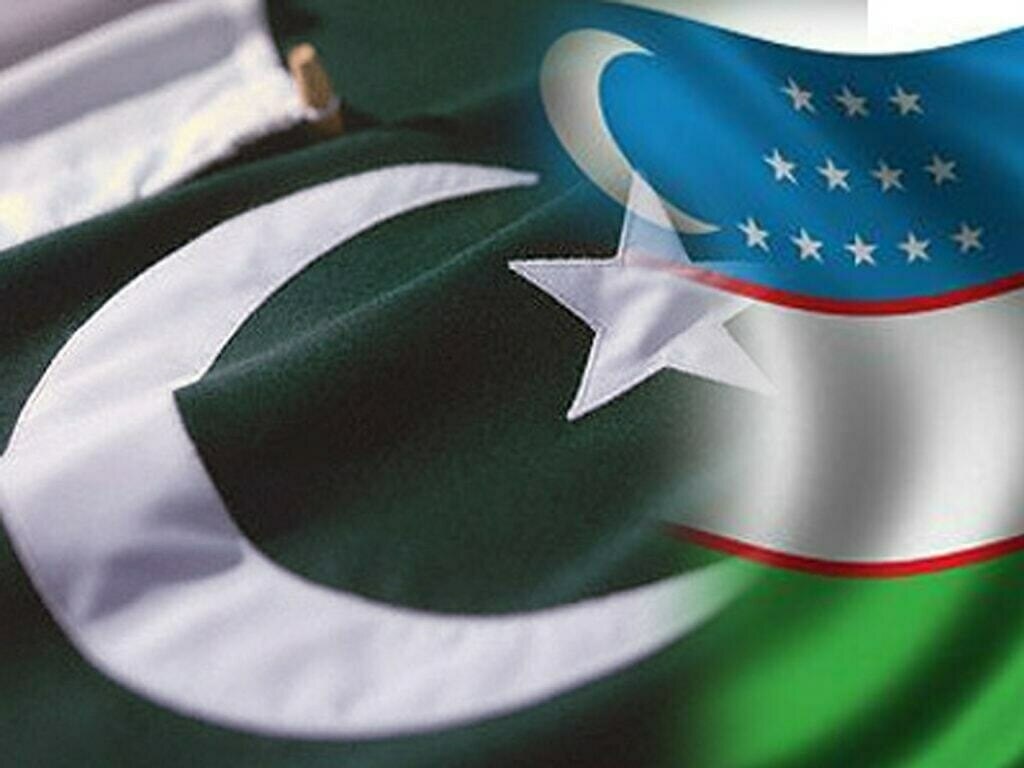
Trade and economic cooperation between Uzbekistan and Pakistan has steadily emerged as a central pillar of their bilateral relationship, driven by complementary geographies, converging strategic interests, and a shared ambition to integrate more deeply into regional and global value chains. As both countries seek to recalibrate their economic diplomacy toward connectivity and industrial collaboration, Pakistan’s access to the Arabian Sea and Uzbekistan’s position at the heart of Central Asia have created a natural synergy with transformative potential.
Pakistan’s seaports provide Uzbekistan with a critical gateway to international markets, enabling diversification of transport routes and reducing reliance on limited corridors. This logistical advantage is particularly significant for Uzbekistan’s export-oriented industries, including textiles, agriculture, pharmaceuticals, and light manufacturing, which require reliable and cost-efficient access to third-country markets.
Recent trade figures underline Uzbekistan’s growing importance in Pakistan’s Central Asia outreach. In 2024, Uzbekistan accounted for the largest share of Pakistan’s trade with the region, reaching USD 404 million. This upward trajectory continued into 2025, reflecting stronger institutional engagement and expanding business-to-business contacts. During January–November 2025, total bilateral trade reached USD 434.4 million, with Uzbekistan’s exports amounting to USD 321.8 million and imports from Pakistan at USD 112.6 million, resulting in a positive trade balance of USD 209.2 million in favor of the Uzbek side.

Riaz Ahmad Malik
However, the data also reveals structural challenges. Trade volumes peaked during the first half of the year and summer months, with a noticeable decline in the latter part of 2025 and a negative balance recorded in November. This volatility underscores the high sensitivity of bilateral trade to external logistics constraints, border procedures, and transit inefficiencies—issues that require systemic solutions rather than ad hoc interventions.
A major political impetus was provided in February 2025 during the official visit of Prime Minister Shehbaz Sharif to Uzbekistan. Both sides reaffirmed their strategic commitment to deepening economic cooperation, while the President of Uzbekistan set an ambitious but achievable target of increasing bilateral trade to USD 2 billion. Priority sectors were clearly identified, including industrial cooperation, textiles, pharmaceuticals, agriculture, transport, and logistics. Achieving this scale of trade, however, will depend on sustained policy alignment, simplified customs and transit procedures, development of reliable logistics corridors, and stronger institutional backing for joint ventures.
In this context, the forthcoming visit of the President of Uzbekistan to Pakistan assumes critical importance. The visit is expected to serve as a turning point in translating political intent into executable economic outcomes. High-level engagements are likely to unlock new investment commitments, accelerate negotiations on trade facilitation agreements, and provide strategic direction to flagship projects in transport connectivity and industrial cooperation. For the private sector, the visit will signal long-term policy stability and encourage greater risk-taking in cross-border investments.
One of the most consequential developments supporting this vision is the Trans-Afghan Railway project. The trilateral framework agreement signed on July 17, 2025, in Kabul marks a historic step toward regional connectivity. Beyond its importance for Afghanistan’s economic recovery, the project promises to fundamentally reshape trade dynamics between Central and South Asia by offering Uzbekistan direct rail access to Pakistani ports. Once operational, the railway could significantly reduce transit time and costs, making the USD 2 billion trade target far more attainable.
Institutional engagement between the two countries has also deepened considerably. More than 40 business forums and over 15 industrial, tourism, and food exhibitions have been held across Uzbekistan and Pakistan, while nearly 80 bilateral agreements are currently in force, covering areas ranging from trade and transport to education, security, and culture. Inter-parliamentary relations have gained new momentum, highlighted by high-level exchanges and Pakistan’s participation in the 150th Assembly of the Inter-Parliamentary Union in Tashkent.
People-to-people connectivity has expanded alongside economic ties. Air connectivity has improved with four weekly flights between Uzbekistan and Pakistan, serving over 30,000 passengers since their launch, and plans are underway to introduce direct Tashkent–Karachi flights. Tourism cooperation has delivered tangible results, with Pakistani tourist arrivals in Uzbekistan exceeding 18,000 by the end of 2025—a 3.6-fold increase over the previous year.
Educational collaboration is emerging as a long-term strategic asset. Nearly 1,500 Pakistani students are currently enrolled in Uzbek universities across priority disciplines. Expanding academic exchanges, joint research centers, and scholarship programs will help build a skilled human capital base to support future industrial and technological cooperation.
As Uzbekistan and Pakistan stand at the cusp of a new phase in their partnership, the challenge is no longer a lack of vision but the execution of a coordinated strategy. The anticipated presidential visit, combined with connectivity projects like the Trans-Afghan Railway and growing private-sector engagement, offers a timely opportunity to shift the relationship from incremental growth to transformational impact—bringing the USD 2 billion trade target firmly within reach. ( The author is Editor-in-Chief of ‘The World News AM’, former Group Editor of Daily ‘National Herald Tribune’ (NHT) and Daily ‘Al-Akhbar’ ).