
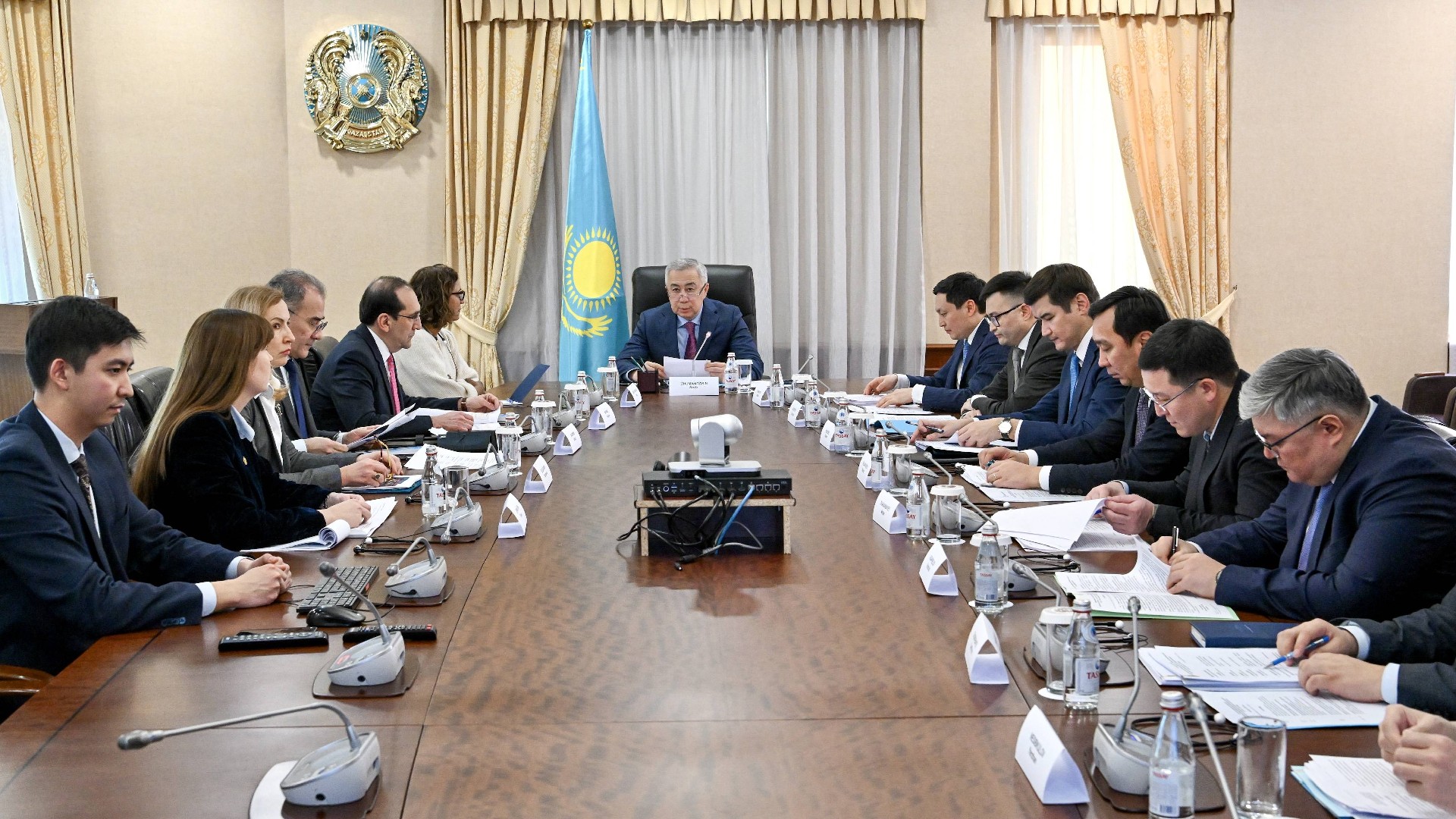
WNAM MONITORING: Deputy Prime Minister – National Economy Minister of Kazakhstan Serik Zhumangarin and representatives of the World Bank Group held talks on shaping a new Country Partnership Framework (CPF) for 2026–2031.
Addressing those present Serik Zhumangarin emphasized the strategic nature of cooperation and expressed gratitude for preparing a document that will guide joint efforts until 2031.
He said Kazakhstan highly appreciates the partnership with the World Bank. He noted the proposed strategy lays the foundation to support the country’s reforms through expertise, financing and joint initiatives.
The key priorities outlined in the draft strategy include development of transport and digital connectivity, advancing the climate agenda, improving services in the water and energy sectors, strengthening financial markets and stimulating private investment, and expanding use of renewable energy sources.
The World Bank expressed readiness to provide up to 1 billion US dollars annually over six years, supporting infrastructure, private sector growth, and competitiveness. Analytical support will continue under the Joint Economic Research Program.
Those attending also summed up the results of the 2020–2025 Country Partnership Framework.
14 projects worth 4.2 billion US dollars were implemented at large, including the development of the Western Europe–Western China transit corridor and reconstruction of the Almaty–Khorgos highway, modernization of irrigation and drainage systems, improving water use efficiency for 94,000 users, and others.
Over 1,000 enterprises received grants and consulting; 175 startups generated 41 million US dollars in sales and attracted 16 million US dollars in investments.
Transport projects reduced travel time by two-thirds, tripled speed, cut costs by 35%, and created 1,200 permanent jobs.
The representatives of the International Finance Corporation IFC confirmed plans to continue advisory support for PPP projects and expand investment activities, citing the financing of the Almaty bypass railway as a successful example.
Future priorities include railway modernization, support for micro and small businesses, and development of the agro-industrial sector, including modern agricultural machinery and grain processing projects.