
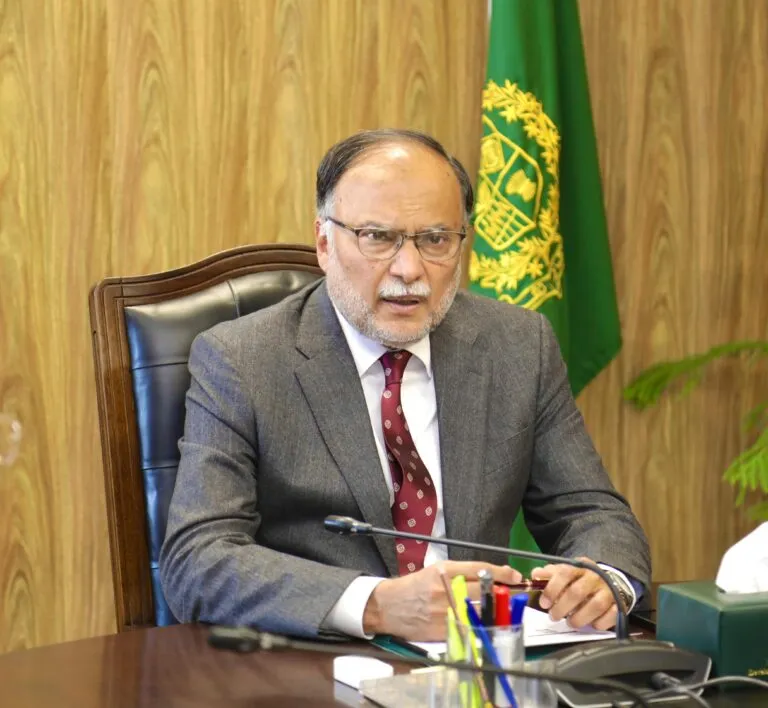
ISLAMABAD( WNAM REPORT ): Federal Minister for Planning, Development and Special Initiatives, Ahsan Iqbal on Friday emphasized that macroeconomic growth driven by an export-led economy and performance-based industrial units at provincial and district levels, was the need of the hour to alleviate poverty in the country.
Addressing the “Launch of Poverty and Inequality Estimates 2024–25” ceremony held at the Ministry of Planning, Development and Special Initiatives Auditorium, the minister underscored the importance of developing competitive
human resource capital across all federating units.
He stressed for the promotion of Small and Medium Enterprises (SMEs) and cottage industries at district and provincial levels to unlock local potential and eradicate poverty at the grassroots level, while advancing progress toward the Sustainable Development Goals (SDGs).
“Export-led growth, along with quality education and competitive human resource development, can play a major role in reducing poverty at both national and provincial levels,” he said.
The minister noted that due to the global food inflation super cycle during COVID-19, along with environmental catastrophes such as floods and the commodities boom cycle, national poverty, increased from 21.9 percent
to 28.9 percent, a rise of seven percent, compared to estimates from 2018–19 to 2024–25.
He attributed part of the economic challenges to the policies of the previous government led by Pakistan Tehreek-e-Insaf (PTI), stating that economic mismanagement and political instability forced the country to enter three programs with the International Monetary Fund (IMF).
He said that strict reform measures, including subsidy reductions under IMF agreements, contributed to rising poverty levels.
Ahsan Iqbal further criticized the previous government for promoting excessive imports and consumer-driven growth,
noting that imports surged to $80 billion, resulting in a $50 billion trade deficit.
Highlighting the role of the Public Sector Development Programme (PSDP), the minister said it has historically played a critical role in poverty reduction and sustainable development.
However, he lamented that PSDP allocations declined from 2.8 percent to 0.9 percent of the total budget in recent
years.
He pointed out that provinces now hold a larger share of PSDP resources compared to the Federation and called for comprehensive provincial strategies to address poverty. “Provincial-level poverty reduction efforts directly impact
national poverty indicators,” he said.
Comparing rural and urban poverty trends, Ahsan Iqbal stated that urban poverty increased from 21.9 percent to 28.9 percent over the past seven years, while rural poverty rose from 28.2 percent to 36.2 percent during the same period.
The minister emphasized that economic stability was essential for achieving sustainable growth and raising Gross Domestic Product (GDP) to levels where poverty can meaningfully decline.
He highlighted the importance of skill development and technological awareness in creating employment opportunities at district and provincial levels, adding that the government is allocating funds to promote such initiatives at the grassroots.
Addressing regional disparities, Ahsan Iqbal noted that unequal distribution of resources within provinces contributes significantly to poverty and inequality. He warned that terrorism tends to take root in districts where disparity and deprivation are widespread.
“We need comprehensive policies to ensure equitable distribution of resources in underdeveloped districts for inclusive and sustainable economic development,” he said.
Reaffirming the government’s commitment to achieving a “Zero Poverty” goal, the minister said targeted development of potential districts through the establishment of small industrial units would remain a key priority in the upcoming years.