
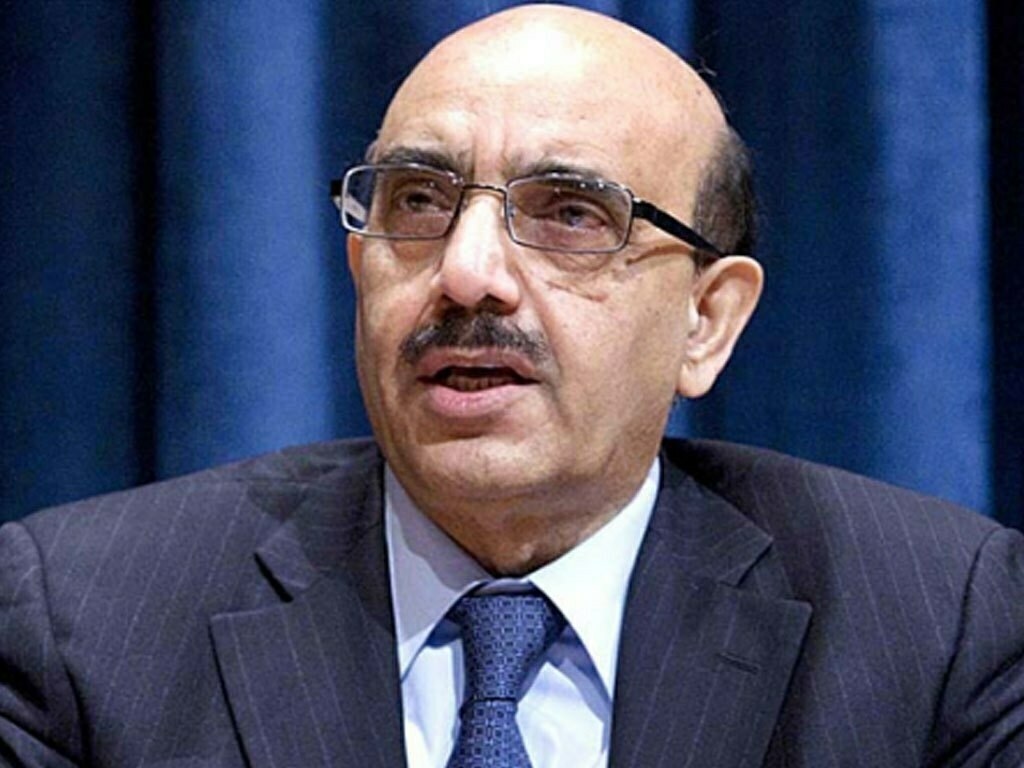
ISLAMABAD ( WNAM REPORT ): Masood Khan, former ambassador to the United States, China and the United Nations, and former president of Azad Jammu and Kashmir on Tuesday described that Pakistan’s diplomatic initiative continues to anchor fragile peace efforts as a temporary ceasefire between the United States and Iran holds, despite escalating tensions following the announcement of a naval blockade in the Strait of Hormuz.
The development marks a critical juncture in ongoing efforts to avert a wider regional conflict and restore stability.
Speaking to national media, former ambassador Masood Khan underscored that while the blockade introduces serious risks, the continuation of the ceasefire signals that diplomatic channels remain open. He noted that negotiations, though temporarily paused, have not collapsed and may resume, potentially again in Islamabad, reflecting confidence in Pakistan’s role as a credible mediator.
Khan highlighted that recent talks were conducted in a constructive atmosphere, with both sides demonstrating flexibility on key issues, particularly regarding nuclear arrangements. However, critical sticking points persist, including access to enriched uranium stockpiles and broader regional concerns linked to maritime security and Lebanon. Despite these hurdles, both Washington and Tehran issued positive statements, indicating proximity to a potential understanding.
On the nuclear question, emerging proposals—such as the possible transfer of enriched uranium to Russia—have been described as a “ray of hope,” provided all parties agree. At the same time, concerns over verification mechanisms and sovereignty remain central to negotiations.
The blockade of the Strait of Hormuz has introduced new geopolitical complexities. As one of the world’s most vital transit routes, any disruption carries global economic implications.
Khan warned that enforcement measures, including interception or diversion of vessels, could escalate tensions, particularly with China, which relies heavily on Iranian oil supplies. The risk of direct confrontation between major powers, he cautioned, must be avoided.
Pakistan, meanwhile, continues intensive diplomatic outreach, engaging regional stakeholders including Saudi Arabia, Turkey, and Egypt, alongside global actors, to sustain dialogue and prevent miscalculation. Officials emphasize that even amid heightened military posturing, communication channels remain active.
Khan stressed that any exchange of fire could immediately collapse the ceasefire, underscoring the delicacy of the current moment. He also pointed to legal complexities surrounding maritime passage under international law, noting that unilateral restrictions could face global resistance.
Describing the situation as a “war of calculations,” he observed that both sides believe they are negotiating from positions of strength. Yet, he emphasized that prolonged conflict risks triggering a broader crisis reminiscent of historic global confrontations.
As developments unfold, Pakistan’s mediation framework remains intact, offering a platform for renewed engagement. The coming days will be decisive in determining whether diplomacy prevails or tensions escalate into a wider conflict with far-reaching global consequences.
Pakistan’s mediation framework remains intact, offering platform for renewed engagement: Masood Khan
85