
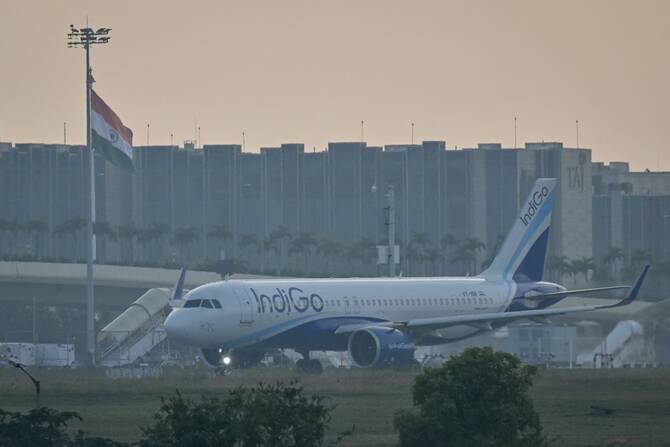
NEW DELHI ( WNAM MONITORING): The ongoing US-Israeli war on Iran has severely impacted India’s aviation and hospitality sectors, an Indian trade body said on Thursday, estimating losses of at least $10 billion.
Tens of thousands of flights have been canceled since the beginning of attacks on Iran on Feb. 28 and its retaliatory strikes on countries in the Gulf region.
Air spaces in much of the Middle East were closed in the first weeks of the war, while operations in the region’s main hubs such as Doha or Dubai — which connect many routes to and from Asia and Europe — are only beginning to stabilize after a ceasefire was announced last week.
In India, the aviation sector has emerged as the most impacted, recording an up to 20 percent decline in inbound tourist traffic and $1.93 billion net losses, according to a report released by the Punjab, Haryana, Delhi Chamber of Commerce and Industry.
“Tourism is the first sector to feel the impact of global unrest. We saw this during the Russia–Ukraine war, but the recent West Asia conflict has completely altered travel dynamics,” said Rajan Sehgal, co-chair of the organization’s tourism and hospitality committee.
“Airlines are under severe pressure from cancellations, longer routes and rising fuel costs, while West Asia — once considered the most stable hub for global travel and business — is now the worst affected.”
As fuel prices have also risen due to Iran’s blockade of the Strait of Hormuz — the main route for Asia’s crude imports from the Middle East — many Indian restaurants, ranging from independent neighborhood restaurants to organized food service chains, have been experiencing the most severe operational disruptions due to limited supply of gas to run their kitchens.
According to the National Restaurant Association of India, the LPG supply disruption has created an “operational crisis” for the restaurant industry.
“Nearly 10 percent of restaurants have temporarily shut down, while 60–70 percent of establishments have shifted to induction cooking, alternate fuels, reduced menus or shorter operating hours to manage limited supplies,” Sagar Daryani, NRAI president, said in the report.
“This has started to directly affect consumer behavior, with dining-out frequency declining by 8–10 percent and average customer spending dropping by 6–8 percent, resulting in a measurable slowdown in industry throughput.”
PHDCCI estimates the losses at about $8.47 billion a month and projects a long-term impact on the industry that directly employs over 8.5 million people.
“Prolonged supply disruptions could therefore result in 5–7 lakh (500,000—700,000) potential job losses, alongside hiring freezes and delayed expansion plans, particularly among small and medium-sized operators who are more vulnerable to cost and supply volatility,” it said.
“In addition to operational disruptions, the crisis has broader social implications. Restaurants play an essential role in providing daily food access to millions of people, including students, migrant workers, office employees and travelers who rely on food service establishments for regular meals.”