
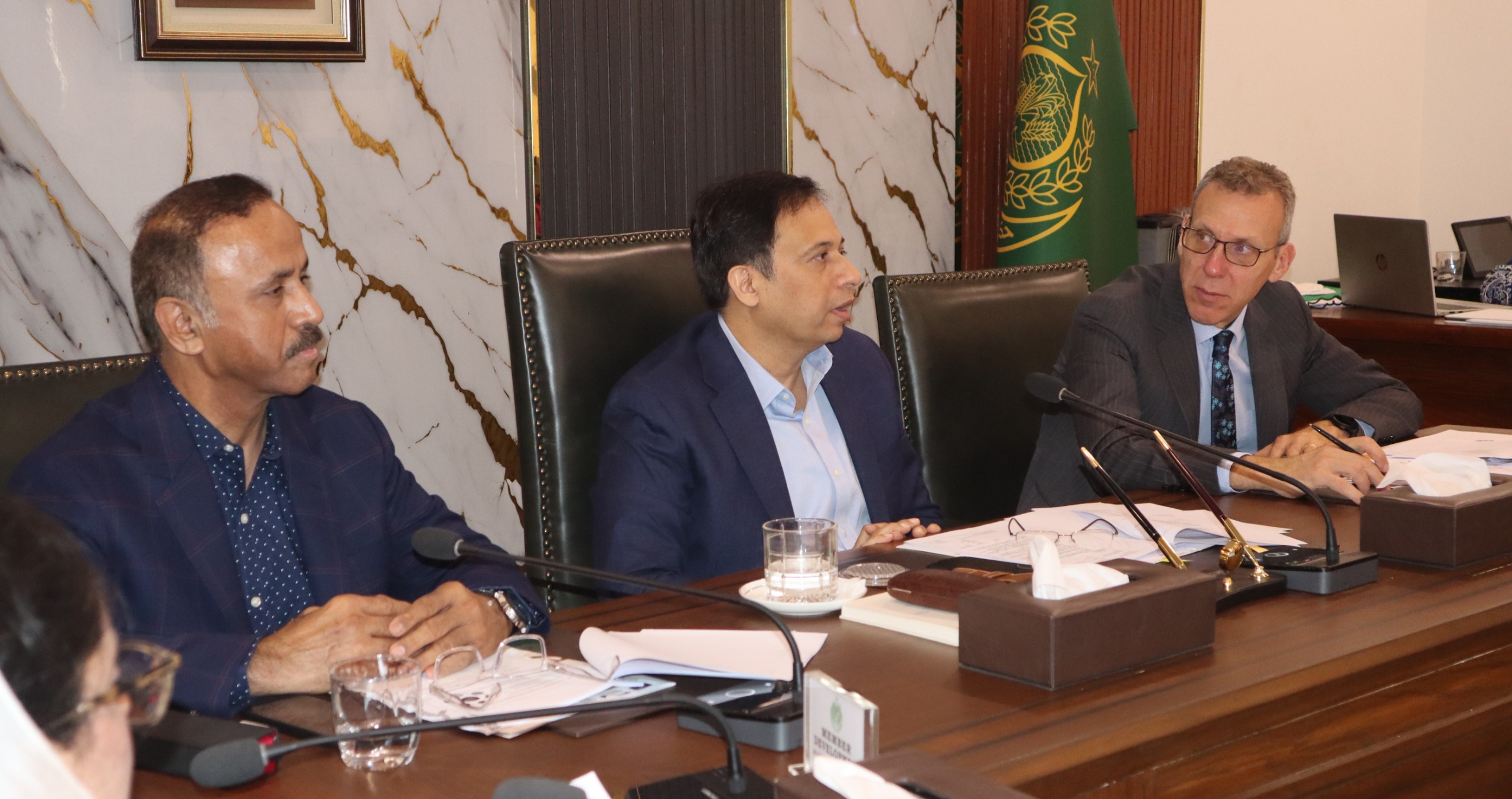
WNAM REPORT: The Government of Sindh convened the 3rd Project Steering Committee (PSC) meeting of the Adaptive Social Protection (ASP) project at the Planning & Development Department, Sindh Secretariat Karachi, bringing together senior representatives from the Government of Sindh, the European Union, and Deutsche Gesellschaft für Internationale Zusammenarbeit (GIZ).
The ASP Project is being implemented by GIZ on behalf of the European Union and the German Federal Ministry for Economic Cooperation and Development (BMZ).
Chaired by Mr. Najam Shah, Chairman, Planning & Development Board Sindh, the meeting reviewed overall progress under the ASP Project and discussed strategic priorities for strengthening climate-resilient and anticipatory social protection systems across the province. All stakeholders also committed to continue collaborative efforts toward building resilient, inclusive, scalable and sustainable social protection systems in the province.
“We can only succeed if institutions work together and reinforce one another’s efforts”, Mr. Jeroen Willems, Head of Cooperation, EU Delegation to Pakistan noted.
The ASP project presented progress across key areas, including social protection policy and strategy, digital and financial literacy, data systems and interoperability, disaster preparedness, and climate resilience through social protection.
“The development of an effective social protection framework requires stronger coordination among departments and institutional ownership across government. The objective is to ensure that social protection interventions become more integrated, sustainable, and responsive to future challenges,” said Mr. Najam Shah, Chairman, Planning & Development Board Sindh.
“We are now working towards a social protection policy and strategy that reflects provincial priorities, climate vulnerabilities, and long-term resilience needs, targeted for finalization by September 2026,” said Ms. Johanna Knoess, Head of the Adaptive Social Protection Project at GIZ.
GIZ team also highlighted progress on data interoperability across federal and provincial institutions to strengthen evidence-based decision-making.
The project reported progress on an Informal Workers Registry at the Sindh Social Protection Authority, underpinning pilots linking social protection with climate resilience: a Women Agricultural Informal Workers programme proposed for the Annual Development Programme; and a cash-for-work programme in Thatta, implemented with SPHF and CRS, building adaptive capacity in a flood-exposed district. These pilot interventions will provide evidence to support future scale-up and integration into long-term provincial programming and financing frameworks.
EU, Germany and Sindh Government Reaffirm Commitment to Climate-Resilient Social Protection in the Province
61