
WNAM REPORT: The Indonesian Ministry of Communication and Digital Affairs underscored that Indonesia has set three pillars in its artificial intelligence (AI) policies to support national digital transformation and drive digital economic impact.
The first pillar centers on regulation that balances innovation and protection, requiring AI platforms to uphold transparency, accountability, and security, while ensuring their values align with Indonesian cultural values.
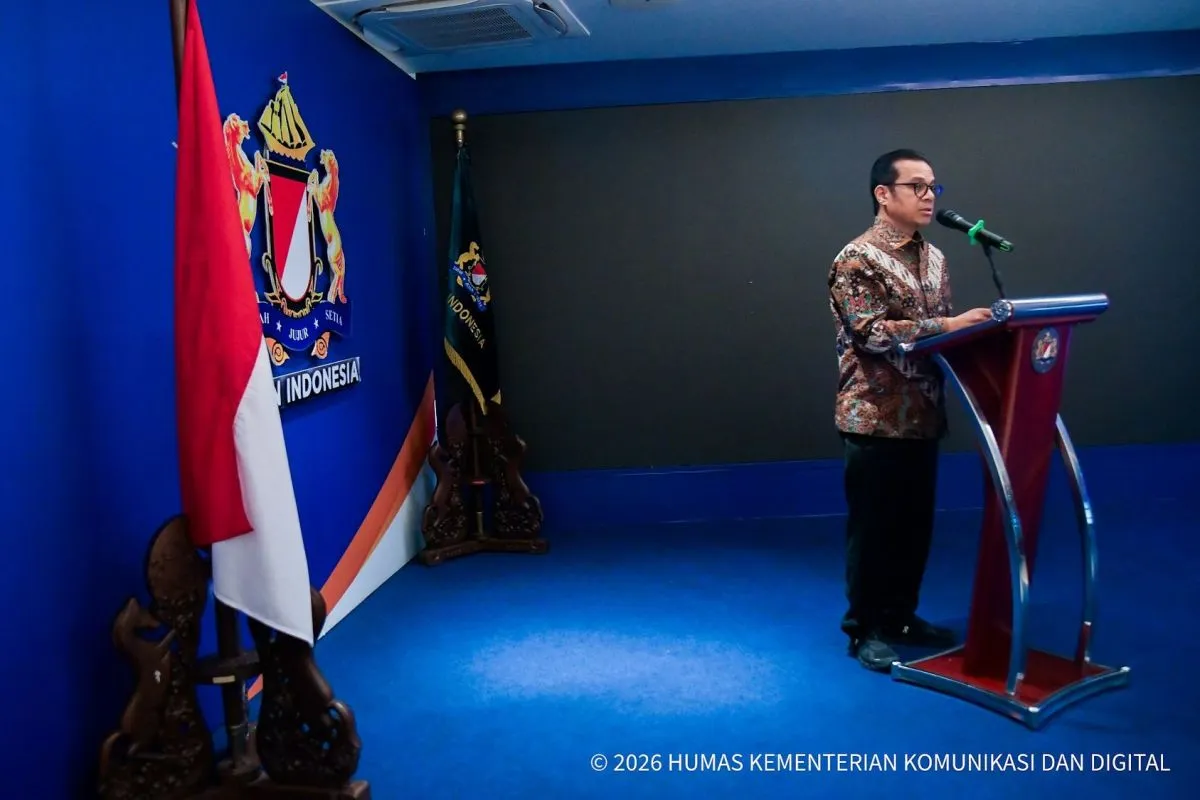
“The government is currently finalizing two key policy instruments: the national AI roadmap and a presidential regulation on AI ethics,” Deputy Minister of Communication and Digital Affairs Nezar Patria said in a statement received and confirmed in Jakarta on Friday.
Furthermore, the second pillar in Indonesia’s AI development is world-class digital infrastructure. To support this effort, Indonesia remains open to collaboration with global technology companies through investment and development initiatives.
Patria outlined several investments and development commitments that Indonesia has already secured.
“Microsoft has committed US$1.7 billion to build cloud infrastructure in Indonesia, while Nvidia and Amazon have also reaffirmed their commitments to investing in our country,” he said.
In line with AI development, data centers are expected to see significant growth. As of 2026, there are 185 data centers in Indonesia with a total capacity of 274 megawatts (MW). The government targets increasing this capacity to over 2,000 MW by 2029.
Lastly, the third pillar is inclusive digital talent development. According to the deputy minister, a skilled workforce is vital to back world-class infrastructure. Therefore, developing digital talent has become an urgent priority.
“World-class infrastructure will be of little value without a skilled workforce. Indonesia currently faces a shortage of around 3 million digital talents – an urgent issue that cannot be ignored,” he stated.
By leveraging these three pillars, Indonesia aims to secure its position as Asia’s largest digital economy in the coming years.
The country’s digital economy is projected to be worth more than US$100 billion in 2026, with the potential to reach around US$220 billion to US$360 billion by 2030.