
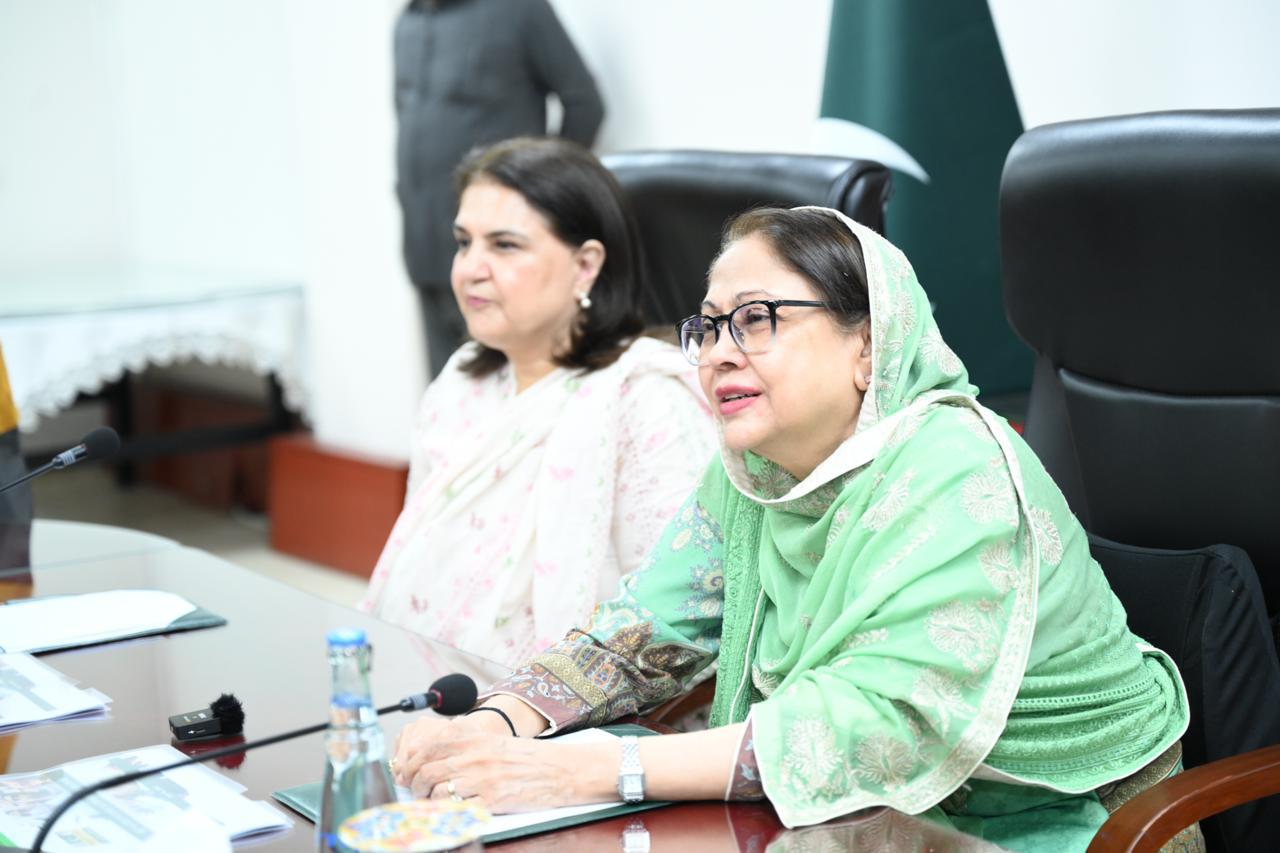
ISLAMABAD ( WNAM REPORT ): Ms. Faryal Talpur, President Women Wing, Pakistan Peoples Party, visited the Benazir Income Support Programme (BISP) Headquarters today. She was accompanied by Ms. Sadia Javed, Spokesperson for the Government of Sindh.
Chairperson BISP Senator Rubina Khalid and Secretary BISP Amer Ali Ahmad welcomed her. Secretary Amer Ali Ahmad briefed Ms. Talpur on BISP’s progress, key reforms, the new digital payment model, and its expanding role in strengthening social protection across Pakistan.
She was informed that the Government has allocated Rs. 838 billion for BISP in the current fiscal year. Under the Benazir Kafaalat Programme, quarterly financial assistance of Rs. 14,500 is being provided to 10.3 million deserving families. The Benazir Taleemi Wazaif Programme supports the education of 12.4 million children, while the Benazir Nashonuma Programme provides nutritional assistance to nearly two million women and children.
She was informed that, to enhance transparency, convenience and dignity of beneficiaries, 9.7 million Digital Social Protection Wallets have been opened, and payments under the current tranche are being disbursed through these wallets.
Ms. Talpur was also briefed on the newly introduced Benazir Hunarmand Program (BHP), which provides free market-oriented skills training to BISP beneficiaries and their family members.
Secretary BISP also shared the findings of a recent World Bank study, which showed that BISP supports over 10.2 million families, covering around 24 per cent of households across Pakistan. According to the study, every Rs. 1 transferred through BISP generates Rs. 2.34 in household income. The study further found that BISP-supported economic activity sustains 1.66 million full-time jobs and contributes around Rs. 174 billion annually to the national exchequer.
Speaking on the occasion, Ms. Faryal Talpur appreciated BISP’s reforms to strengthen transparency, service delivery, financial inclusion, and digital transformation. She commended the Programme’s contribution to poverty reduction, women’s empowerment, and human capital development, and emphasised the need to further improve transparency, enhance public awareness, and make services more accessible and convenient for beneficiaries.