In the wake of decolonisation and the end of the Cold War precipitated a significant expansion in the number of Independent states, with the total now standing at around 195 recognized states. The conclusion of the Cold War and failure of communism marked the triumph of capitalism as the dominant global economic system, ideology and political power.
These newly independent countries adopted democracy as a form of government and capitalism as the economic system. The relationship between democracy and capitalism is complementary. Democracy fosters certain values such as freedom of speech, movement, worker’s rights which ultimately allows capitalism to flourish.
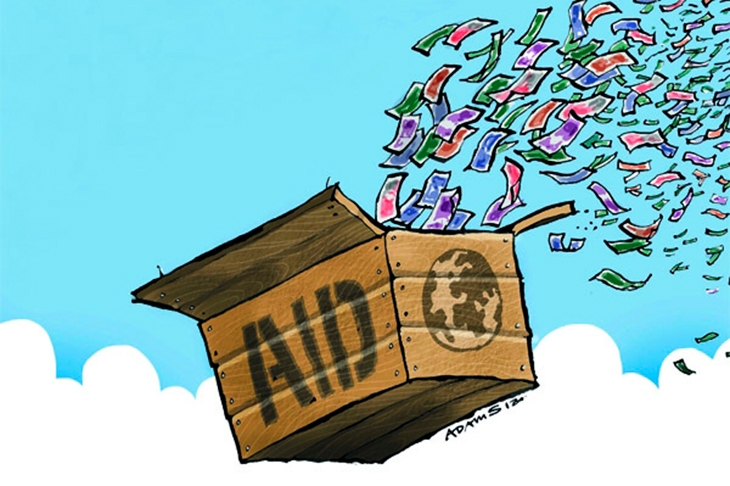
The triumph of capitalism, however, did not simply consolidate democratic values but reconfigured global power dynamics and economic order. The direct control by former colonizers was replaced by indirect involvements through trade agreements and aid settlements. Similarly, the influence of multinational corporations expanded significantly, with many operating across the world generating revenue that rival GDPs of the entire countries. This is visible by the fact that Coca Cola Company, reported an annual revenue of $31.856 billion in 2018 which is higher than Pakistan’s annual revenue for the same period. This reiterates the shift in global order with economic dominance supplanting military might as the primary tool of global hegemony.
The Industrial Revolution and globalization have profoundly transformed international trade, with technological advances acting as a primary instrument opening new economic frontiers. While this phenomenon has many claimed benefits, as articulated by Justin Kuepper, such as increased foreign direct investment, technology transfer, and industrial restructuring. However, these advantages come at a price, globalization fosters interdependence thereby economic fluctuations can trigger global instability. Moreover, the inception of financial institutions such as WTO and IMF were framed to facilitate peace through economic development and regulate international trade. However, these institutions were curated by developed countries with existing advanced infrastructure and stable economies, conditions that newly developed states lacked. Similarly, the trade regulations that are offered by IFIs often extend economic policy into governmental or military decision making. This is further noted by the fact that loan qualification often requires the countries to implement certain demands such as tax credits and banning or promotion of certain goods. This underpins that International financial systems operate under the guise of a neutral system of mutual cooperation and stability, however its structure consolidates economic hegemony.
Financial institutions such as the IMF operates as a catalyst for sustaining global hegemony by incorporating western heavy economic orthodoxy into the foundation of international finance, thereby ensuring compliance with its adjustment programs as a prerequisite for solvency. This is starkly highlighted by Pakistan’s protracted reliance on IMF bailouts, 7 billion extended fund came at the price of stringent measures including tax hikes, energy reforms, and governance overhauls. Moreover, the hegemonic system is further pronounced by the use of unilateral U.S. sanctions, such as those imposed on Iran, thereby leveraging the dominance of the dollar to isolate a nation from global economic order. This is a profound exercise of soft power under the mask of economic strength and cooperations. Therefore, this enables economic strength to be applied as a geopolitical instrument that aids major economic powers such as the U.S. to shape global governance outcomes, thereby reinforcing unipolar world order.
Although the IMF, monetary institutions and U.S. economic sanctions exemplify western centric economic hegemony through financial isolation and governance and institutional conditionalities, China has recently emerged as a parallel architect of using its own model to expound soft power using its distinct economic toolkit. China’s Belt and Road initiative, having around 150 active countries, spanning over six overland economic corridors, has been criticized for its debt trap policy. Beijing has provided massive infrastructural loans to developing nations, and in return secure operational control of strategic assets such as ports and resources rights. This eventually creates an asymmetrical dependency formation, thereby providing China with geopolitical leverage and economic soft power analogous to western hostile sanctions. This is visible by the Hambatota port of Sri Lanka whereby China now holds a 70% stake in the port effectively providing China with control of vital strategic assets over the Indian Ocean.
Furthermore, China has progressively adopted the Western sanction model such as rare earth export control and the restriction over Huawei’s ability to trade with US firms, escalating the extent of the US-China power struggle. As the trade war broadens into a “technology cold war”, the prospect of a normalization looks increasingly distant. Therefore, on one hand there is a huge trade advantage to China when it can access the US market but on the other hand it is at disadvantage as well when faced by such sanctions leaving much room for manipulation and exploitation. Thus, China does not seek to dismantle the existing global order but forge parallel structures which allows it to enforce its strategic objectives, cementing its position as the formidable economic hegemon.
This renders that while financial integration institutions have undoubtedly facilitated economic development in many regions, they’ve grown into vehicles of soft power projection. IMF’s conditional lending model and China’s debt trap under the guise of win win model, converge in their outcome. Both create structure of dependency to enhance the strategic influence of the creditors nations. This reflects that economic strength is swiftly substituting hard power, wherein trade and aid have become tools for consolidating hegemonic power. The author is Senior researcher of law and public policy at Center of knowledge and public policy.