
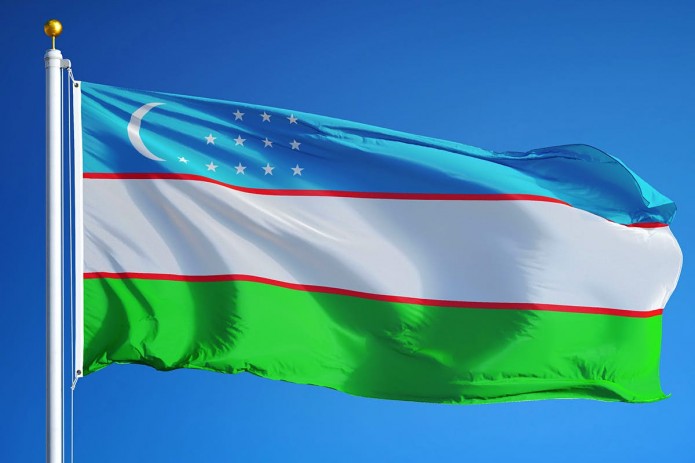
Thirty-five years after reclaiming its independence, Uzbekistan stands at a defining moment in its national journey—emerging as a confident, reform-driven and increasingly influential nation at the heart of Central Asia. What began in 1991 as the difficult task of building a sovereign state has evolved into an ambitious national transformation, opening Uzbekistan to greater economic engagement, regional cooperation and international partnerships. At the centre of this transformation is the visionary leadership of President Shavkat Mirziyoyev, whose reform agenda has sought to modernize institutions, strengthen the economy, expand international engagement and place human development at the heart of national progress.
The 35th anniversary of independence, therefore, is far more than a ceremonial milestone. It is an opportunity to reflect on a remarkable journey of nation-building and to recognize the aspirations of a country determined to translate independence into sustainable prosperity. Uzbekistan’s story today is increasingly defined by confidence, openness and ambition—a nation seeking not merely to participate in the changing landscape of Central Asia, but to help shape it.
Under President Mirziyoyev’s leadership, Uzbekistan has pursued a broad programme of economic and institutional reforms. Greater emphasis has been placed on attracting investment, developing the private sector, modernizing infrastructure, improving the business environment and expanding the country’s engagement with international markets. These reforms have coincided with a more outward-looking foreign policy, enabling Uzbekistan to strengthen relations with its neighbours and broaden partnerships beyond the region.
Perhaps one of the most significant dimensions of Uzbekistan’s transformation has been its renewed approach to Central Asian cooperation. Geography has given Uzbekistan a unique position: it is the only Central Asian country bordering all four other Central Asian states, as well as Afghanistan. This strategic location gives Tashkent a natural role in regional connectivity, trade, transport and economic integration. The country’s growing emphasis on dialogue and cooperation has contributed to a more interconnected Central Asia, where shared economic interests increasingly complement political and cultural ties.
Uzbekistan’s economic potential is equally compelling. With a large and youthful population, substantial natural resources, a strong agricultural base and a growing industrial and services sector, the country possesses many of the ingredients required for sustained economic expansion. Its efforts to diversify production, promote value-added industries, strengthen exports and attract foreign investment are gradually positioning Uzbekistan as an increasingly important economic partner for regional and international businesses.
The country’s ambitions extend beyond economic indicators. Modernization is also being pursued through investments in education, technology, urban development, energy, tourism and human capital. Uzbekistan’s historic cities—Samarkand, Bukhara, Khiva and Tashkent—provide an extraordinary cultural foundation, linking the country’s contemporary ambitions with its remarkable role in the history of the Silk Road. The challenge and opportunity before Uzbekistan is to transform this heritage into a modern platform for tourism, cultural diplomacy and international engagement.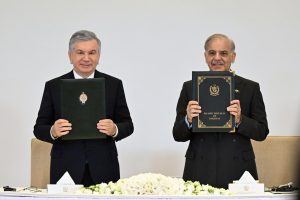
The country’s geographical position also makes connectivity one of its greatest strategic opportunities. As global supply chains are being reconfigured and countries seek new trade corridors linking Asia, the Middle East and Europe, Central Asia is gaining renewed importance. Uzbekistan’s landlocked geography has historically presented challenges, but its growing focus on transport corridors, regional infrastructure and closer economic cooperation offers an opportunity to turn geography into an asset.
For Pakistan, Uzbekistan’s transformation carries particular significance:
Pakistan and Uzbekistan share more than diplomatic relations. They are connected by centuries of cultural interaction, religious heritage and the historical legacy of the Silk Road. The peoples of the two countries have long been linked through commerce, scholarship, culture and ideas. Today, that historical relationship can be translated into a much stronger economic partnership.
The Pakistan–Uzbekistan relationship possesses considerable untapped potential in trade, investment, transport, textiles, pharmaceuticals, agriculture, information technology, tourism and energy. Improved connectivity between the two countries can further strengthen these opportunities. The establishment and expansion of transport links through Afghanistan and the wider Central Asian region can provide Pakistan with greater access to Central Asian markets, while Uzbekistan can benefit from Pakistan’s seaports and access to the Arabian Sea.
This is where the strategic importance of stronger Pakistan–Uzbekistan economic relations becomes particularly evident. Gwadar and Karachi offer Uzbekistan potential gateways to international maritime trade, while Uzbekistan can provide Pakistani businesses with access to a market of significant size and a broader Central Asian economic landscape. Connectivity, therefore, should not be viewed merely as infrastructure—it should be understood as an instrument of economic transformation and regional integration.
There is also considerable scope for private-sector engagement. Chambers of commerce, business associations and investment institutions in both countries can play a decisive role by creating regular business-to-business platforms, identifying sector-specific opportunities and facilitating joint ventures. The next phase of Pakistan–Uzbekistan relations should increasingly be driven by entrepreneurs, investors, exporters and innovators alongside governments and diplomatic institutions.
The vision of stronger bilateral relations should also embrace the human dimension. Educational exchanges, tourism, cultural cooperation and academic partnerships can deepen mutual understanding and create durable bonds between the younger generations of both countries. In an increasingly interconnected world, people-to-people relations are often the strongest foundation for lasting economic and diplomatic partnerships.
Uzbekistan’s progress also carries a wider lesson for the region. Central Asia is no longer simply a geographical space between major powers; it is becoming an increasingly important centre of economic opportunity, connectivity and strategic cooperation. A stable, prosperous and outward-looking Uzbekistan can make an important contribution to this transformation.
As Uzbekistan marks its 35th year of independence, the country can look back with confidence while looking forward with even greater ambition. Its transformation is still a work in progress, and like every major national journey, it brings challenges alongside opportunities. But the direction is unmistakable: greater openness, modernization, economic diversification and stronger international engagement.
President Shavkat Mirziyoyev’s reform-oriented leadership has provided an important impetus to this transformation. The real measure of its success, however, will ultimately be reflected in the opportunities created for Uzbekistan’s people, the strength of its institutions, the competitiveness of its economy and the depth of its engagement with the international community.
For Pakistan, Uzbekistan’s rise should be viewed not simply with admiration, but with strategic vision. The two countries have an opportunity to convert historical friendship into contemporary economic partnership and geographical proximity into meaningful connectivity. From trade corridors to technology, from investment to tourism, and from education to cultural diplomacy, the possibilities are extensive.
The 35th anniversary of Uzbekistan’s independence is thus both a celebration and a statement of intent. It celebrates a nation that has travelled a remarkable distance since 1991, while signalling its determination to go much further.
Uzbekistan is writing a new chapter in its national story—one in which independence is increasingly being translated into reform, reform into opportunity, and opportunity into a broader vision of prosperity and regional partnership.
As the world watches Central Asia assume greater strategic and economic importance, Uzbekistan has every reason to approach the future with confidence. And for Pakistan, strengthening its partnership with this dynamic Central Asian nation is not merely a diplomatic choice—it is a strategic opportunity whose potential deserves to be fully realized.
( The author is :Editor-in-Chief of the World News AM)