
The author
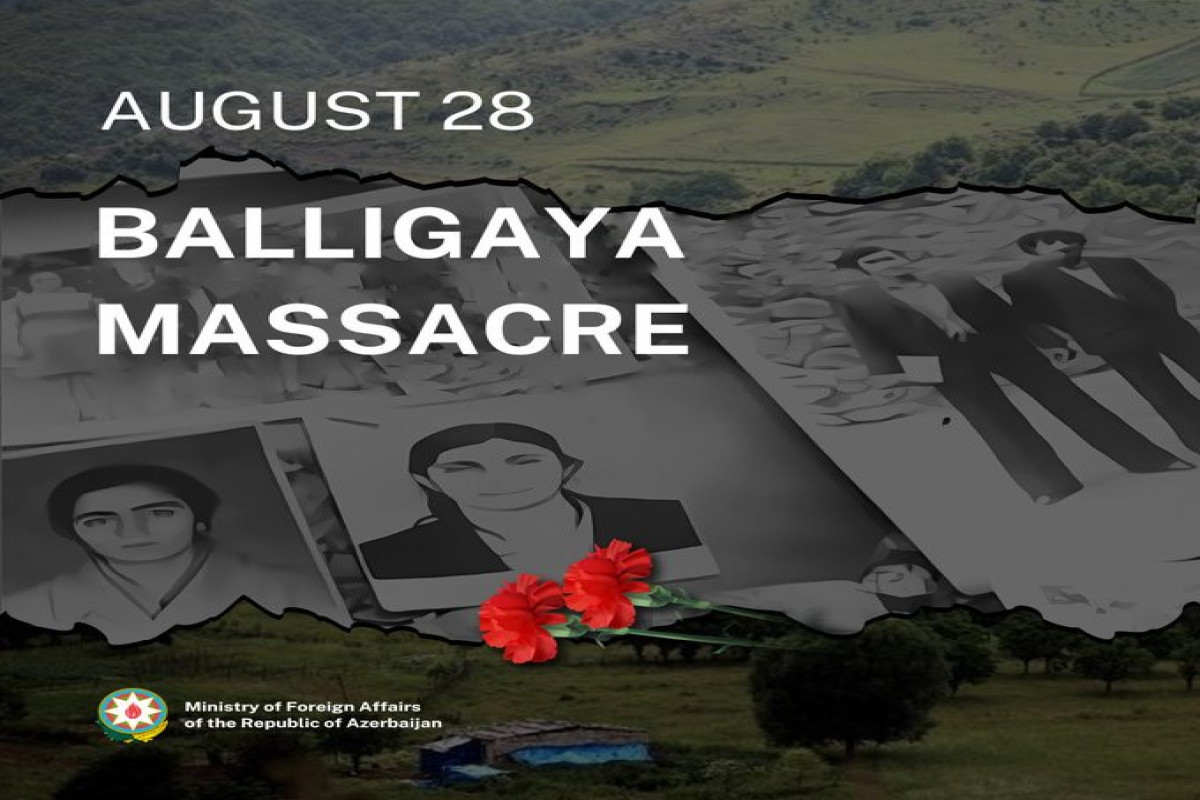
Thirty-four years after the tragedy in Balliqaya, Azerbaijan once again commemorates the civilians who lost their lives in one of the darkest episodes of the first Nagorno-Karabakh war. The anniversary falls on August 28, the date on which, according to Azerbaijani authorities, civilians in the village of Balliqaya in the Goranboy district were killed in 1992. Azerbaijan’s Ministry of Foreign Affairs marked the anniversary on Friday, paying tribute to the victims and calling for accountability for what it describes as crimes against humanity.
According to Azerbaijani official records, the Balliqaya tragedy took place on August 28, 1992, during the First Nagorno-Karabakh War. Azerbaijani authorities state that 24 civilians were killed, including six minors, a six-month-old infant and a 93-year-old woman. They further say that several of the victims were women, children and elderly people and that the bodies of some victims were burned. These details form part of Azerbaijan’s official account of the tragedy and remain central to its annual commemoration.
The significance of Balliqaya extends beyond the number of victims. It represents the human cost of a conflict in which civilians repeatedly found themselves exposed to violence, displacement and insecurity. The village tragedy occurred amid the wider armed conflict over Nagorno-Karabakh, a confrontation that produced deep wounds on both sides and left a legacy of grief that continued for decades. Remembering individual tragedies such as Balliqaya is therefore important not to reopen old divisions, but to underline the human consequences of war.
History, however, demands both remembrance and responsibility. The suffering of civilians should never be reduced to statistics or political narratives. Every name, every family and every lost child represents a human story. The international community has repeatedly emphasized the importance of accountability, protection of civilians and respect for international humanitarian law in armed conflicts. The Balliqaya anniversary provides another opportunity to reflect on these principles.
Azerbaijan’s Foreign Ministry has called for the alleged crimes committed in Balliqaya to be legally investigated and for those responsible to be held accountable. Such calls should be considered within the broader principle that serious violations of international humanitarian law deserve credible, impartial and lawful investigation. Justice, when pursued through established legal mechanisms and supported by evidence, can serve not only the victims but also the cause of lasting reconciliation.
The memory of Balliqaya also acquires significance at a time when the South Caucasus is seeking to move beyond decades of confrontation. The region has experienced profound changes since the 1990s, and recent diplomatic developments have created new possibilities for a more peaceful future. Yet sustainable peace cannot be built by forgetting the past. It requires acknowledging suffering, preserving historical memory and ensuring that future generations are not condemned to inherit the conflicts of their predecessors.
For Azerbaijan, commemorating Balliqaya is an expression of national remembrance and a reminder of the civilian suffering experienced during the Karabakh conflict. For the wider international community, it should serve as a reminder of a universal principle: civilians must never become the price of political or military disputes. Their protection must remain at the heart of international law and diplomacy.
As Azerbaijan remembers the victims of Balliqaya on this 34th anniversary, the most meaningful tribute would be to ensure that such tragedies are never repeated. The ultimate purpose of remembrance should not be revenge, but justice; not hatred, but understanding; and not the perpetuation of conflict, but the construction of a future in which disagreements are resolved through dialogue and law rather than violence. The memory of those who perished deserves nothing less. ( The author is: Editor-in Chief of World News AM )