
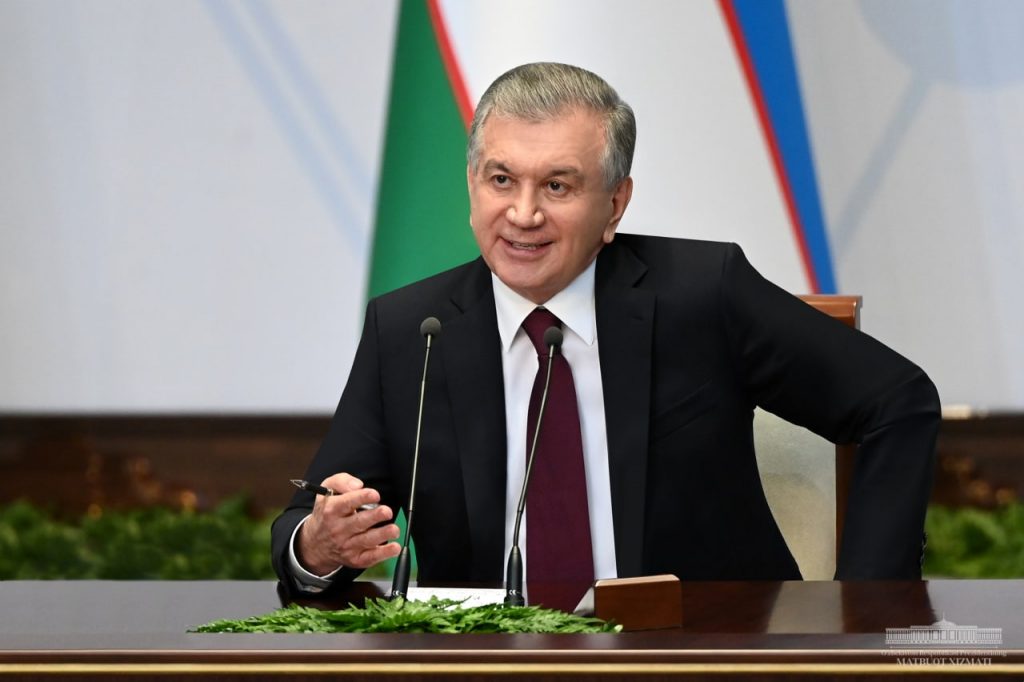
As the Republic of Uzbekistan approaches the 35th anniversary of its independence in 2026, the national motto, “With a united homeland and a united people, we will build a new life, a new future”, serves as a powerful articulation of a cohesive national project.
This motto is not merely aspirational; it is a calculated, multi-vector strategy that finds its theoretical underpinnings in classical and contemporary frameworks of political economy, international relations, and development studies. Under President Shavkat Mirziyoyev, Uzbekistan has engineered a paradigm shift, moving from a post-Soviet, resource-dependent model to a dynamic, open, and increasingly sophisticated market economy.
The author
Uzbekistan’s early economic profile was defined by its static comparative advantage an abundance of natural resources, a strategic landlocked geography, and a large, low-cost labor pool. However, the reforms initiated under President Mirziyoyev represent a conscious application of “Competitive Advantage Theory”. The state has moved beyond passively exporting raw commodities to actively cultivating a sophisticated and productive economic ecosystem.
By driving GDP past $145 billion and pursuing aggressive industrial modernization, the government is fostering the four attributes of advanced factor conditions (skilled human capital, digital infrastructure), sophisticated domestic demand, the development of related and supporting industries (industrial clusters), and a domestic environment characterized by intense firm rivalry and strategy. The result is a qualitative shift towards economic diversification, sustainability, and enhanced productivity, moving the nation up the value chain and insulating it from the volatility of primary commodity markets.
The early reform architecture full currency convertibility, dismantling trade barriers, and liberalizing FDI flows echoes rigorous economic transformation and now the Uzbek approach, has been dubbed as second only to China’s in its efficacy, represents an ideal combination of “gradualism” or the “Beijing Consensus”.
This model eschews the “shock therapy” that destabilized other post-Soviet economies. Instead, it embraces a state-managed integration into the global economy, maintaining strategic coordination while simultaneously creating the institutional and legal frameworks necessary for a vibrant private sector.
This syncretic approach has created a form of “state-directed capitalism,” where the state acts not as a sole proprietor but as a facilitator and strategic partner, evidenced by the tripling of business lending portfolios to 450 trillion soums and the provision of 650 trillion soums in tax and customs incentives. This strategic engagement has de-risked private investment and catalyzed an entrepreneurial revolution from the grassroots up.
Uzbekistan’s most potent strategic asset is its demographic profile, with over 60 percent of the population under 30. This is a textbook case of a “demographic dividend” a period of accelerated economic growth that can occur when a country has a large share of working-age population.
The state’s explicit policy is to convert this demographic potential into economic power. The creation of IT Park Uzbekistan and the transition from a technology consumer to a digital exporter is a direct investment in human capital theory echoing the work of economists like Gary Becker and Theodore Schultz. By nurturing a digitally-skilled workforce, Uzbekistan is not just creating jobs; it is generating the knowledge-based assets that drive growth in the Fourth Industrial Revolution.
In the sphere of international relations, Uzbekistan’s strategy is a prime example of geo-economics the application of economic instruments to advance geopolitical goals. The country has successfully reframed its landlocked geography from a liability into a “connectivity asset.” The “New Regionalism” pursued by Tashkent, including visa-free travel for citizens of over 90 countries and proactive Central Asian diplomacy, aligns with the concept of complex interdependence, where multiple channels of contact (trade, investment, cultural exchange) reduce the likelihood of conflict and create mutual economic benefits.
This strategy has transformed Uzbekistan into a pivotal economic hub, attracting foreign capital and positioning itself as a critical node in emerging Eurasian trade networks. The upgrade of sovereign credit ratings by Fitch, S&P, and Moody’s is a direct, quantifiable result of this reputational capital, lowering borrowing costs and signaling to global financial markets that Uzbekistan is a stable and predictable partner in the international liberal order.
The country’s socio-economic progress is deeply rooted in the principles of “New Institutional Economics”, particularly Douglass North’s emphasis on the role of institutions in reducing transaction costs and shaping economic performance. The “mahalla of five” institution is an innovative application of this theory, leveraging a traditional social structure to solve modern problems of poverty and unemployment. By empowering these grassroots bodies, the state has created a decentralized mechanism for social welfare and economic empowerment.
The dramatic reduction of the poverty rate from 17 percent in 2017 to 5.8 percent by 2025 is not merely a statistical achievement; it is a testament to the effectiveness of institutional innovation in achieving what Amartya Sen would call “development as freedom” expanding the real capabilities of citizens to lead lives they value.
Analytically, Uzbekistan has effectively synthesized a unique development model. It has drawn lessons from the “East Asian developmental states”, the “gradualist transition” of China, and the “market liberalization” principles of the West, all while tailoring them to its specific historical and cultural context. The Uzbekistan 2030 Strategy, focused on green energy, digitalization, and human capital, signals a forward-looking agenda aligned with the UN’s Sustainable Development Goals.
The macroeconomic achievements GDP growth of 7.7 percent in 2025, international reserves exceeding $77 billion, and record exports of $33.8 billion are not just data points. They are the output of a sophisticated, multi-layered system. The economy has displayed remarkable resilience.
In conclusion, Uzbekistan’s transformation under President Mirziyoyev is more than a “national revival”; it is a compelling case study in modern statecraft. By deliberately applying the principles of competitive advantage, human capital development, geo-economics, and institutional reform, Uzbekistan has constructed a new model of “good governance”.
Fantastically, Uzbekistan today is more open to international engagement, more integrated with its regional neighbours, more interested in attracting global capital and knowledge, and increasingly conscious of the importance of its international reputation than it was ten years ago which has put its economy, productive channels, joint ventures, investments, energy, green renewables and last but not least, industrialization on modernization and openness creating an optimal balance generating new jobs and reduce poverty.
The country’s economic expansion has accelerated over time. GDP stood at 61.5bn rubles in 1991, before transitioning to the national currency and reaching UZS 302.8bn ($24.8mn) in 1995 and UZS 3.26 trillion ($267mn) in 2000.
Growth continued steadily in the following years, rising to UZS 15.9 trillion ($1.3bn) in 2005 and UZS 88.1 trillion ($7.2bn) in 2010. By 2015, GDP had reached UZS 250.5 trillion ($20.5bn), before accelerating further to UZS 705.1 trillion ($57.8bn) in 2020.
In recent years, the upward trend has intensified, with GDP increasing to UZS 861.2 trillion ($70.6bn) in 2021, UZS 1,041.9 trillion ($85.4bn) in 2022, and UZS 1,261.8 trillion ($103.5bn) in 2023. The figure rose further to UZS 1,535.4 trillion ($125.9bn) in 2024, reaching a preliminary UZS 1,849.7 trillion ($151.7bn) in 2025.
It was earlier reported that Uzbekistan’s exports reached $33.8bn in 2025, marking nearly a 19-fold increase since 1991 and highlighting sustained growth in the country’s trade capacity.
Comparative studies confirm that the pace of economic growth achieved by Uzbekistan in the first quarter exceeded the expectations of international institutions. The Asian Development Bank had projected 6.7 percent growth for the first quarter. The World Bank initially forecast 6.0 percent but revised it upward to 6.4 percent in April. The IMF also raised its forecast in April from 6.2 percent to 6.8 percent.
Over the past years Uzbekistan has attracted more than $150 billion in foreign investment, of which $123 billion has been secured in the last five years alone which is commendable confirming its state’s policies towards FDIs, JVs, qualitative industrialization, smart economy and last but not least achieving the goals of green development.
To conclude, Uzbekistan model of economic transformation is a model that successfully navigates the tensions between “state and market”, “sovereignty and openness”, and “tradition and modernity”, creating a foundation for “shared prosperity” that is robust, sustainable, and inclusive. The nation is not merely celebrating 35 years of independence; it is codifying a new paradigm for development in the 21st century.
(The author is : President at the Center for Knowledge and Public Policy, Regional Expert: China, CPEC, BRI & World Affairs).