
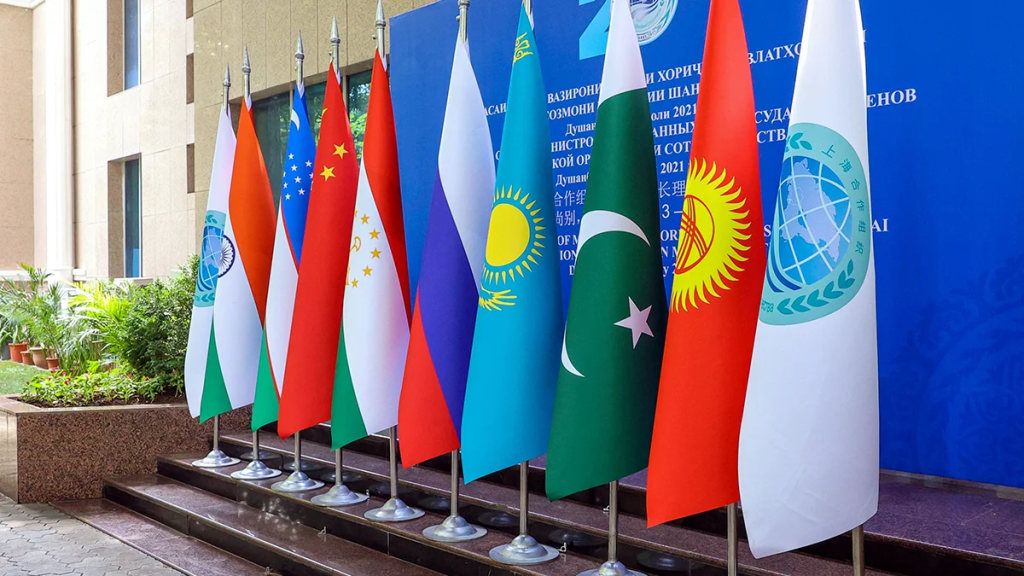
WNAM REPORT: President of the Republic of Uzbekistan Shavkat Mirziyoyev will pay a working visit to Kyrgyzstan’s capital on August 31 – September 1 to participate in the anniversary meeting of the Shanghai Cooperation Organization’s Heads of State Council.
The summit commemorates the organization’s 25th anniversary and is themed around Kyrgyzstan’s chairmanship motto, “25 Years of the SCO: Together Towards Sustainable Peace, Development, and Prosperity”. The main political and legal outcome will be the Bishkek Declaration on the SCO’s 25th Anniversary, with expectations that 20-25 additional documents will be signed afterward, shaping Eurasian cooperation for the upcoming cycle. For Tashkent, the Bishkek platform goes beyond a ceremonial celebration. It serves as a strategic tool to promote practical economic, transportation, and anti-crisis initiatives.
The SCO Serving as a Market and Infrastructure Hub
Over more than 25 years, the organization has grown from a confidence-building forum along the post-Soviet border with China into one of the world’s largest economic blocs. The Bishkek summit brings together delegations from 21 countries, including current chair Sadyr Japarov, leaders of China, Russia, India, Pakistan, Iran, Kazakhstan, Tajikistan, Uzbekistan, as well as presidents of Türkiye and Egypt, Armenia’s Prime Minister, and UN Secretary-General António Guterres. This broad participation positions the SCO as a platform representing double-digit shares of both global GDP and population, with decisions made at its summits having near-immediate effects on transportation, logistics, and trade.
For Uzbekistan, this economic scope has long been a tangible reality. By the end of 2025, trade with SCO member states reached $40.6 billion, up 21.7%. Estimates from the Center for Economic Research and Reforms indicate that from 2017 to 2025, this figure grew 3.1 times, from $12.9 billion to $40.6 billion. Exports increased from $5.8 billion to $10.65 billion, while imports surged from $7.1 billion to $29.96 billion. In 2025, foreign investments from member states reached $24.8 billion, with China leading at $13 billion and Russia at $2.6 billion. With Uzbekistan’s total foreign trade reaching $81.2 billion, up 20.7% year-on-year, SCO nations now account for half of its external economic relations. This shift signifies more than tactical importance. It reflects structural interdependence and resources that require institutional management.
Tashkent has traditionally aimed to turn interdependence into practical actions. Recently, Uzbekistan launched a Database of Industrial Investment Projects, with regulations approved in June 2026. It also proposed establishing an SCO Regional Center for Critical Materials, an Energy Consortium, a Network of Innovation and Technology Hubs, and venture financing tools to promote innovation. The underlying idea is to move the focus of summits from mere declarations to tangible value chains, financial tools, and infrastructure development.
Priority One: Transport Corridors and a “Single SCO Transport Space”
Transport connectivity is Tashkent’s most urgent and sensitive issue in Bishkek. As a landlocked nation, diversifying routes is essential for economic survival in global trade. The main project is the China – Kyrgyzstan – Uzbekistan railway, which started construction in December 2024. It aims to cut the distance from East Asia to the Middle East and Southern Europe by about 900 km and decrease delivery times by 7-8 days, with a freight capacity of 12-15 million tons annually. Importantly, as a trilateral logistics route linking neighboring countries, the project reflects the geography of the summit.
The second key transport route remains the Trans-Afghan Corridor, which runs from Termez through Mazar-i-Sharif, Kabul, and Peshawar, allowing Central Asian goods access to Indian Ocean ports. Combined with the China – Kyrgyzstan – Uzbekistan route, it creates a network capable of shifting a significant portion of Eurasian transit. Tashkent advocates a “Single SCO Transport Space” at the institutional level, promoting customs digitalization, electronic document exchange, advance information sharing, and comprehensive cargo tracking. These strategies support the relevant points of the Bishkek Declaration on international transport corridors.
Priority Two: Promoting Industrial Cooperation and Developing a Value Chain Map
Tashkent’s second strategic goal is to turn trade data into sustainable industrial collaboration. The Database of Industrial Investment Projects, established in June 2026, aims to reduce information gaps by enabling enterprises within member states to quickly identify potential cooperation areas, partner expertise, and localization levels. An extension of this effort is the SCO Industrial Cooperation Map suggested by Tashkent – a practical guide to unify fragmented initiatives into cohesive production chains and highlight areas where countries’ capabilities complement each other.
Initially, cooperation targets sectors where Uzbekistan has an established raw-material base and distribution channels, such as textiles and the agro-industrial sector. Later, this approach is anticipated to expand to mechanical engineering, electrical engineering, pharmaceuticals, the chemical industry, and construction materials production. This sequence follows a pragmatic management strategy: starting with straightforward cooperation models and progressively advancing to more complex production stages.
Priority Three: Security as a Holistic System, Not Just a Collection of Responses
The anniversary summit is significantly transforming the SCO’s security framework. The Regional Anti-Terrorist Structure’s Executive Committee is being restructured into a Universal Center to address a wider range of security threats. At the same time, the SCO is establishing new regulations for the Center for Combating Organized Crime in Bishkek and the Anti-Drug Center in Dushanbe. Upcoming documents slated for signing include the Declaration on Enhancing Multilateral Partnership for Nuclear Security, the 2030 Drug Addiction Elimination Program, initiatives to curb synthetic drugs and precursors, and an Action Plan for International Information Security.
Uzbekistan plays a key role in shaping this architecture, initiating several core elements. Since the Expert Forum on Information Security (2021) and the Samarkand Solidarity Initiative for Common Security and Prosperity (2022), Tashkent has consistently suggested proactive formats that aim to anticipate threats rather than merely react to them. These include the Code of Good-Neighborliness, Trust, and Cross-Border Partnership (2023), and the proposal for an SCO Declaration on Nuclear Security (2025). At the Tianjin summit, Uzbekistan also proposed establishing an International Expert Council on Artificial Intelligence. Tashkent’s strategy emphasizes shifting from reactive measures to rule-setting mechanisms: protocols on rules, trust, and data sharing are becoming as vital to security as enforcement and agencies.
Afghanistan remains a key area of focus. Uzbekistan supports restarting the SCO – Afghanistan Contact Group and involving Kabul in regional transport and energy initiatives. This strategy aims to lower risks while leveraging Afghanistan’s transit potential.
Central Asia as the Core of the SCO and the “Bishkek Effect”
Holding the summit in Bishkek emphasizes the Central Asian dimension of the agenda. The region is increasingly central to the organization conceptually and geographically, as it includes five Central Asian states that have resolved the most sensitive border issues of the past decade. In January 2023, Presidents Shavkat Mirziyoyev and Sadyr Japarov signed a Declaration on Comprehensive Strategic Partnership and 25 accompanying documents, including a border treaty, ending three decades of legal uncertainty. By 2024, Kyrgyzstan and Uzbekistan had officially completed delimitation, defining a 302.29-km border section. In 2026, during Uzbekistan President’s state visit to Kyrgyzstan, both leaders reaffirmed their commitment to expanding their strategic partnership.
Economic cooperation is now showing tangible results. According to Uzbekistan’s Statistics Agency, bilateral trade hit $846.4 million in 2024, with plans to raise it to $2 billion. Kyrgyzstan is leveraging its chairmanship to promote the organization’s financial tools, such as the SCO Development Bank, Development Fund, and Investment Fund, with Uzbekistan playing a supportive role. As a result, a more unified Central Asia, mainly due to resolving border and water disputes, is emerging as a key factor for stability within the SCO, rather than just a peripheral part.
Summary: Transforming an Anniversary into Tangible Projects
While the SCO summit anniversary in Bishkek might have been mostly ceremonial, Uzbekistan’s involvement suggests otherwise. Tashkent aims to leverage this 25th anniversary to formally include, in the declaration and related documents, already agreed-upon tools such as the Database of Investment Projects, the revised counterterrorism framework, and transport and digital mechanisms.
President Shavkat Mirziyoyev’s involvement in the Council of Heads of State meeting is anticipated to yield several durable results for Uzbekistan: firstly, formalizing economic initiatives with concrete documents; secondly, establishing an extra diplomatic channel for bilateral talks with main partners on issues like investment, transit, and security; and thirdly, reaffirming Tashkent’s pivotal role in forming a unified Central Asian stance within the organization.
Uzbekistan’s multi-vector strategy helps explain the overall impact. Uzbekistan uses the Bishkek platform to strengthen its integration into the SCO’s main economic routes while maintaining an independent foreign economic policy that also targets the EU, Gulf States, and Southeast Asia. For Tashkent, despite its symbolic importance, the Bishkek Declaration on the SCO’s 25th anniversary is primarily a practical document, a framework that supports national economic interests with a durable international legal basis. The anniversary’s real purpose is not just to review past achievements but to turn them into actionable rules for the coming decade.