
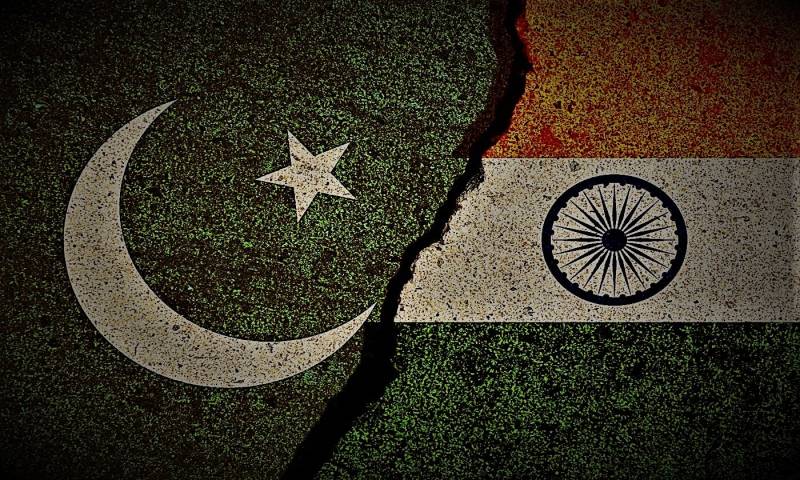
The relationship between Pakistan and India remains locked in a “cold war” atmosphere, characterized by deep-seated mistrust and a volatile military posture. Following a significant military standoff in 2025, the regional landscape has undergone a seismic shift. While Pakistan has pivoted strategically toward the Middle East to secure its economic and diplomatic future, India appears to be struggling with a geopolitical environment that no longer fits in the traditional South Asian arena
The bilateral relationship reached its lowest point in decades following a four-day “mini-war” in May 2025. This conflict, though brief, represented the first time since 1971 that Pakistan and India engaged in multi-domain kinetic operations, including cyber-attacks and drone swarms. Though both Pakistan and India, being a nuclear-armed nations managed to avoid a full-scale confrontation through international pressure, the skirmish left behind a legacy of heightened alert. Currently, Pakistan and India have withdrawn their High Commissioners, leaving diplomatic channels hollowed out and relegated to mid-level bureaucrats. This lack of top-tier representation underscores a “new normal” where communication is transactional rather than transformational.
Pakistan’s Strategic Pivot:
In a significant departure from its historical preoccupation with South Asian integration, Pakistan has increasingly looked to the West. By leveraging its long-standing ties with major powers, Pakistan has positioned itself as a lead mediator in the volatile U.S.-Iran-Israel tensions. This is not merely a diplomatic exercise; it is a survival strategy.
This pivot serves a triple purpose for Pakistan.
Economic Stabilization:
Strengthening ties with the GCC (Gulf Cooperation Council) to secure essential investment, deferred oil payments, and energy security.
Diplomatic Utility:
By proving its worth as a regional peacemaker and a bridge between Tehran and Washington, Pakistan aims to regain the international prestige it lost during the Afghan withdrawal era.
Counter-Balancing India:
Pakistan hopes that by becoming a pivot state for Middle Eastern stability, the international community will be compelled to address its security concerns regarding India’s growing global influence.
If Pakistan manages to become indispensable to global stability in the Middle East, the Western powers, specifically the United State will find it increasingly difficult to ignore the systemic risks posed by an unchecked Indian hegemony in South Asia.
The most alarming development following the 2025 confrontation was India’s decision to put the 65-year-old Indus Waters Treaty (IWT) in abeyance to use water as “weapon” For over six decades, the IWT was considered “war-proof,” having survived three major conflicts (1965, 1971, and 1999). It served as the primary mechanism for water-sharing between the two nations, mediated by the World Bank.
However, in March 2026, the situation took a serious turn when Pakistan officially urged India to restore the treaty, citing the existential threat to regional water security and the livelihoods of millions of farmers in the Indus Basin. India’s total silence on this demand suggests a shift toward “hydro-diplomacy” as a tool of coercion. By threatening the flow of the Chenab and Jhelum rivers, India is signalling that it is willing to use environmental and humanitarian leverage to achieve political ends. This move risks turning a territorial dispute into a generational humanitarian catastrophe, as downstream Pakistan faces increasing water scarcity exacerbated by climate change.
Pakistan’s current India policy remains anchored in traditional “red lines.” The government remains firm that no formal normalization of ties or resumption of trade can occur until India reviews its August 2019 decision regarding the special status of Jammu and Kashmir.
Inside Pakistan, however, this stance is a subject of intense internal debate:
The business community and people are suffering from record-high inflation and supply chain bottlenecks. Many traders in Punjab and Sindh have shown increasing eagerness to resume direct trade. Currently, Indian goods often reach Pakistan via third-country routes like Dubai or Singapore, which triples the landing cost for the average Pakistani consumer however the Pakistani government has firmly rejected these overtures, prioritizing its principled stance on Kashmir. The leadership argues that economic relief can not come at the cost of abandoning the right to self-determination for the Kashmiri people. This “Kashmir-first” policy remains the bedrock of Pakistan’s national security narrative, despite the mounting economic pressure.
The prospects for improvement in the diplomatic relationship between Pakistan and India are increasingly stagnant, largely due to the ideological framework of India’s ruling Bharatiya Janata Party (BJP). Prime Minister Modi’s “Hindutva” policy rooted in a vision of India as a Hindu nationalist state has fundamentally altered the nature of Indian diplomacy.
The Rashtriya Swayamsevak Sangh (RSS), the ideological and paramilitary wing of the BJP, plays a decisive role in shaping the national narrative. Critics argue that the RSS promotes a narrow, exclusionary agenda that fuels violence against India’s 200 million Muslims and fosters a permanent state of hostility toward Pakistan to maintain domestic polarization
For Prime Minister Modi, a hardline stance against Pakistan is a potent electoral tool. By maintaining a narrative of “the external enemy,” the BJP consolidates the support of radicalized segments of the majority population. In this climate, any move toward peace is perceived not as statesmanship but as a “political death” for the current leadership. The BJP’s electoral success is now inextricably linked to a “tough on Pakistan” image, leaving little room for back-channel diplomacy or “cricket diplomacy” of the past.
The security dimension is further complicated by allegations of state-sponsored subversion. Pakistan maintains that India is actively supporting terrorism within its borders through proxies operating out of safe havens in Afghanistan. Specifically, Pakistan views the following groups as Indian proxies designed to destabilize the China-Pakistan Economic Corridor (CPEC) and “bleed” Pakistan internally:
Tehrik-i-Taliban Pakistan (TTP): Targeting security forces in the northwest.
Balochistan Liberation Army (BLA): Targeting Chinese interests and infrastructure projects.
Baloch Liberation Front (BLF): Engaging in separatist insurgency in the south.
Pakistan has presented multiple dossiers to the United Nations, alleging that Indian intelligence agencies are providing financial and logistical support to these groups to hamper Pakistan’s economic recovery.
.
Conclusion:
There is no immediate possibility of a “Grand Peace.” The relationship has moved beyond the hope of a comprehensive settlement and into a phase of managed hostility. We are witnessing a transition where Pakisran and India have accepted that they can not change each other’s fundamental nature.
Until there is a fundamental shift in the political leadership in New Delhi or a total reassessment of the Hindutva ideology, the relationship will remain purely transactional, focused on preventing a nuclear escalation rather than building a shared future. For now, the border remains a silent witness to a cold war that shows no signs of friendly relationships, as both Pakistan and India look past each other toward vastly different horizons.