
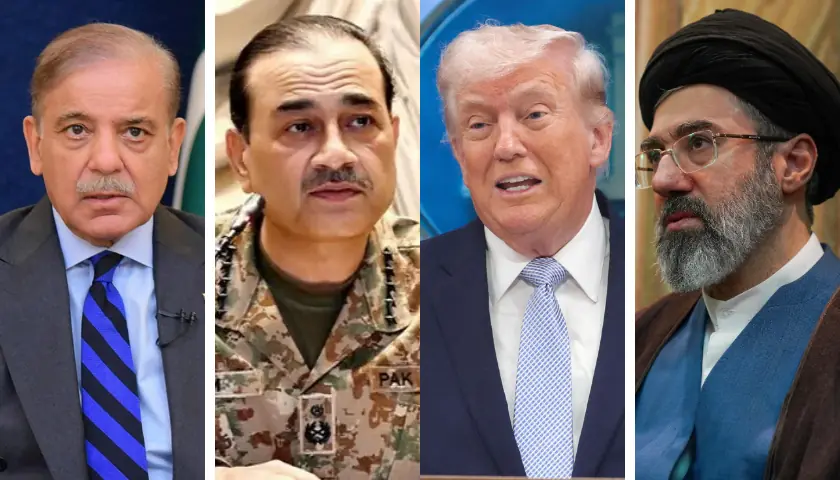
Masood Khan, former ambassador to United States China and United Nations, and former president of Azad Jammu and Kashmir, has hailed Pakistan’s diplomatic efforts as a historic breakthrough, stating that the country has set a new global benchmark in peacemaking by facilitating direct engagement between the United States and Iran during one of the most dangerous conflicts in recent history.
In an op-ed titled “Pakistan’s mediation: A catalyst for peace” written by Ambassador Masood Khan and published by Al Jazeera Arabic, he described the moment as unprecedented and noted that the eyes of the world are now firmly fixed on Pakistan.
“I do not recall any such responsibility being entrusted to a country in the history of diplomacy,” he remarked, emphasizing that Pakistan’s swift and sustained engagement from the very onset of the conflict transformed what seemed an impossible task into a tangible achievement.
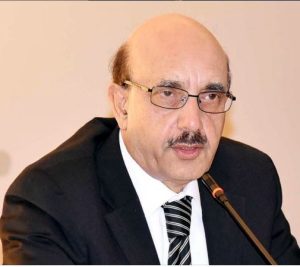
Masood Khan
He commended the leadership of Pakistan, including the Prime Minister, Deputy Prime Minister, and Field Marshal Syed Asim Munir, for their coordinated and tireless efforts. Through intensive shuttle diplomacy and continuous high-level contacts across global capitals, Pakistan succeeded in creating the conditions necessary for a ceasefire and, crucially, for direct, face-to-face negotiations between Washington and Tehran—an outcome not witnessed at this level in decades.
Ambassador Khan highlighted three major successes: the establishment of a ceasefire framework, Islamabad’s emergence as a trusted venue for dialogue, and the facilitation of direct engagement between the two adversaries. He noted that this development marks a significant departure from past indirect negotiations, opening a new pathway for substantive diplomacy.
However, he cautioned that the road ahead remains complex. The negotiating agenda includes critical and sensitive issues such as guarantees of non-aggression, a permanent ceasefire, the future governance of the Strait of Hormuz, withdrawal of foreign forces, lifting of sanctions, and questions of war reparations. These issues, he observed, reflect deeply entrenched positions on both sides.
Despite these challenges, Ambassador Khan expressed cautious optimism that a middle ground could be found. Both the United States and Iran, he noted, are under significant strategic and domestic pressure—creating incentives for compromise. He emphasized that Pakistan’s role will remain that of a neutral facilitator, focused on building trust, ensuring security, and guiding the process toward incremental progress.
He further underscored that Pakistan is not acting alone but enjoys the support of key regional and global partners, including Gulf states, China, Russia, and European stakeholders. This broad-based backing enhances Pakistan’s credibility and strengthens its position as a “net stability provider” in an increasingly volatile region.
Ambassador Khan concluded that Pakistan’s diplomatic success has elevated its global standing and opened new avenues for strategic and economic engagement. While the outcome of negotiations remains uncertain, he stressed that Pakistan has already written a “golden chapter” in the history of diplomacy by steering the world away from a potentially devastating conflict and toward dialogue and peace.