
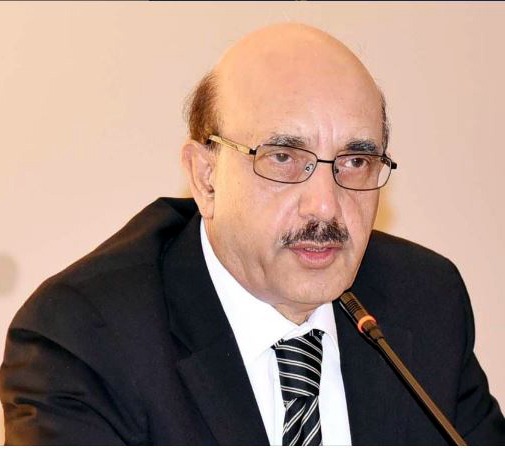
WNAM REPORT: Sardar Masood Khan, former Ambassador of Pakistan to the United States, China, and Permanent Representative to the United Nations on Monday reaffirmed that Pakistan continues to play a vital and credible role as a facilitator in the evolving U.S.–Iran negotiations, dismissing claims that its diplomatic relevance has diminished.
In a TV interview, he observed that the current phase of the crisis is not only defined by military escalation but also by unprecedented global awareness of diplomacy in action. “This conflict has brought diplomacy into public view, where citizens across the world are observing in real time how states engage, negotiate, and maneuver,” he remarked.
Clarifying recent statements by U.S. President Donald Trump, Ambassador Khan emphasized that they have been widely misinterpreted. “There is no indication that Pakistan has been sidelined. On the contrary, proximity talks—where parties engage indirectly through a trusted intermediary—are ongoing, and Pakistan is playing that intermediary role effectively,” he stated.
He explained that Pakistan is facilitating the exchange of proposals between Washington and Tehran while attempting to bridge critical differences under highly complex conditions. “This is a continuous and delicate process, requiring both sides to consolidate internal positions and move toward a workable consensus,” he added.
Highlighting the core impediment to progress, Ambassador Khan stressed that trust cannot be restored without simultaneous steps to ease tensions, particularly the U.S. blockade measures and issues surrounding the Strait of Hormuz. He noted that Iran has demonstrated some flexibility, but Washington continues to apply pressure to shape the outcome of negotiations.
Assessing the broader strategic landscape, he observed that both sides have incurred significant costs. Iran, despite suffering extensive damage and leadership losses, has maintained operational coherence and avoided internal collapse. The United States, meanwhile, faces financial burdens, reputational challenges, and growing friction with European allies, particularly within NATO and the European Union.
Ambassador Khan further pointed out that parallel to diplomatic engagement, aggressive rhetoric and military threats continue to escalate, complicating Pakistan’s mediation efforts.
On regional dynamics, he noted Iran’s outreach to Gulf states, including Saudi Arabia, Qatar, and Kuwait, aimed at rebuilding trust. However, he cautioned that deep-seated divisions and external influences would make post-conflict reconciliation a gradual process.
Concluding, Ambassador Khan stressed that while both sides appear inclined toward a negotiated settlement, achieving a sustainable agreement will require patience, mutual concessions, and sustained third-party facilitation, with Pakistan continuing to serve as a key bridge in this critical diplomatic effort.
Islamabad still leads high-stakes diplomacy in US–Iran standoff
8